
Our 38 churches › Ableiges

Patron saint
Saint Martin
Bishop of Tours
Liturgical feast
11 November
Historic monument
Listed (1931)
the chancel and its side aisles
Address
Rue Gilles-de-Maupeou, 95450 Ableiges
at the southern edge of the village
Directions
Upcoming Masses
- Saturday 27 February, 6:00 pm
- Saturday 26 June, 6:00 pm
A hall chancel hidden behind a very plain façade
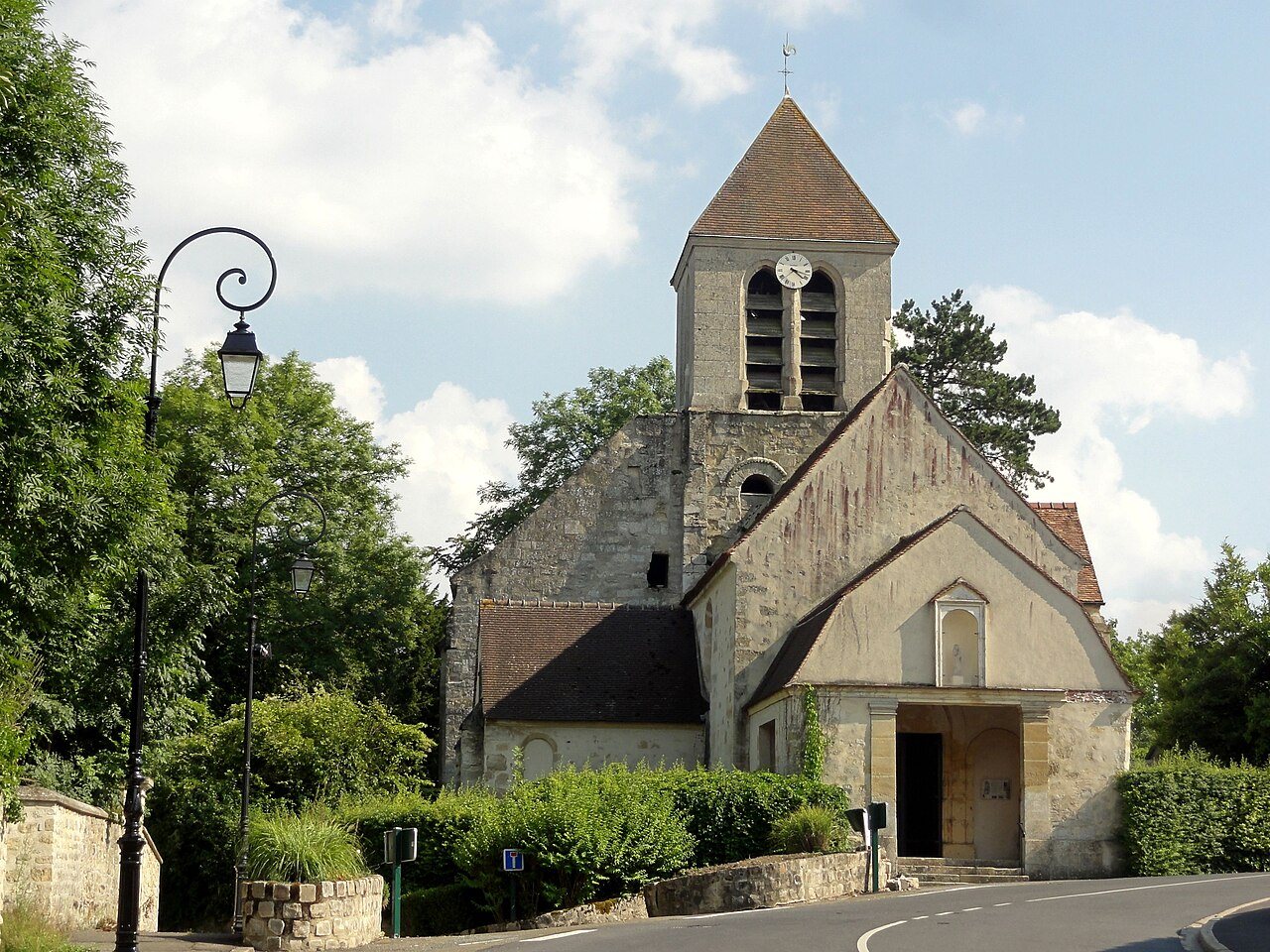
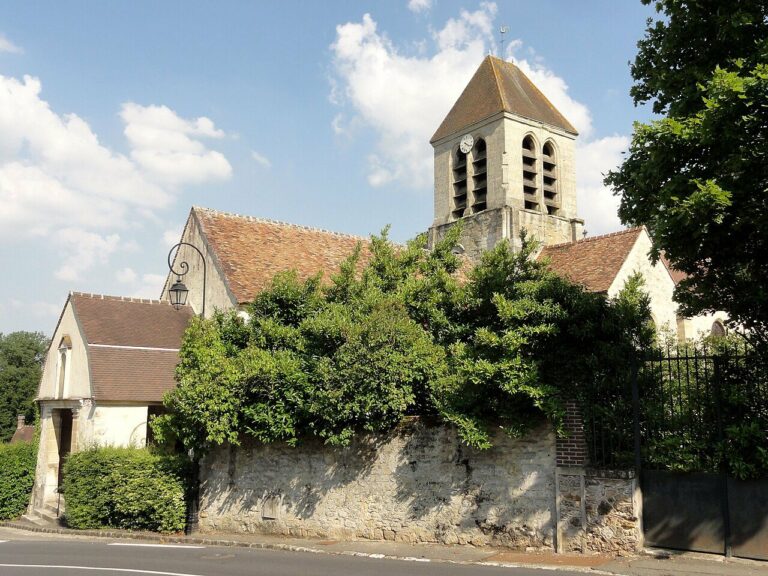
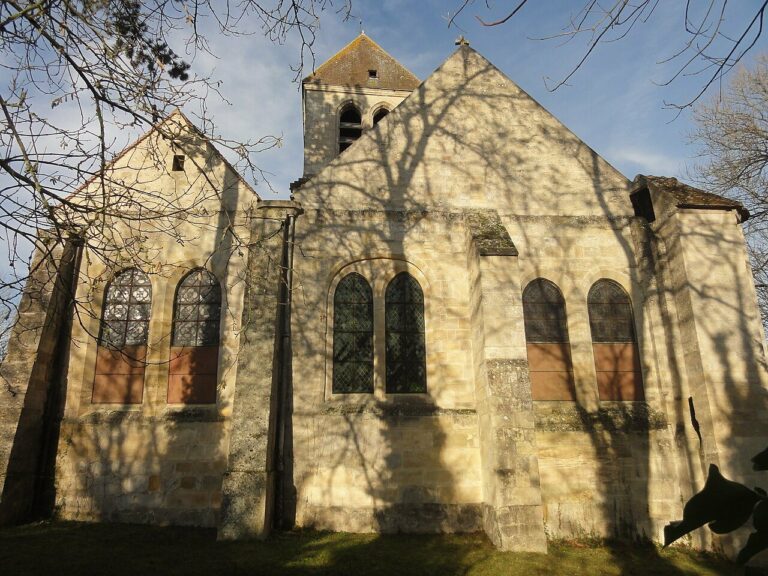
South of the village of Ableiges, opposite the former farm of the lords of the manor, Saint-Martin Church hides one of the most unusual interiors in the Vexin behind a very plain façade. The place of worship is probably very old: around 1880 a Gallo-Roman sarcophagus was discovered beneath the bell tower. A church is recorded as early as 1071, when the Archbishop of Rouen ceded its revenues to the Abbey of Saint-Denis.
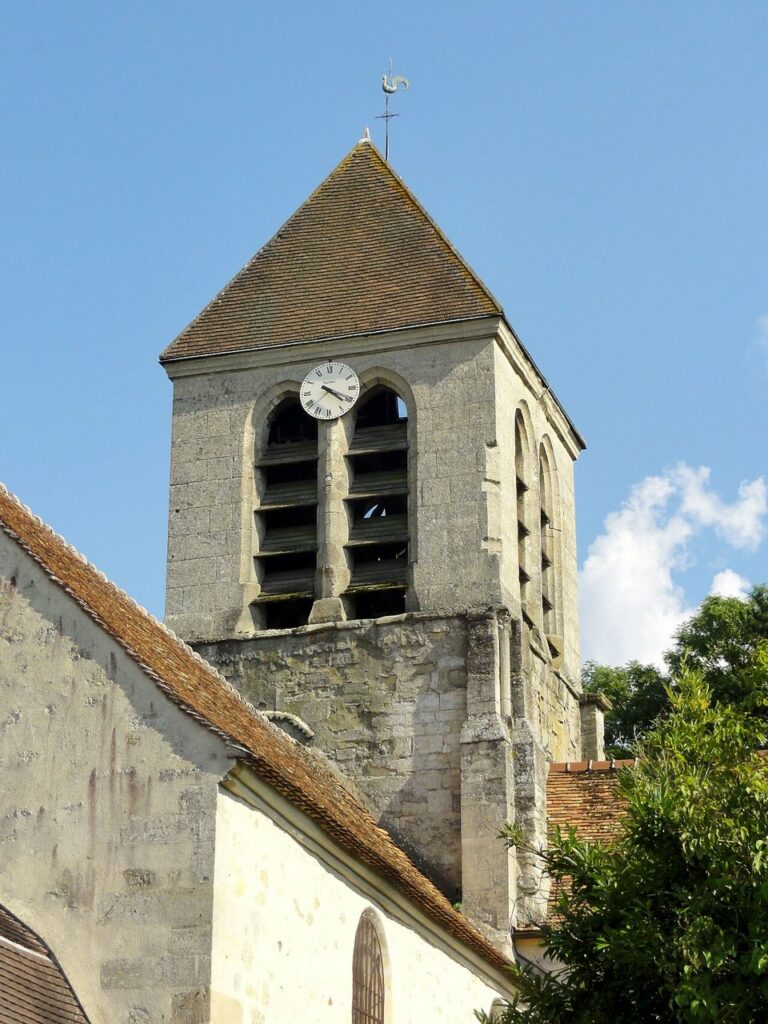
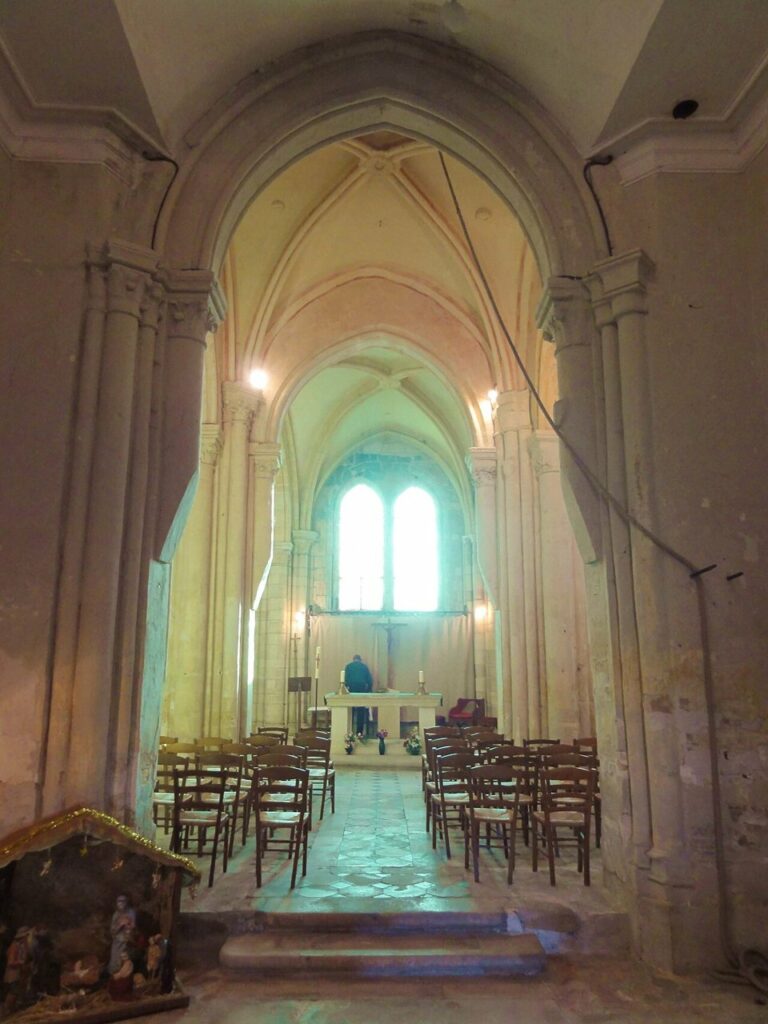
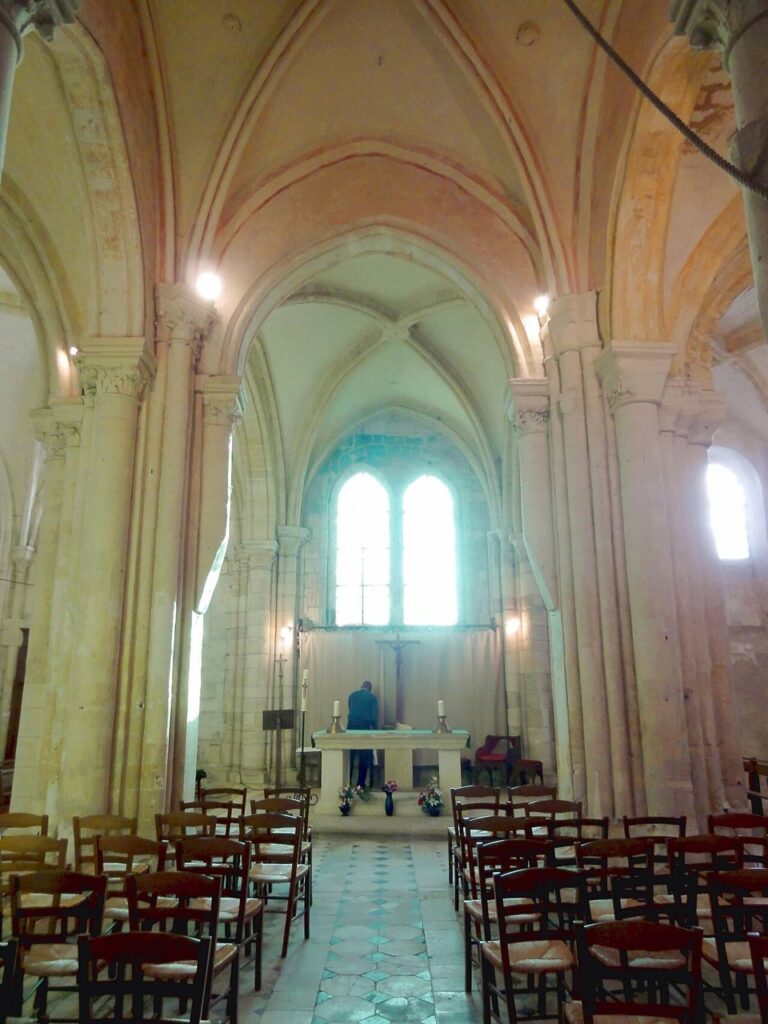
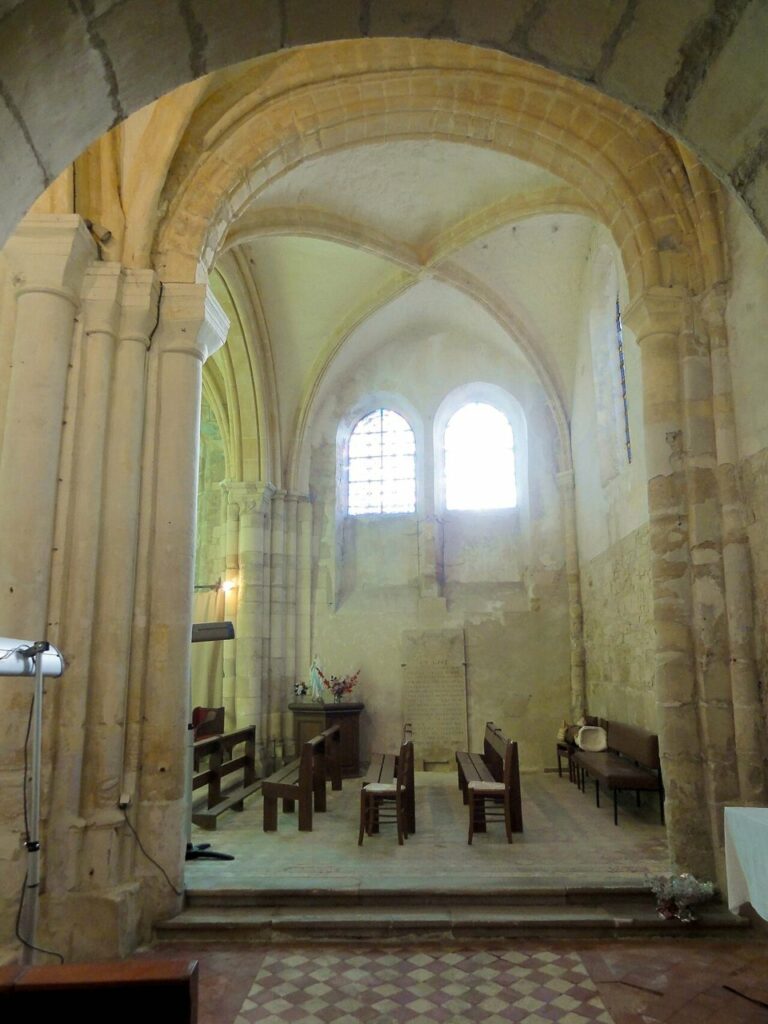
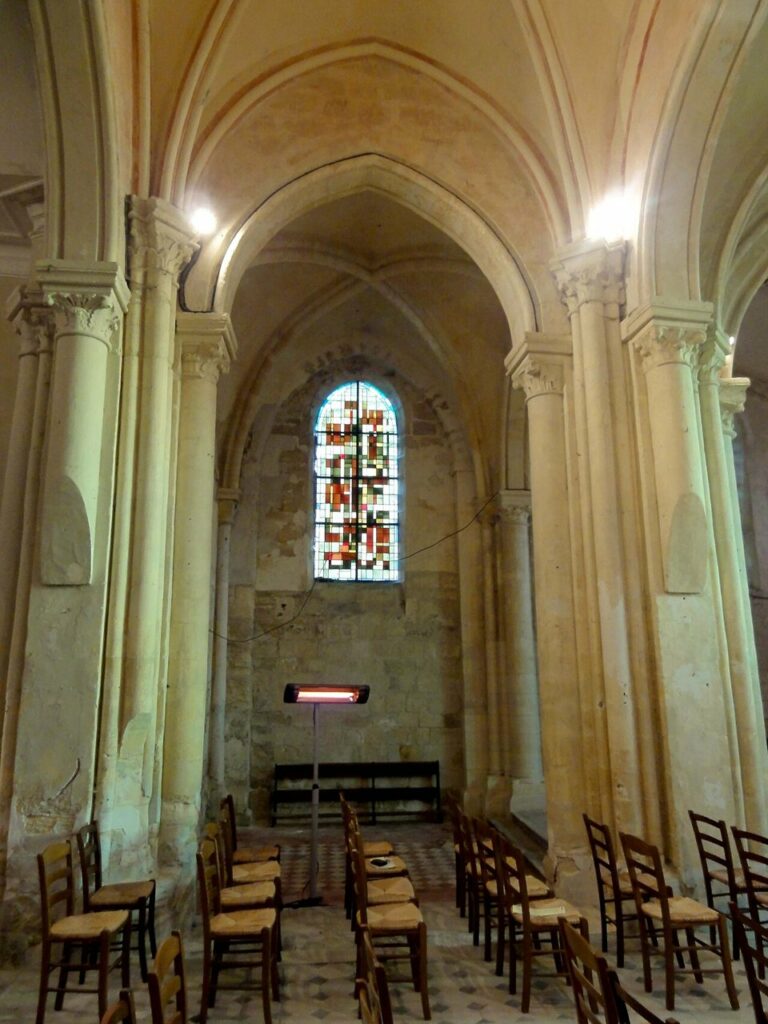
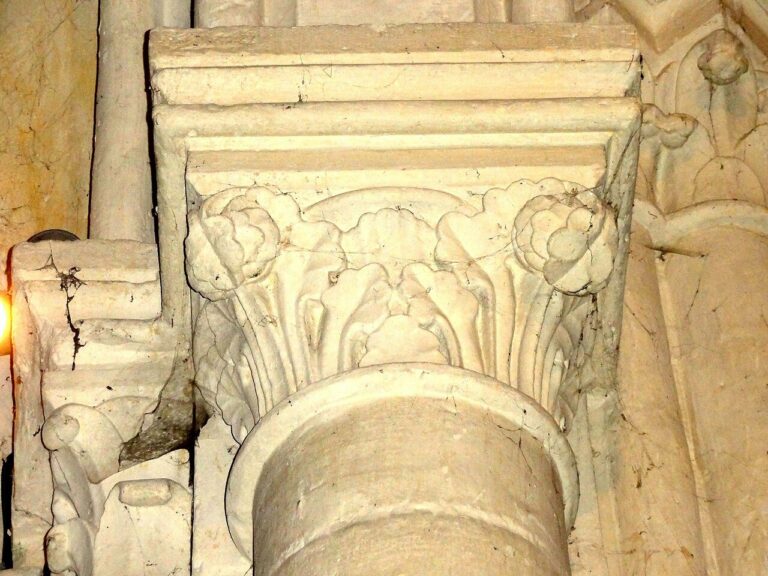
The present building took shape in stages, between about 1160 and 1220. Beyond the nave, modest and probably rebuilt in the 18th century, the visitor discovers a rib-vaulted chancel made up of three vessels of almost equal height: a “hall chancel”, a rarity in the region. Take the time to look at the capitals: their foliage is inspired by wetland plants. The bell tower, still Romanesque in appearance, received its belfry stage at the end of the Middle Ages.
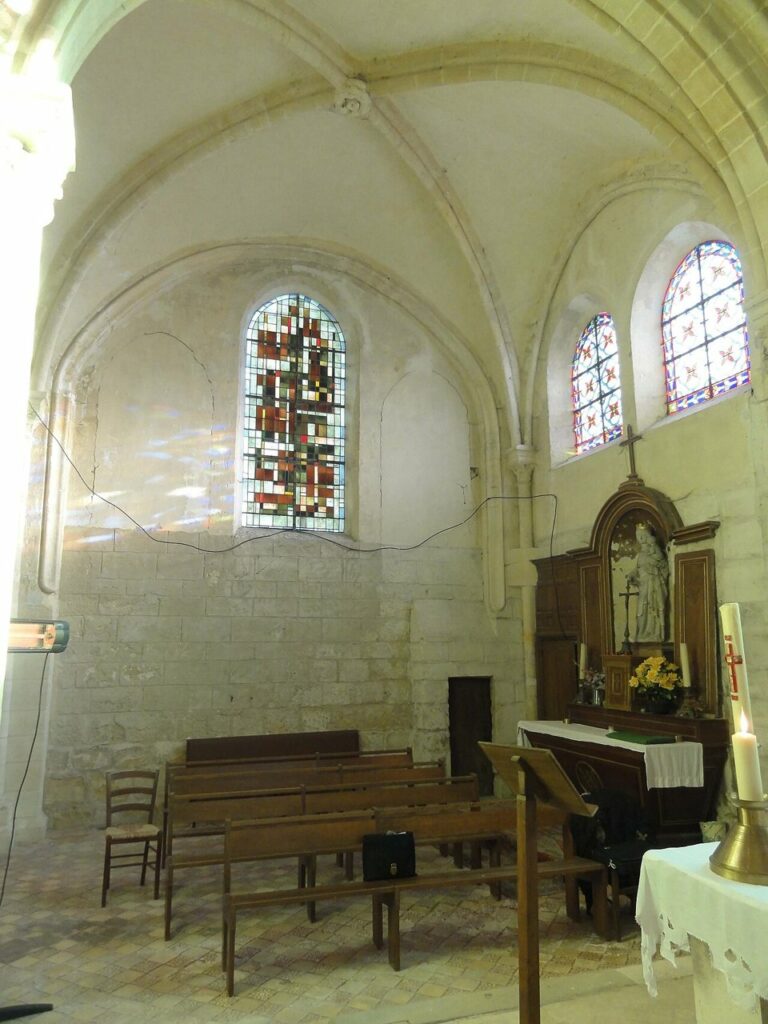
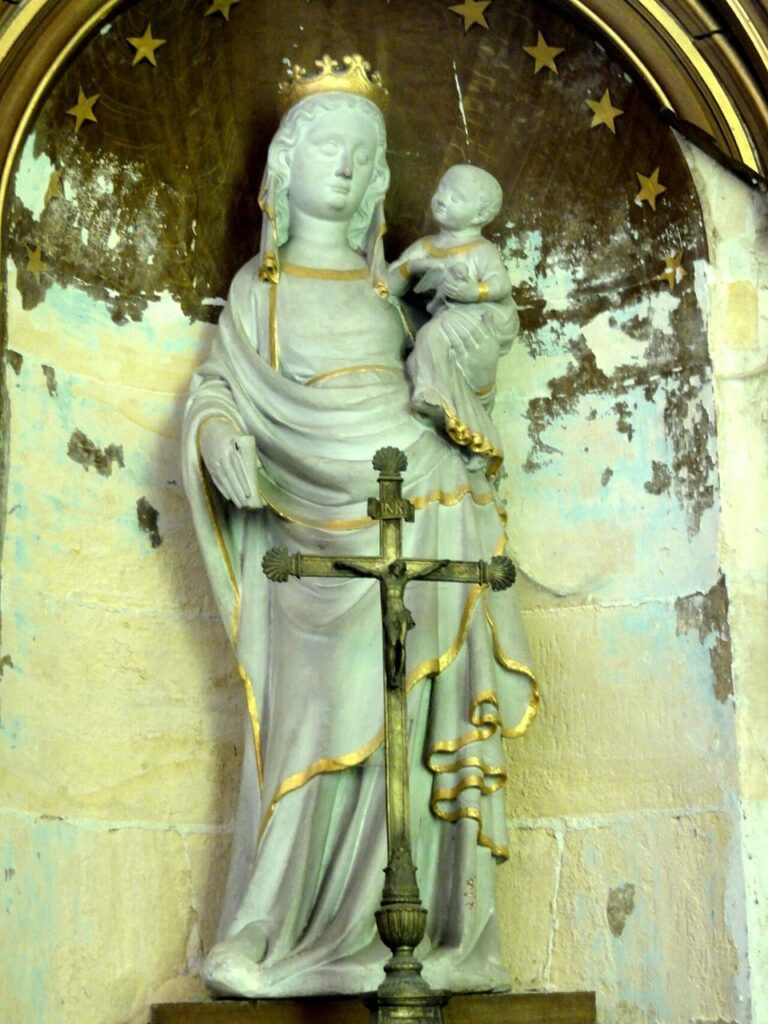
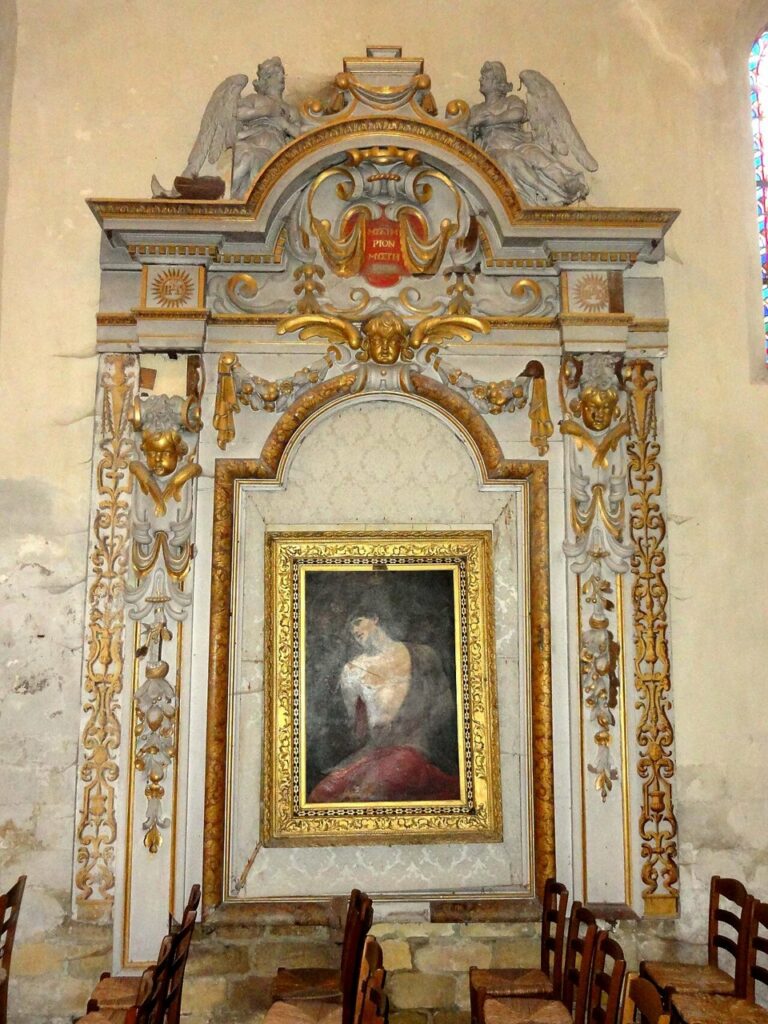
To the north, a chapel is dedicated to the Virgin Mary. In the nave, a Baroque altarpiece of carved wood, adorned with garlands and angels, recalls the Maupeou family, lords of Ableiges, who probably commissioned it. Dedicated to Saint Martin, the Bishop of Tours who shared his cloak with a poor man, the church hosts a few Masses a year within the parish of Avernes and Marines.
Saint Martin, patron saint of the church
Born in Pannonia around 316, Martin was a Roman soldier before his conversion; the episode in which he shares his cloak with a poor man at Amiens is the most famous of his life. A disciple of Hilary of Poitiers, he founded Ligugé and then Marmoutier, and became Bishop of Tours in 371. He died at Candes in 397. He is one of the most popular saints in France and the patron of thousands of country churches, not least in the Vexin.
Key dates
- AntiquityGallo-Roman sarcophagus, discovered beneath the bell tower around 1880
- 1071The Archbishop of Rouen gives the church to the Abbey of Saint-Denis
- c. 1160–1170Construction of the central vessel of the chancel and the base of the bell tower
- c. 1220Completion of the hall chancel with the north chapel
- Mid-13th centurySaint-Martin Church has about 120 parishioners; its parish priest is presented by the Abbot of Saint-Denis
- End of the Middle AgesBelfry stage of the bell tower, in the Flamboyant style
- 1802The parish of La Villeneuve-Saint-Martin is merged with that of Ableiges
- 1931The chancel is listed as a historic monument
- 1966The church becomes part of the new Diocese of Pontoise
In pictures










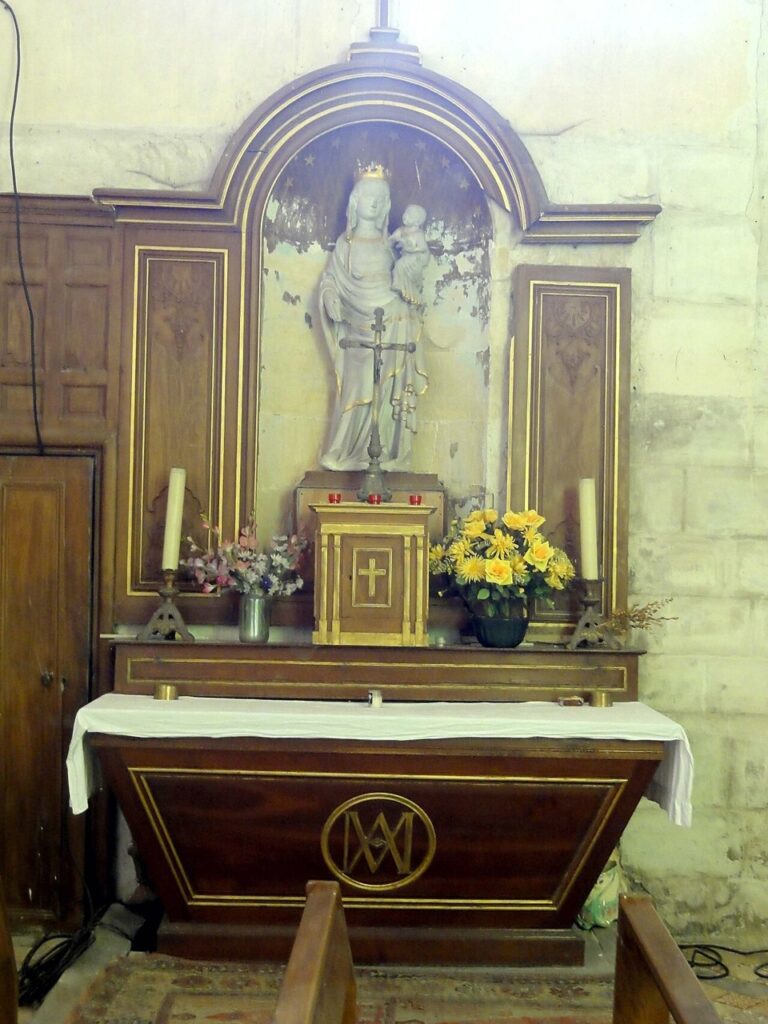

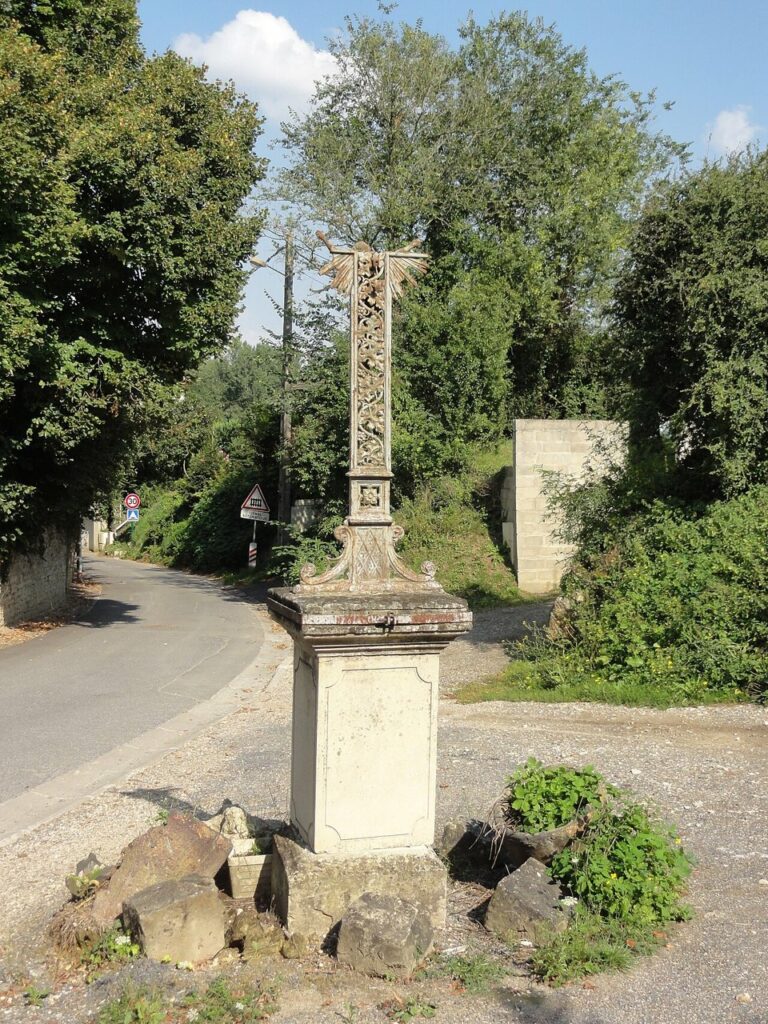

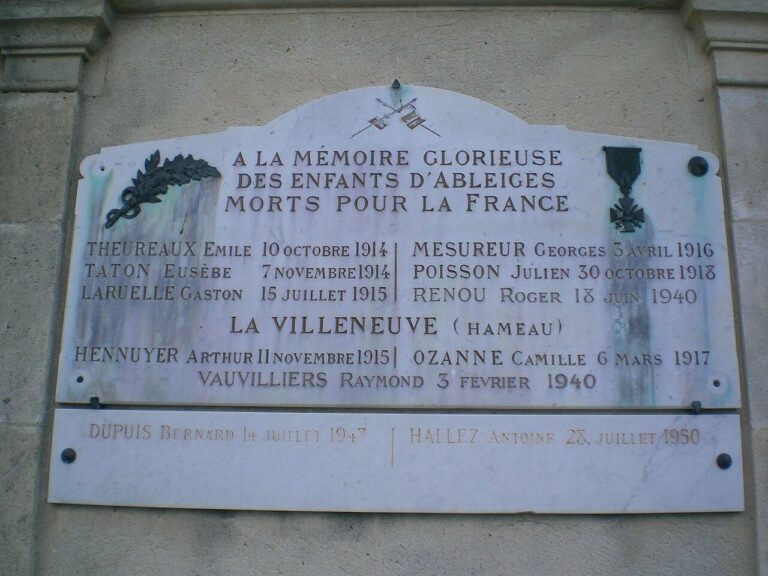

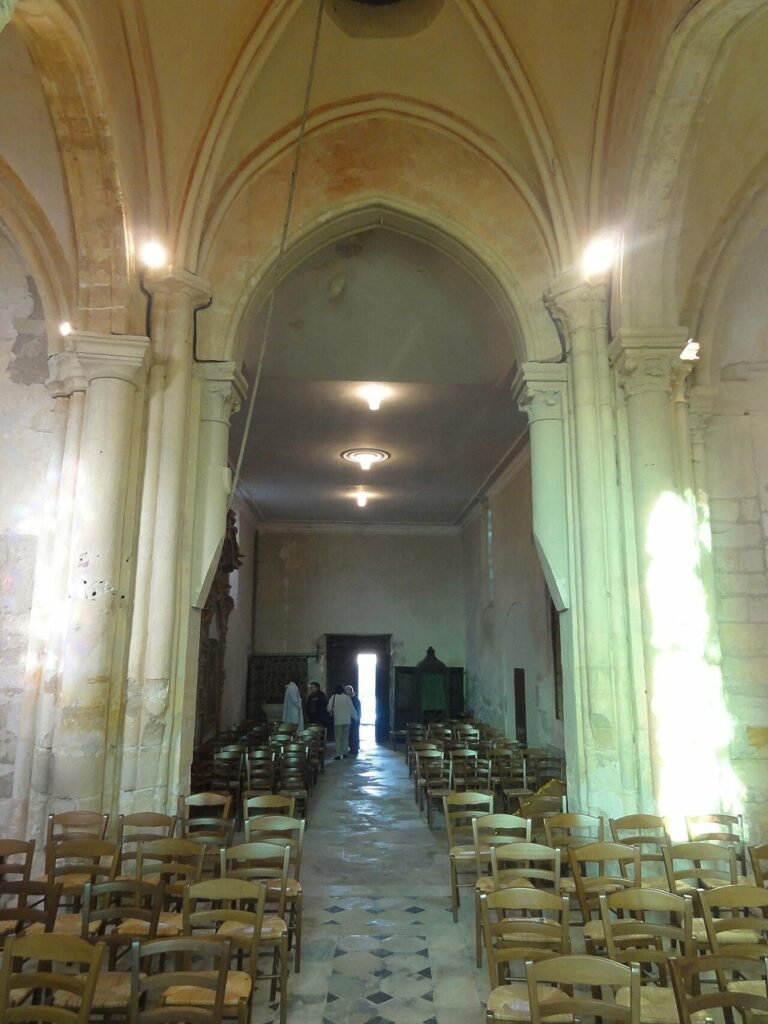



The church’s treasures
- Hall chancel: three rib-vaulted vessels of almost equal height, 12th–13th century (listed)
- Chancel capitals: foliage inspired by wetland plants
- Baroque altarpiece: wood carved with garlands, angels and a cherub's head, 17th century
- Bell tower: Romanesque-style first stage with openings decorated with flowers, belfry from the end of the Middle Ages
Find out more
Open a section to read the details.
Detailed history
- 1071An agreement between John, Archbishop of Rouen, and the Abbot of Saint-Denis cedes to the abbey the revenues of the altars of Cormeilles, Sagy, Boissy-l'Aillerie, Montgeroult and Ableiges. From now on it is the Abbot of Saint-Denis who presents the parish priest.
- Before 1164According to a charter of the Abbey of Saint-Martin in Pontoise, Hugh of Amiens, Archbishop of Rouen, confirms to that abbey lands and tenants at Ableiges, given by a certain Anculf and his ancestors. These are lands, not the church.
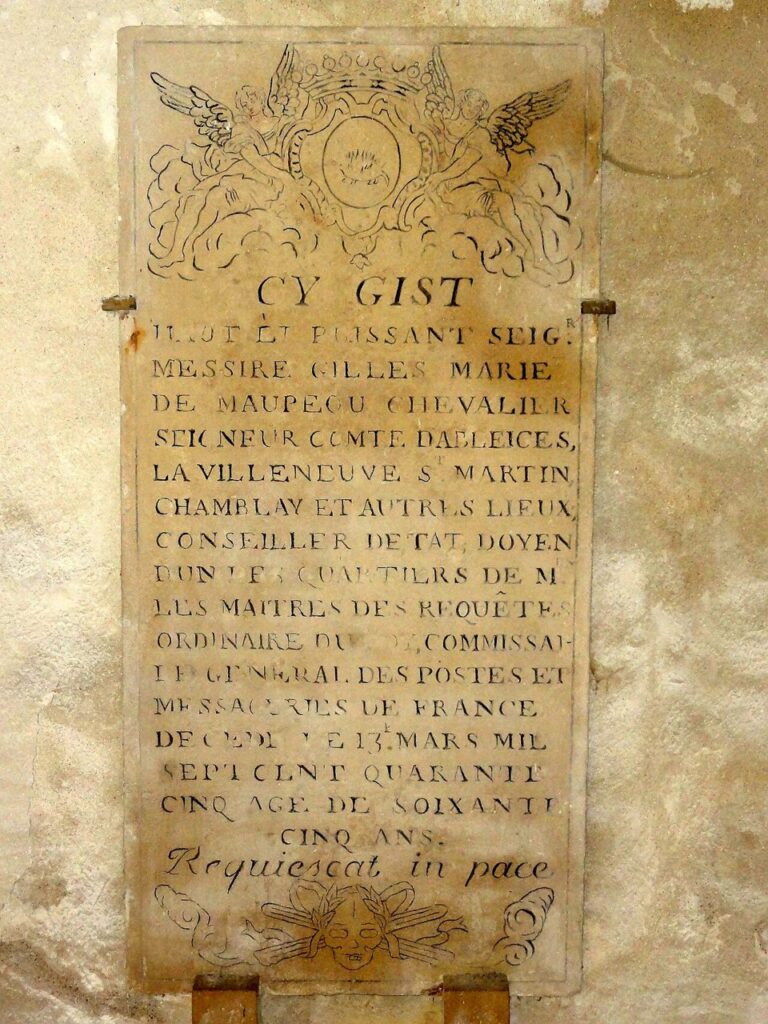
- 1745Death of Gilles V Marie de Maupeou, Count of Ableiges.
- February – March 1789Before the Estates General, the parish priest of Ableiges, named Lalouette, receives at the presbytery his summons to the assembly of the clergy of the bailiwick of Pontoise.
- RevolutionThe parish leaves the Diocese of Rouen for the new Diocese of Versailles, that of Seine-et-Oise.
- c. 1880Abbé Marchand reports to the Société historique du Vexin the Gallo-Roman sarcophagus found beneath the bell tower. At the same period, a burial ground of 42 graves, accompanied by vessels, is excavated at Ableiges; in 1889 the local press speaks of a “Merovingian cemetery”.
- 1885The funerary inscription of Gilles de Maupeou, recorded in the church, is communicated to the Commission des antiquités et des arts de Seine-et-Oise.
- 1939–1945The listed church suffers only war damage judged to be slight.
Architecture
The plan is simple and symmetrical: a porch, a single nave covered by a flat ceiling, then the chancel. The chancel has six rib-vaulted bays, arranged in three vessels, and ends in a flat east end, that is, a straight wall, pierced by narrow windows grouped in pairs.
The first bay of the chancel carries the bell tower, crowned by a slate pyramid. Its first stage keeps round-headed openings, decorated with violet flowers. A historian writing in 1903 places it among the “mixed” bell towers: the original tower is partly hidden beneath the roofs, which have since been raised, and the upper parts are later.
The capitals of the central vessel, of fine quality, recall those of Bréançon and Chars. On each side, a narrow vaulted passage links the nave to the two arms of the transept: these are known as “Berry passages” (passages berrichons).
A departmental study places the chancel roof structure among the timber roofs of the years 1220–1250, on the basis of its form. The same study notes a part added at the beginning of the 14th century and timbers carved in the 16th century.
- c. 1160–1170Central vessel of the chancel, base and first stage of the bell tower.
- Late 12th – early 13th centurySouth transept arm and south side chapel.
- 1220sNorth transept arm and north side chapel, dedicated to the Virgin.
- Late Middle AgesBelfry stage, in the Flamboyant Gothic style.
- Second half of the 16th – 17th centuryReworking of one keystone in the chancel and of a few capitals.
- 18th centuryCeiled nave, porch, sacristy and Berry passages: the dating is probable.
The parish in earlier times
Under the Ancien Régime, Ableiges belongs to the deanery of Meulan, in the archdeaconry of the French Vexin and the Diocese of Rouen. In the mid-13th century, the register of parishes of Archbishop Eudes Rigaud names the church “Sancti Martini de Bleges”: it is therefore already dedicated to Saint Martin. Its income is put at 25 livres parisis, and the Abbot of Saint-Denis has presented a priest named John to it.
In 1337, the register of the deanery of Meulan still gives the Abbot of Saint-Denis as patron of the living: it is he who chooses the parish priest.
Did you know?
The first stage of the bell tower looks Romanesque, but it actually dates from the beginnings of Gothic, around 1170: a crocket capital gives it away.
The Berry passages here are a late and rare example: they probably date from the 18th century.
The neighbouring hamlet is called La Villeneuve-Saint-Martin, but it is the church of Ableiges that is dedicated to Saint Martin; the hamlet's church bears the name of Our Lady of the Assumption.
According to some authors, the roof space of the nave was once used as a barn.
Further reading
Other photos and documents about this church can be found on other websites; we cannot reproduce them all here, but you can look at them there:
- Wikimedia Commons: freely licensed photos of the churchNearly 60 freely licensed photos: bell tower, chevet and chapels seen from outside; inside, the chancel, transept arms, base of the bell tower and north and south chapels from several angles.
- Wikipedia: article on the churchDetailed article: location, history, description (overview, interior, exterior) and furnishings of Saint-Martin Church; some sixty images and a bibliography.
- Ableiges town hall: history of the communeParagraph on Saint-Martin Church: the town hall mentions the 13th-century chancel, an altarpiece of the Charity of Saint Martin, a 14th-century Virgin, an “Angélique” bell of 1763 and the Maupeou burial vault.
- Ministère de la Culture (POP): protected object in the churchThe record describes a 14th-century stone Virgin and Child, listed in 1908 (2 photos); the database also records, for this church, a painting of Saint Sebastian dated 1888.
- Ministère de la Culture (POP): record of the churchOfficial protection record (partial listing in 1931): listed parts, centuries of construction and references of the order; no photograph online for this building.
- Wikipedia (German): article on the churchShort entry in German (about 200 words): history of the Romanesque and Gothic church and the main furnishings, based on Patrimoine des communes du Val-d'Oise.
Sources for this page
- Base Mérimée, notice PA00079971 « Église » (Ableiges) — link
- Base Palissy, notice PM95000001 « statue : Vierge à l'Enfant » — link
- Base Palissy, notice PM95001332 « tableau du retable latéral sud : Saint Sébastien » — link
- Wikipédia, « Église Saint-Martin d'Ableiges » — link
- Bernhard Duhamel, Guide des églises du Vexin français, Valhermeil, 1988, p. 35-36
- Vital Jean Gautier, Pouillé du diocèse de Versailles, 1876, p. 48 et 251 — link
- Wikipédia, « Ableiges » — link
- Paroisse de Marines, calendar of Masses and feasts — link
- clochers.org, fiche INSEE 95002 Ableiges — link
- Base Mémoire (POP), photographies du ministère de la Culture, export officiel memoire (photos non libres : © Ministère de la Culture, MPP, diffusion GrandPalaisRmn) — link
- Wikimedia Commons, catégorie « Église Saint-Martin d'Ableiges » — link
- MSHAPV, t. III-IV (1881), procès-verbaux et chroniques — Internet Archive — link
- MSHAPV, t. XV-XVIII (1895-1896), bibliographie et catalogues de vente — Internet Archive — link
- MSHAPV, procès-verbaux et bibliographie (volume relié, années 1880) — Internet Archive — link
- Eugène Lefèvre-Pontalis, « L'église de Cormeilles-en-Vexin (Seine-et-Oise) », Bulletin monumental, t. 75, 1911, p. 265-276 — link
- Paul Coquelle, « Les clochers romans du Vexin français et du Pincerais », Mémoires de la Société historique et archéologique de Pontoise et du Vexin (MSHAPV), t. XXV, 1903 (classification p. 65) — Internet Archive — link
- Jean Verrier, « Les dommages de guerre aux édifices classés parmi les Monuments historiques et inscrits », Bulletin monumental, t. 104, 1946, p. 207-247 (codes p. 207-208 ; Seine-et-Oise p. 243) — link
- Wikipédia en allemand, « St-Martin (Ableiges) » (d'après Le Patrimoine des communes du Val-d'Oise, Flohic, 1999, p. 986) — link
- Mairie d'Ableiges, « Histoire de la commune » (consultée le 17/11/2026) — link
- Polyptychum Rotomagensis diœcesis (pouillé dit d'Eudes Rigaud, milieu du XIIIe siècle), éd. dans Recueil des historiens des Gaules et de la France, t. XXIII, Paris, 1876, p. 316-327 — Internet Archive — link
- Auguste Longnon (éd.), Pouillés de la province de Rouen (Recueil des historiens de la France, Pouillés, t. II), Paris, 1903, pouillé de 1337 — Internet Archive — link
- Ernest Mallet (éd.), Les élections du bailliage secondaire de Pontoise en 1789, Pontoise, Société historique du Vexin, 1909 (assignations du clergé ; inventaire des cahiers par communauté) — Internet Archive — link
- Louis Régnier, « Cloches et fondeurs de cloches, notes recueillies dans les départements de l'Eure, de l'Oise et de Seine-et-Oise », Bulletin archéologique du Comité des travaux historiques et scientifiques, 1895, p. 399-457 — Internet Archive — link
- Joseph Depoin (éd.), Cartulaire de l'abbaye de Saint-Martin de Pontoise, Pontoise, Société historique du Vexin, 1895-1909, fascicule 2, charte CXXII (confirmation par Hugues d'Amiens) — Internet Archive — link
- « L'évolution des charpentes d'églises du Val-d'Oise, du XIe au XXe siècle », Revue archéologique du Centre de la France, t. 47, 2008 (étude d'archéologie du bâti ; auteurs non nommés, personnes vivantes ; relue le 20/11/2026) — link
- Léon Plancouard, « La cloche de Marines (Seine-et-Oise) », Bulletin monumental, t. 72, 1908, p. 66-77 (note 2 p. 66 : cloches du canton antérieures à la Révolution) — link
- Mairie d'Ableiges, « Arrêté municipal : autorisation ponctuelle de survol d'un drone au-dessus des églises », avis du 11/04/2024 — link
Page compiled from the databases of the French Ministry of Culture and the Inventaire du patrimoine, and from documents of the parish, the diocese and the commune; checked in November 2026. An error, a memory, a photo to share? Contribute.
Have you noticed an error, would you like to add further information, or share photos you have taken of this church? Our team would be grateful if you let us know: contribute to this page (form in French).