
Our 38 churches › Avernes

Patron saint
Saint Lucian
first Bishop of Beauvais, martyr
Liturgical feast
Date not confirmed
Historic monument
Listed (1945)
3 protected works
Address
Rue de l'Église, 95450 Avernes
reached across the lawn of the old churchyard
Directions
The church is reached across the lawn of the old churchyard and through the north portal.
Upcoming Masses
- Sunday 2 May, 10:00 am
- Thursday 6 May, 10:00 am
- Sunday 9 May, 10:00 am
A Romanesque portal and a chancel drawn in perspective
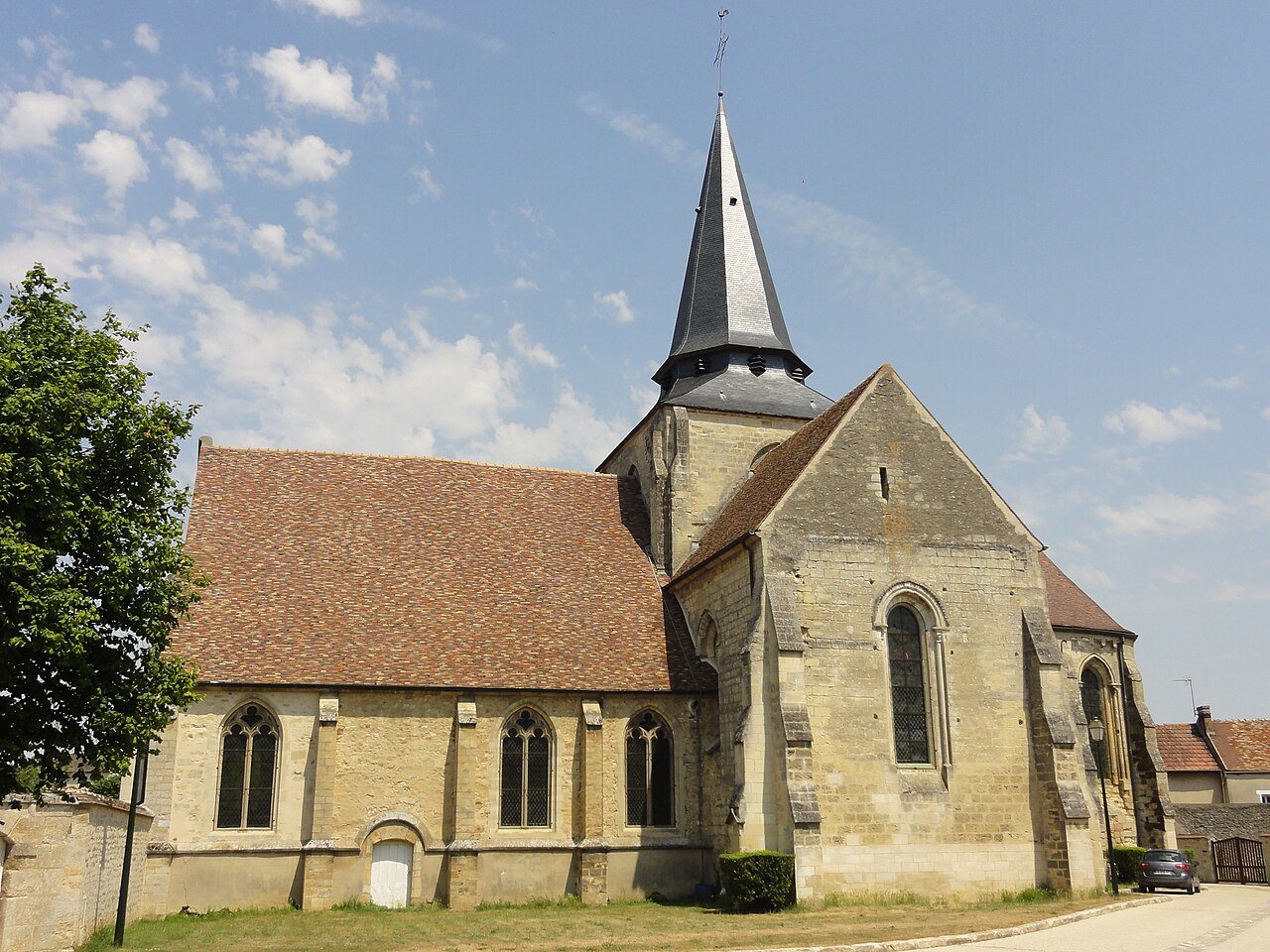
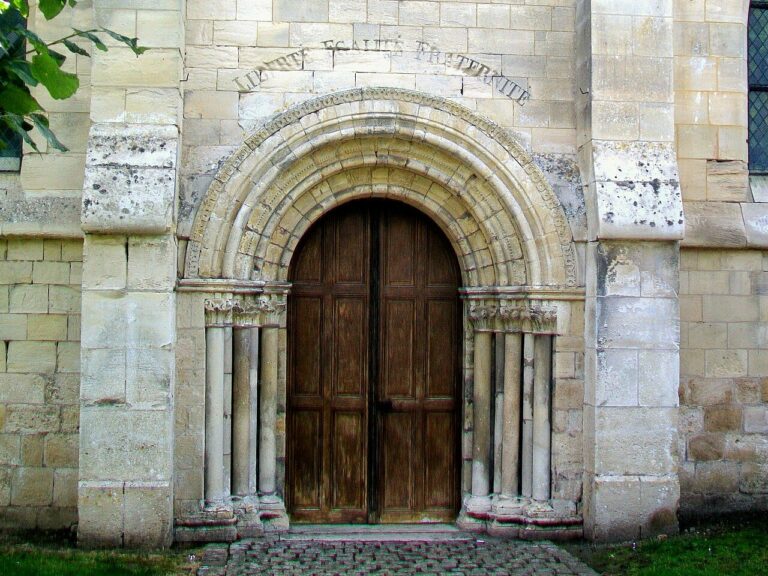
In the heart of Avernes, you reach Saint-Lucien Church by crossing the lawn of the old churchyard. It is dedicated to Saint Lucian, whom tradition presents as the apostle of the Beauvaisis and the first Bishop of Beauvais. Before going in, pause in front of the north portal: its archivolts and slender columns, from the middle of the 12th century, are the oldest surviving part of the building, and you can still read the motto “Liberté, Égalité, Fraternité”, carved during the Revolution when the church served as a Temple of Reason.
Inside, the nave, partly destroyed during the Hundred Years' War and then rebuilt at the end of the 15th century, and damaged once more during the Wars of Religion, leads to a transept crossing of surprising breadth, which keeps its oak-leaf capitals and traces of old paintwork. Beyond opens a bright chancel that gently narrows towards the altar, as if to draw the eye further on.
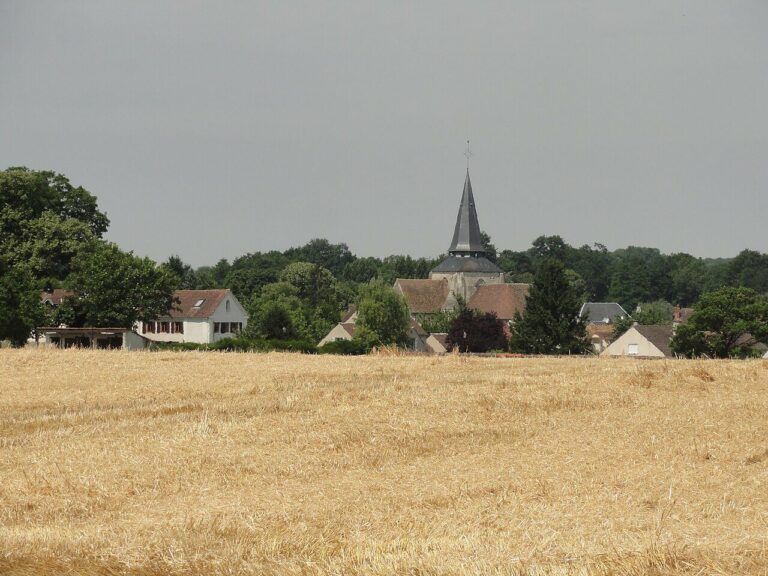
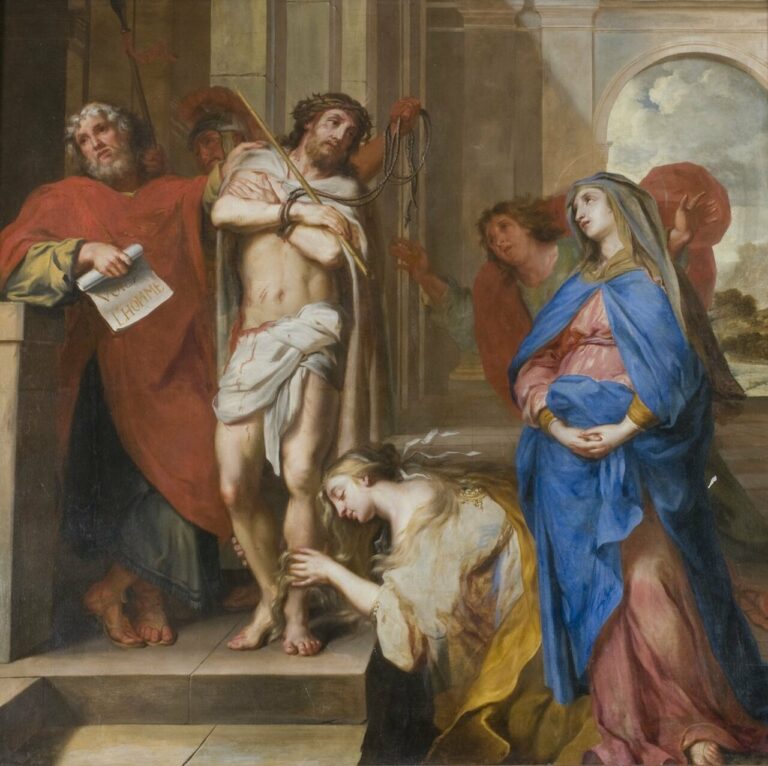
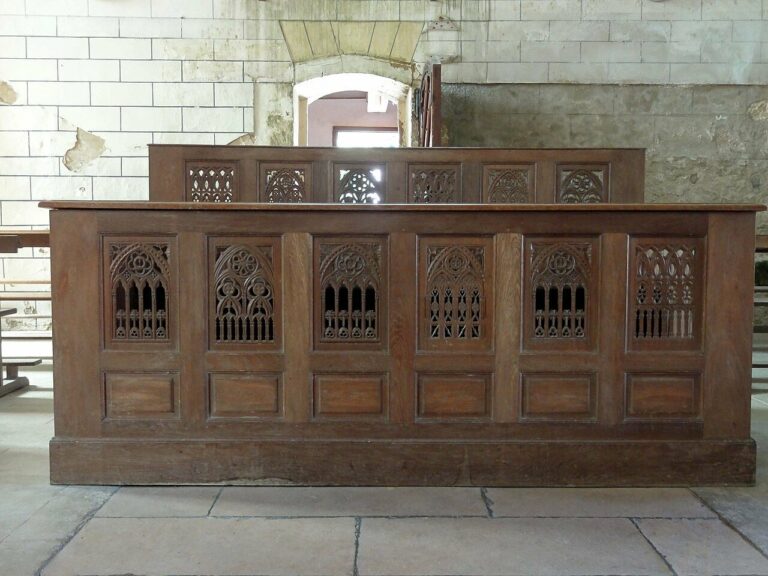
The squat bell tower carries a tall slate spire that houses the belfry; an 18th-century bell there is listed as a historic monument. Do not miss two elegant carved console tables from the time of Louis XV and a moving 17th-century “Ecce Homo”, attributed to the painter Frère Luc. Saint-Lucien remains one of the places of worship of the parish of Avernes and Marines.
In the Middle Ages the parish, already placed under the name of Saint Lucian in the middle of the 13th century, depended on the Priory of Sausseuse, a house of canons regular near Tilly, in Normandy. Two of its canons then lived in Avernes to serve the hundred or so parishioners, and in the 14th century the prior was still the patron of the living.
Saint Lucian, patron saint of the church
Lucian is venerated as the apostle of the Beauvaisis and the first Bishop of Beauvais. According to tradition, he came to evangelise the region in the 3rd century and was martyred there at the end of that century with two companions, Maximian and Julian. His cult is very widespread in the Oise and the neighbouring regions.
Key dates
- Mid-12th centuryFirst church, of which the north portal survives
- Late 12th – early 13th centuryConstruction of the chancel, the crossing and the bell tower
- 15th centuryDuring the Hundred Years' War the nave is partly destroyed
- Late 15th centuryThe nave is rebuilt
- RevolutionThe church becomes a Temple of Reason
- 19th centuryMajor restoration of the chancel, nave and transept arms
- 1945Listed as a historic monument
- 2015The “Ecce Homo” is registered as a historic monument
In pictures


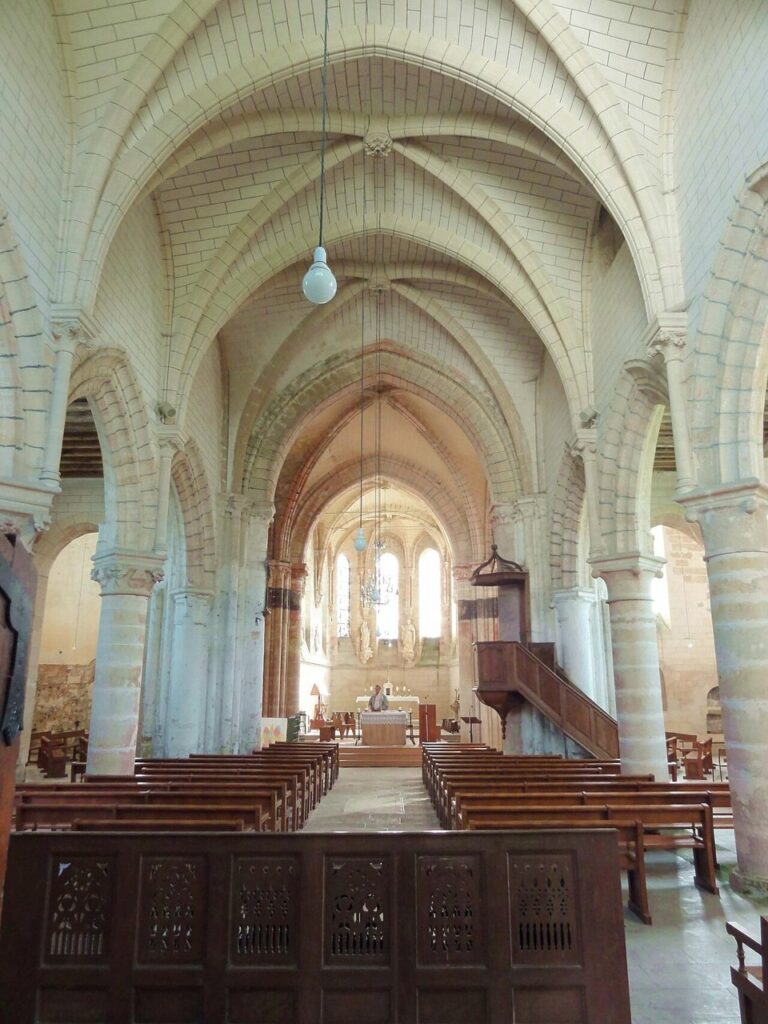

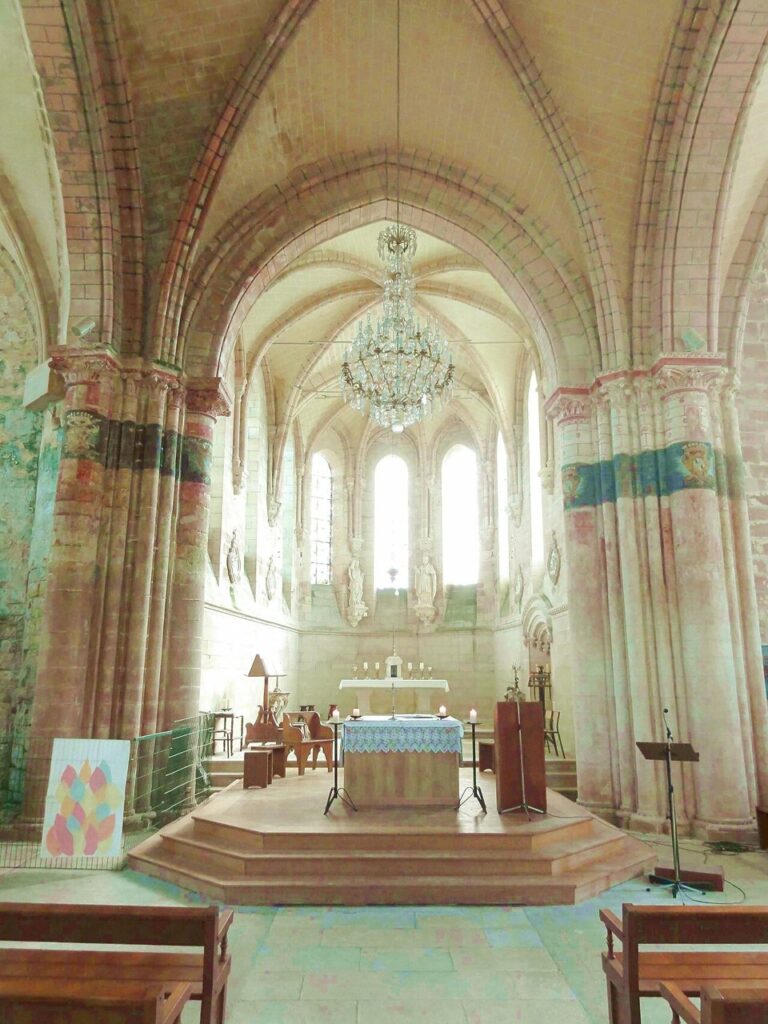

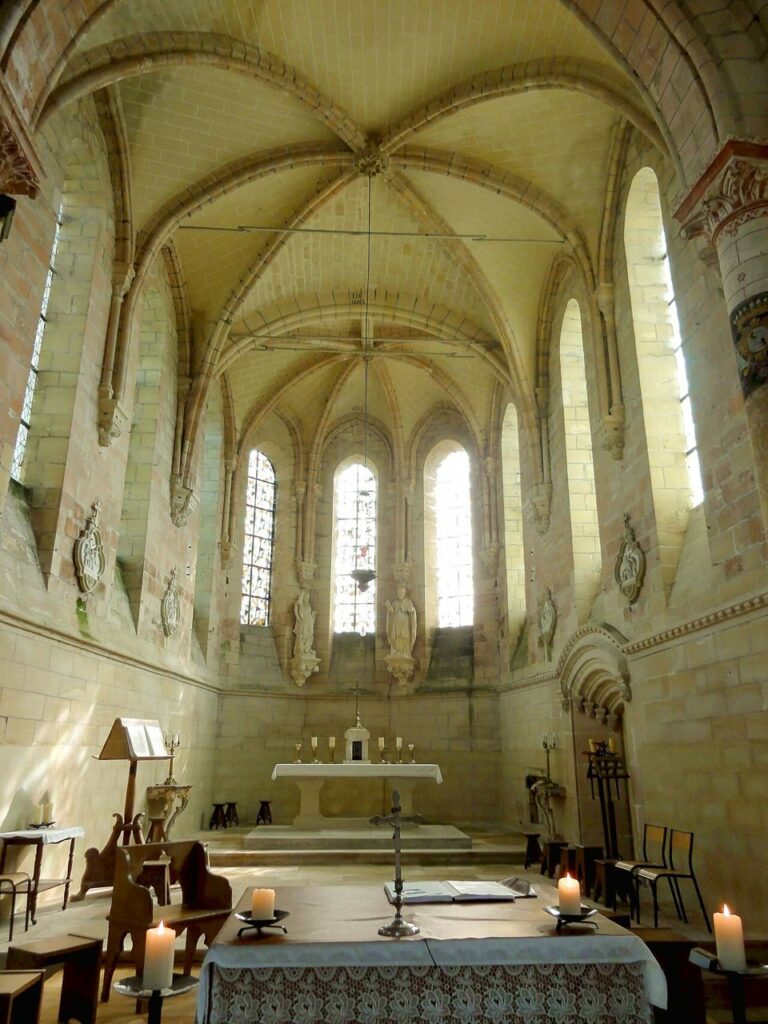

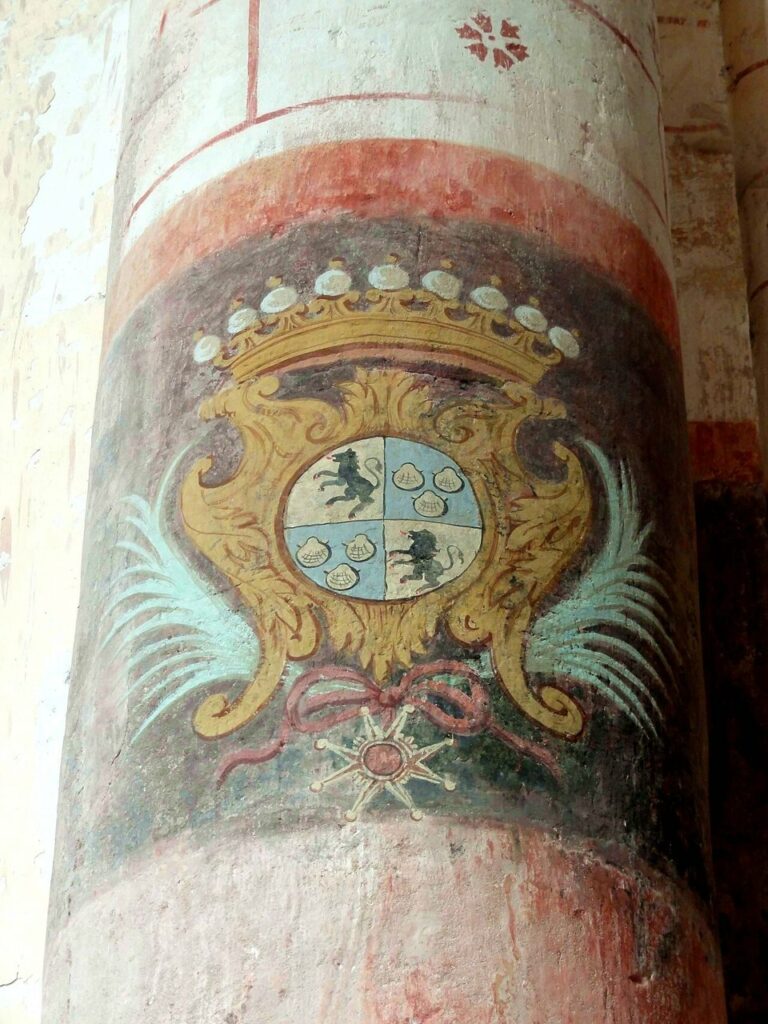


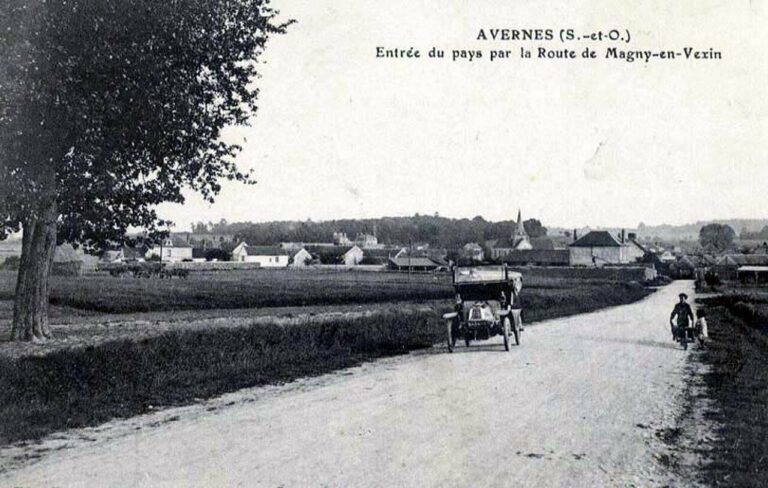



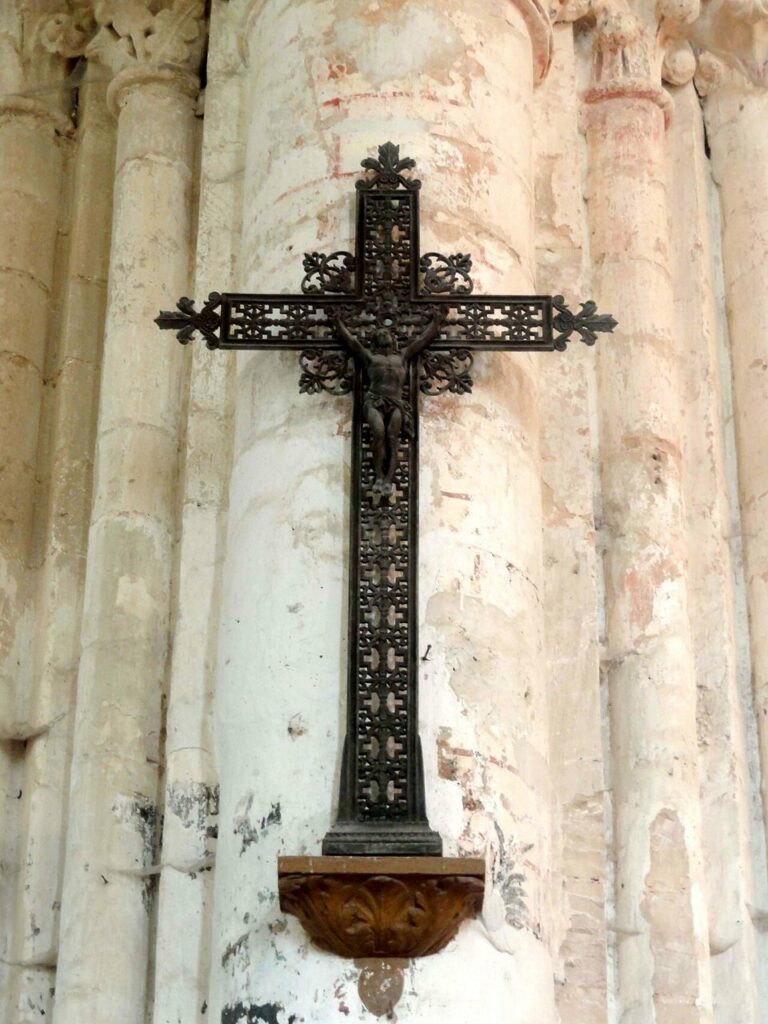

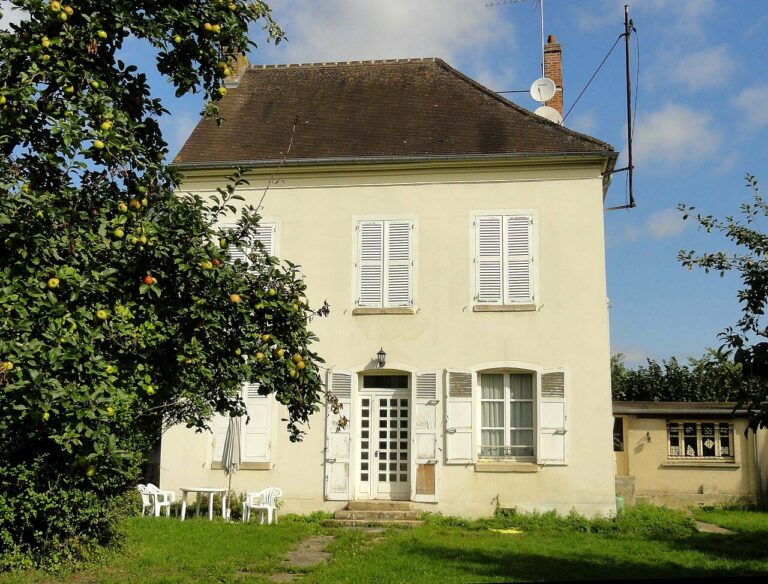

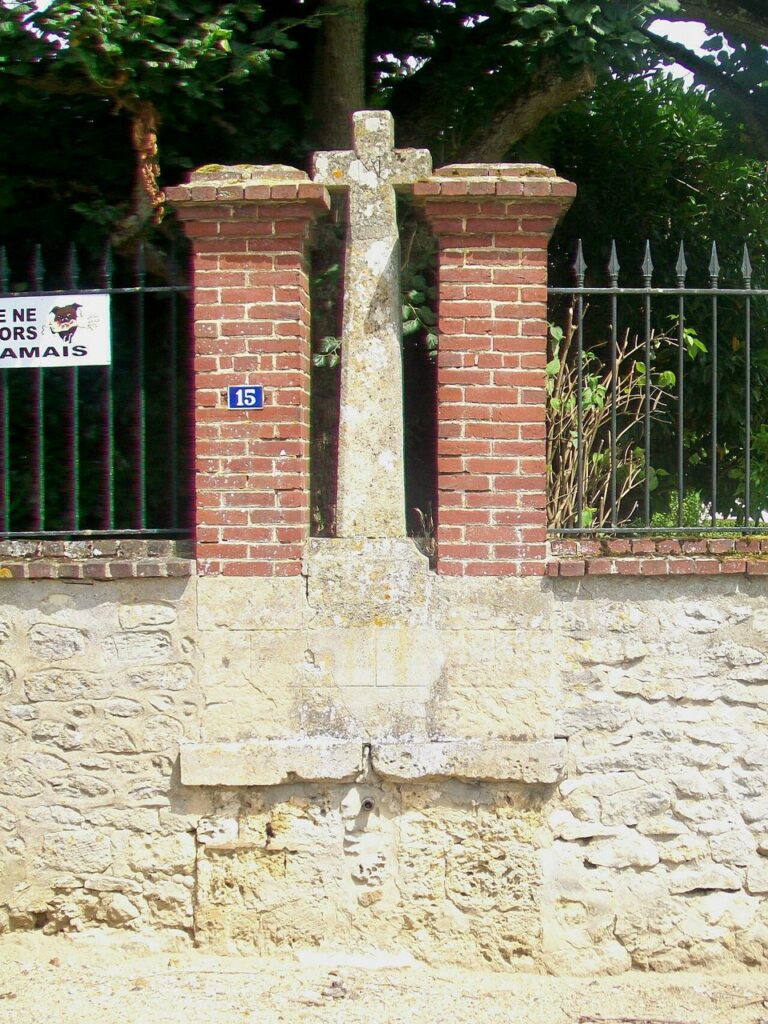

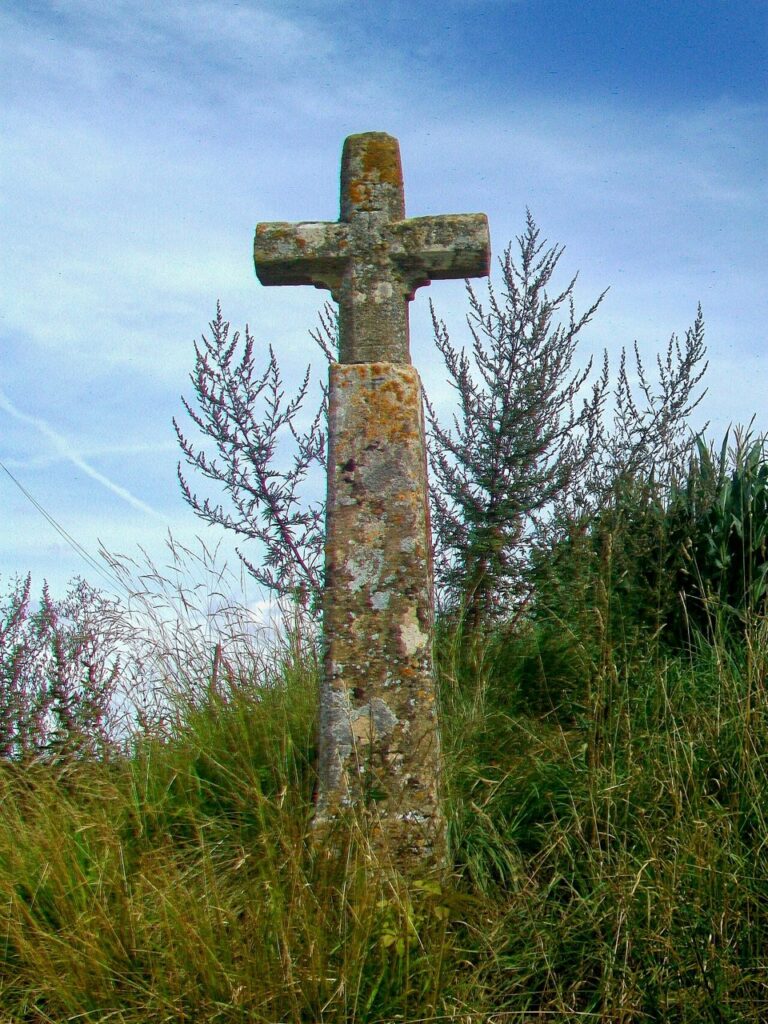


The church’s treasures
- North portal: triple archivolt and slender columns, mid-12th century
- Rocaille console tables: two tables of carved and gilded wood, Louis XV period (listed)
- “Ecce Homo”: oil on canvas attributed to Frère Luc, 17th century (registered)
- Bell: bronze, 18th century (listed)
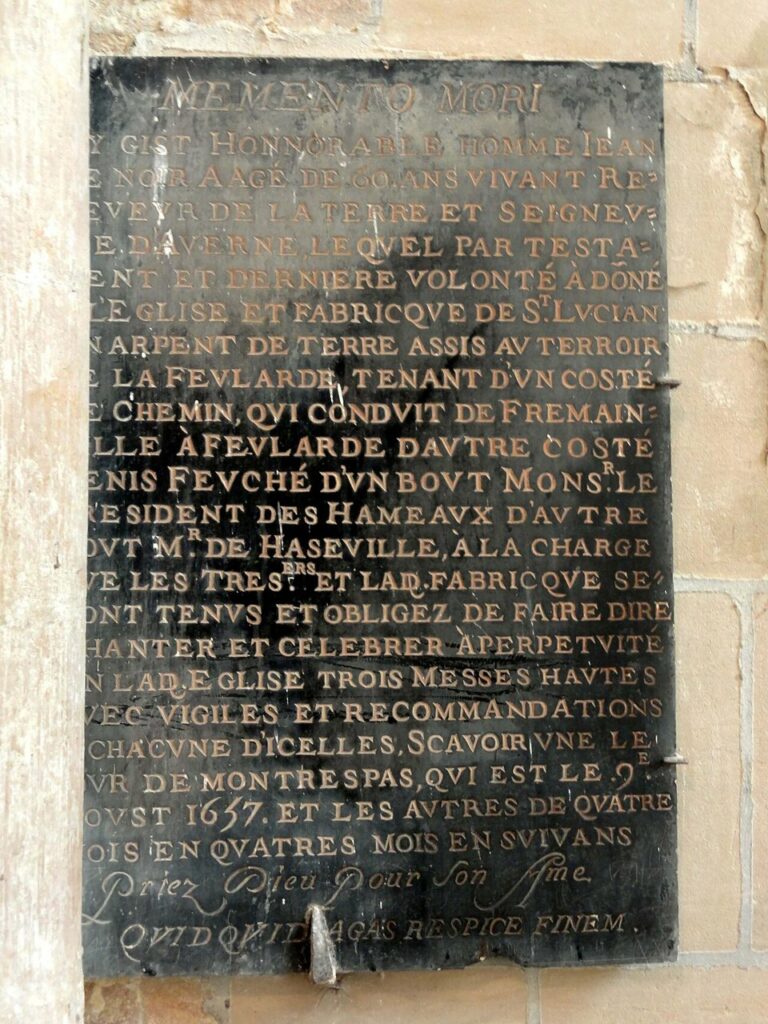
- Foundation plaque: black marble, for Jean Le Noir, receiver of the seigneury, who died in 1657
Further reading
Other photos and documents about this church can be found on other websites; we cannot reproduce them all here, but you can look at them there:
- Wikimedia Commons: freely licensed photos of the churchAbout 80 freely licensed photos: west portal and its capitals, chancel, transept arms, cornices; inside, the nave, aisles, crossing with seigneurial mourning band (litre), and a plan.
- Ministère de la Culture (POP): record and photos of the churchRecord of the church, listed in 1945, with 25 photos: north portal and its capitals, apse, nave, chancel, pulpit, carved console tables and exterior views.
- Wikipédia: article on the churchDetailed article: location, history, description of the interior and exterior, furnishings of Saint-Lucien Church; some sixty illustrations and a bibliography.
- Ministère de la Culture (POP): protected object in the churchTwo carved 18th-century console tables, listed in 1914: 4 photos. The church's other protected objects are an 18th-century bell and a painting of the Ecce Homo.
- Wikipédia (German): article on the churchFairly full German article (about 500 words): history, description of the Romanesque and Gothic architecture, portal, windows, plan and furnishings of Saint-Lucien Church.
Sources for this page
- Base Mérimée, PA00079996 « Église Saint-Lucien » — link
- Base Palissy, PM95000052 « 2 consoles » — link
- Base Palissy, PM95000053 « cloche » — link
- Base Palissy, PM95001191 « tableau : Ecce Homo » — link
- Wikipédia, « Église Saint-Lucien d'Avernes » — link
- Bernhard Duhamel, Guide des églises du Vexin français, 1988, p. 55-56
- Pierre Coquelle, « Les clochers romans du Vexin français et du Pincerais », Mémoires de la Société historique de Pontoise, 1903 — link
- Diocèse de Pontoise, « Journées du patrimoine 2026 » — link
- Paroisse de Marines, calendar of Masses and feasts — link
- clochers.org, fiche INSEE 95040 Avernes — link
- Base Mémoire (POP), photographies du ministère de la Culture, export officiel memoire (photos non libres : © Ministère de la Culture, MPP, diffusion GrandPalaisRmn) : séries de photos de l'église par Félix Martin-Sabon (avant 1897) et de la Commission des antiquités de Seine-et-Oise (1925) — link
- Wikimedia Commons, catégorie « Église Saint-Lucien d'Avernes » — link
- Paul Coquelle, « Les portails romans du Vexin français et du Pincerais », MSHAPV, t. XXVII, 1906, p. 41-60 — Internet Archive — link
- Léon Plancouard, « La cloche de Marines (Seine-et-Oise) », Bulletin monumental, t. 72, 1908, p. 66-77 (note 2 p. 66 : liste des cloches du canton de Marines antérieures à la Révolution) — link
- Notice sur le canton de Magny-en-Vexin, 1872, p. 62-63 — link
- Paroisse de Marines, feuille paroissiale n°84 (3 octobre 2026) — link
- Paroisse de Marines, agenda Google public (export ICS, 2008-2023) — link
- Wikipédia en allemand, « St-Lucien (Avernes) » (d'après Flohic, 1999, p. 986-987) — link
- Commune d'Avernes, « Découvrir Avernes » et « Un peu d'histoire » (couvent, Ecce Homo, curé de Caix, août 1944) — link
- Commune d'Avernes, procès-verbaux des conseils municipaux (08/03/2016, 07/07/2020, 2020-2021) — link
- Polyptychum Rotomagensis diœcesis (pouillé dit d'Eudes Rigaud, milieu du XIIIe siècle), éd. dans Recueil des historiens des Gaules et de la France, t. XXIII, Paris, 1876, p. 316-327 — Internet Archive — link
- Auguste Longnon (éd.), Pouillés de la province de Rouen (Recueil des historiens de la France, Pouillés, t. II), Paris, 1903, pouillé de 1337 — Internet Archive — link
- Louis Régnier, « Cloches et fondeurs de cloches, notes recueillies dans les départements de l'Eure, de l'Oise et de Seine-et-Oise », Bulletin archéologique du Comité des travaux historiques et scientifiques, 1895, p. 399-457 — Internet Archive — link
- Joseph Depoin (éd.), Cartulaire de l'abbaye de Saint-Martin de Pontoise, Pontoise, Société historique du Vexin, 1895-1909, charte XCIV (don de la dîme d'Avernes, avant novembre 1135) — Internet Archive — link
Page compiled from the databases of the French Ministry of Culture and the Inventaire du patrimoine, and from documents of the parish, the diocese and the commune; checked in November 2026. An error, a memory, a photo to share? Contribute.
Have you noticed an error, would you like to add further information, or share photos you have taken of this church? Our team would be grateful if you let us know: contribute to this page (form in French).