
Our 38 churches › Brignancourt

Patron saint
Saint Peter in Chains
the Apostle freed from his chains by an angel
Liturgical feast
Not known for certain
Saint Peter in Chains was traditionally celebrated on 1 August
Historic monument
Listed (1910)
3 protected works
Address
Rue de l'Église, 95640 Brignancourt
Directions
Upcoming Masses
- Saturday 6 March, 6:00 pm
- Saturday 26 June, 6:00 pm
More than nine centuries of history in a few square metres
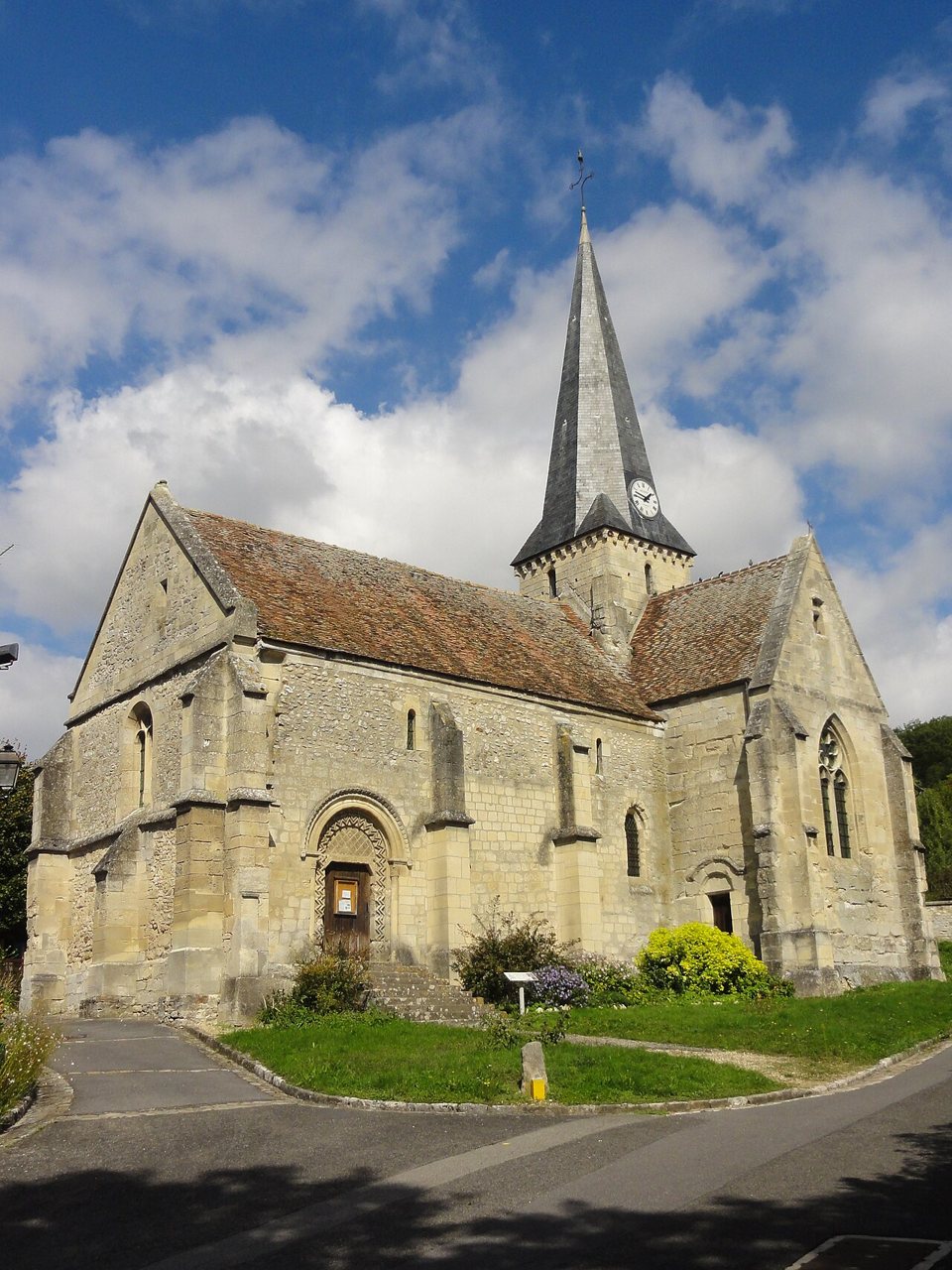
Perched above the Rue de l'Église, the little church of Brignancourt is among the oldest in our parish. It is placed under the patronage of Saint Peter, the Apostle who was thrown into prison in Jerusalem and then freed from his chains by an angel: hence the name Saint-Pierre-aux-Liens, “Saint Peter in Chains”.
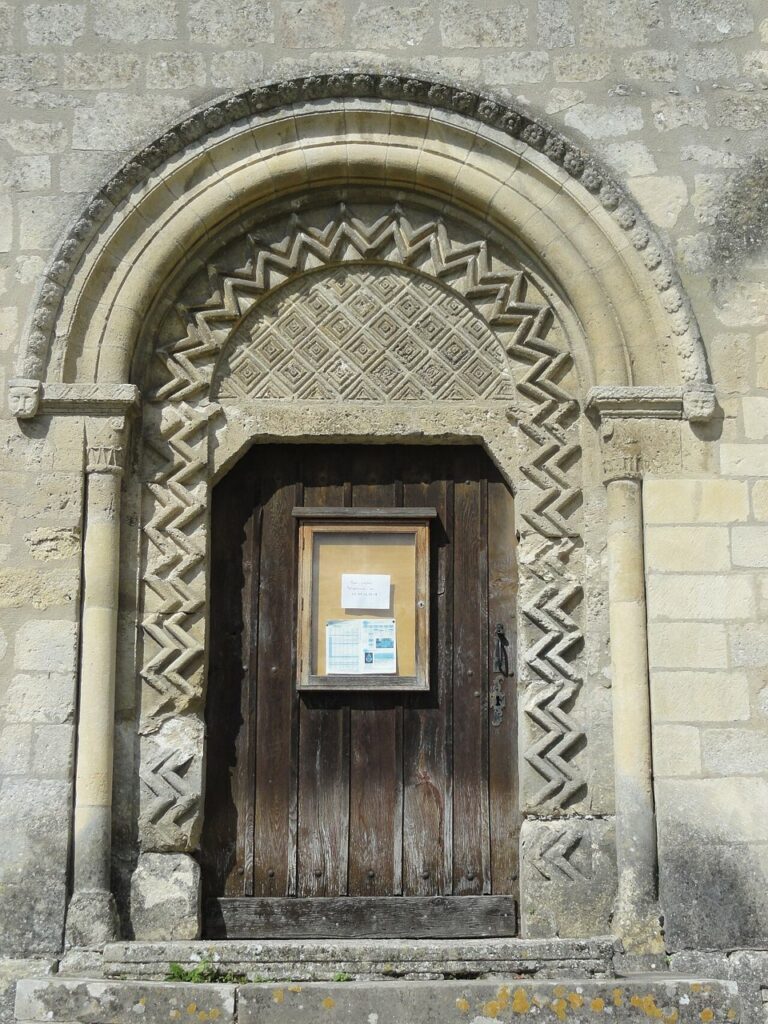
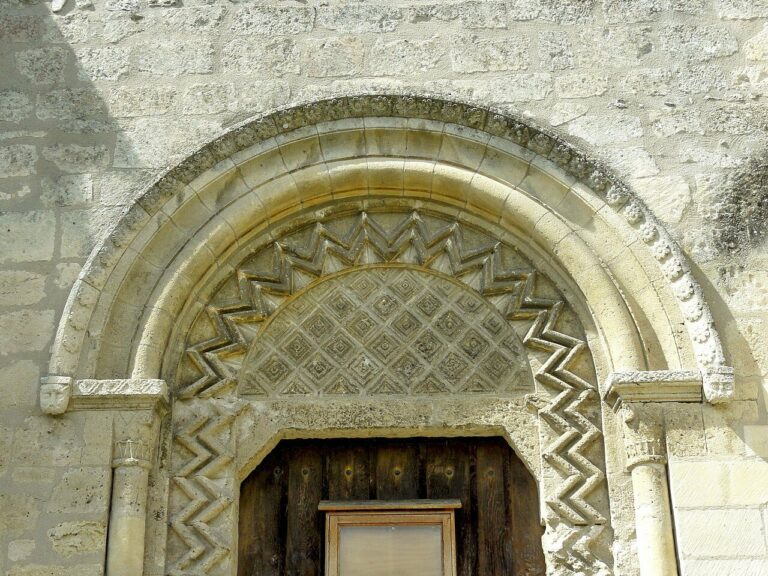
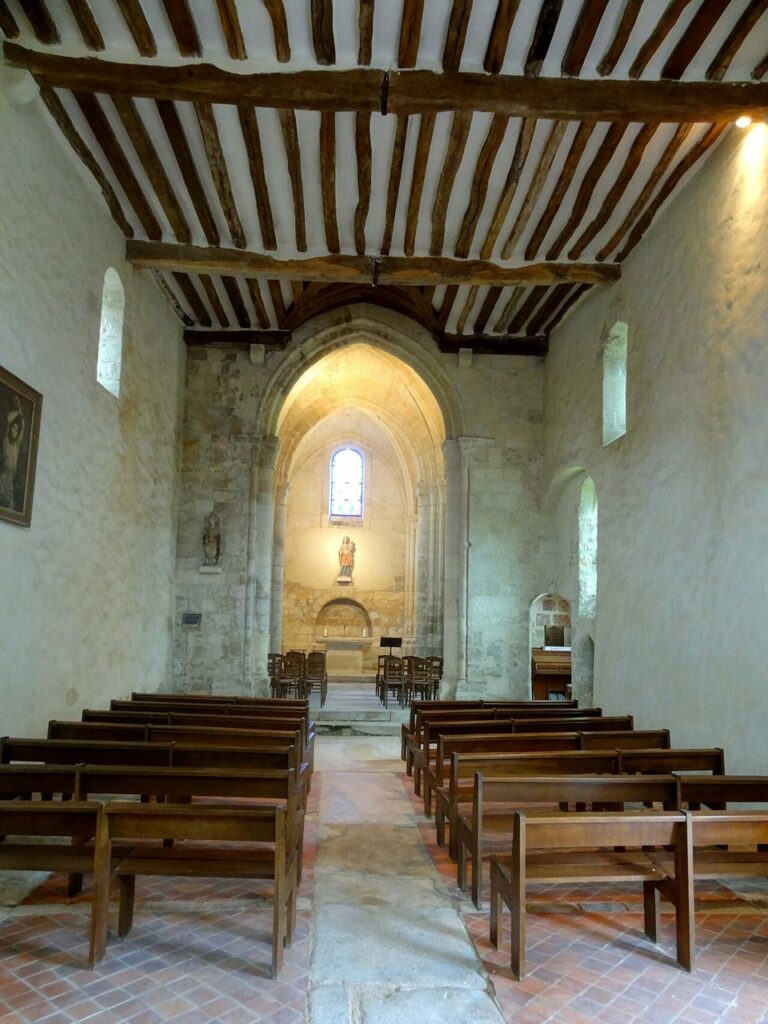
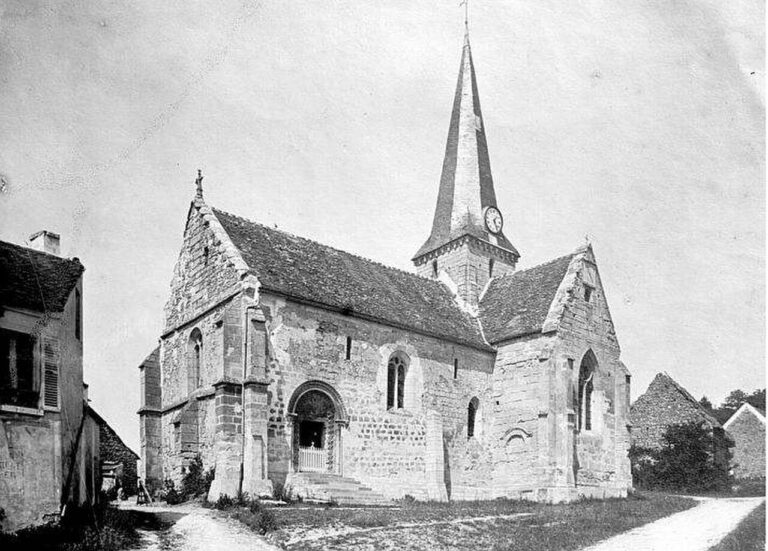
Its nave, a simple hall covered by a beamed ceiling, dates back to the end of the 11th century. Around the middle of the 12th century the chancel was rebuilt beneath a bell tower and a very fine Romanesque portal was opened: look at its chequered tympanum, cut in a single block with the lintel, and the double row of zigzags (chevrons) running down to the ground beneath a frieze of daisies. As there is no room to the west, it is in fact the south side that serves as the façade.
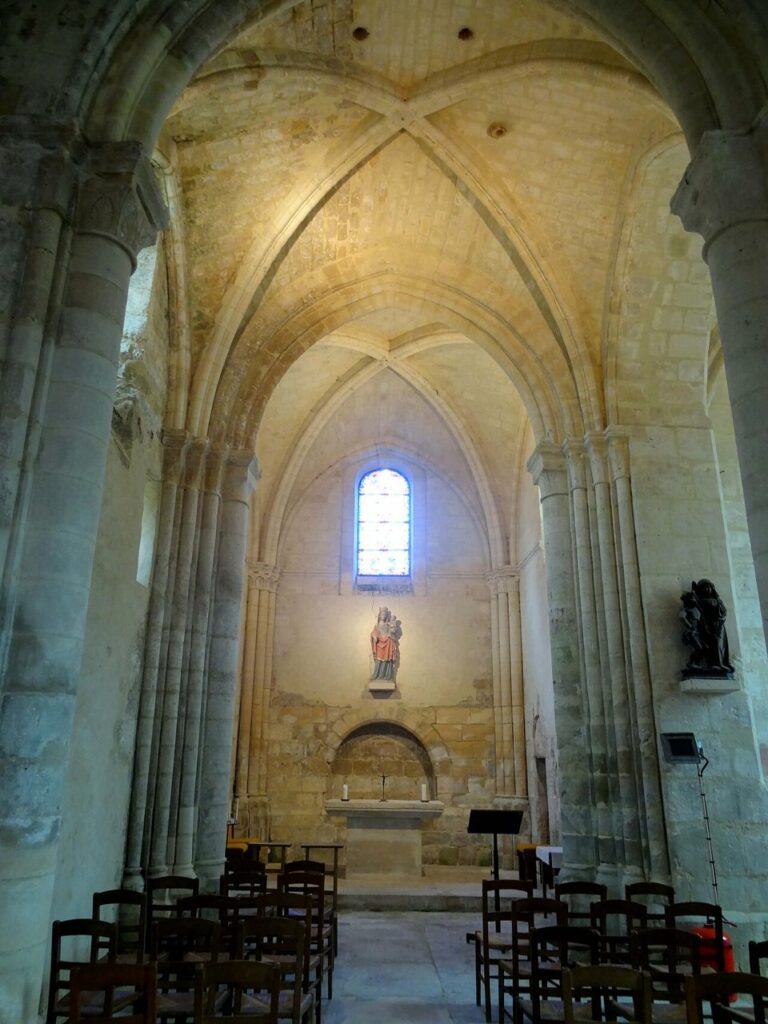
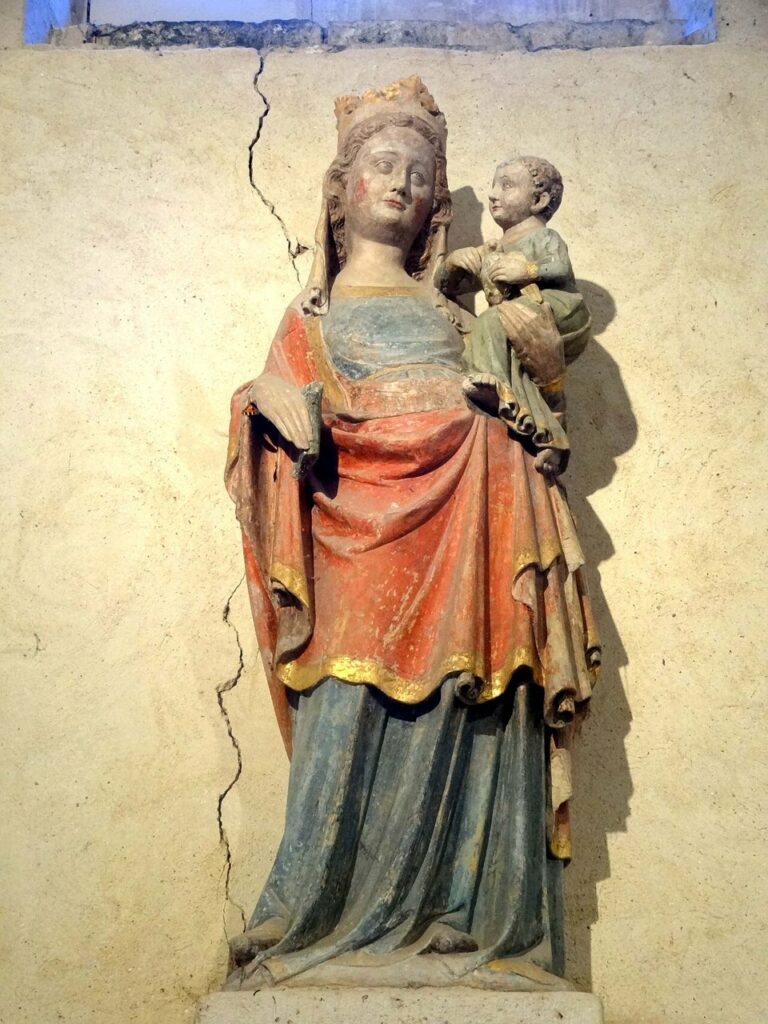
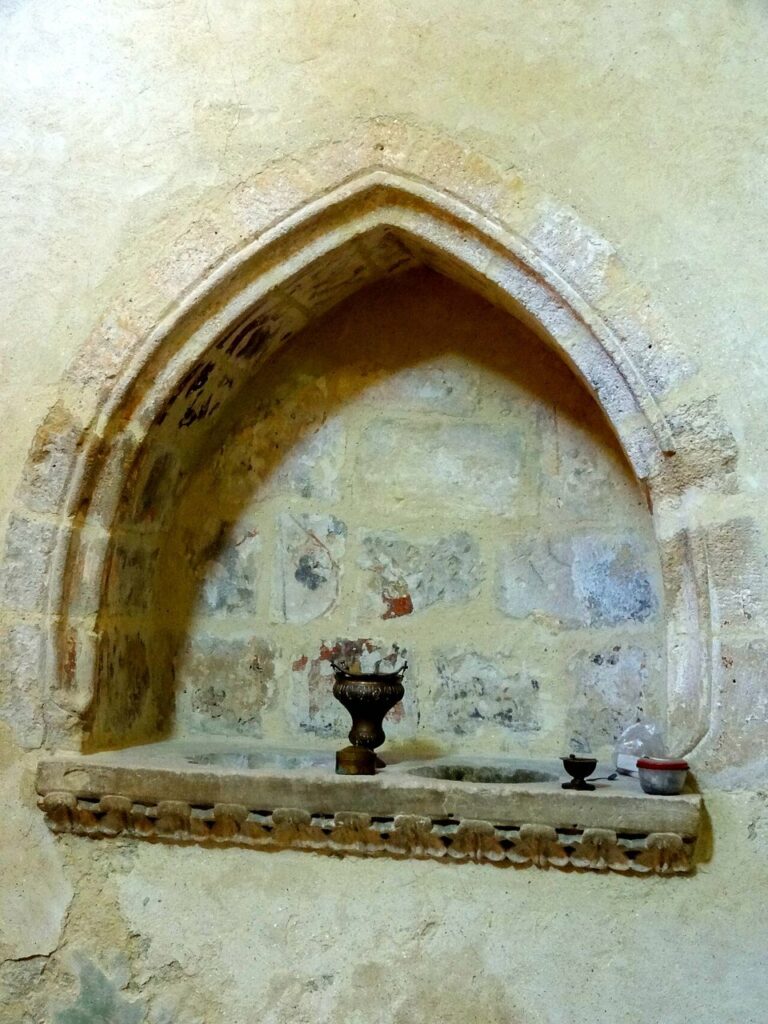
The chancel houses a rare double piscina, where the priest purified the sacred vessels, as well as a graceful 14th-century Virgin and Child: the Child plays with a bird under his mother's gaze.
Listed as a historic monument since 1910 and restored several times since, the church still hosts Mass on a few Sundays a year. Push open the door: within a few square metres, more than nine centuries of history and prayer await you.
Saint Peter in Chains, patron saint of the church
Saint Peter, Apostle and first Pope, is honoured here under a particular title: Saint Peter in Chains. The name recalls his imprisonment in Jerusalem on the orders of King Herod Agrippa, around the year 44, and his miraculous release by an angel who made his chains fall away.
Key dates
- Late 11th centuryConstruction of the nave
- Mid-12th centuryChancel beneath a bell tower and Romanesque portal
- 1161First known mention of the parish
- Late 12th – early 13th centuryThe chancel is extended with a flat east end; double piscina
- Mid-13th centuryThe church, then dedicated to Saint Peter, has about sixty parishioners; the Archbishop of Rouen is its patron
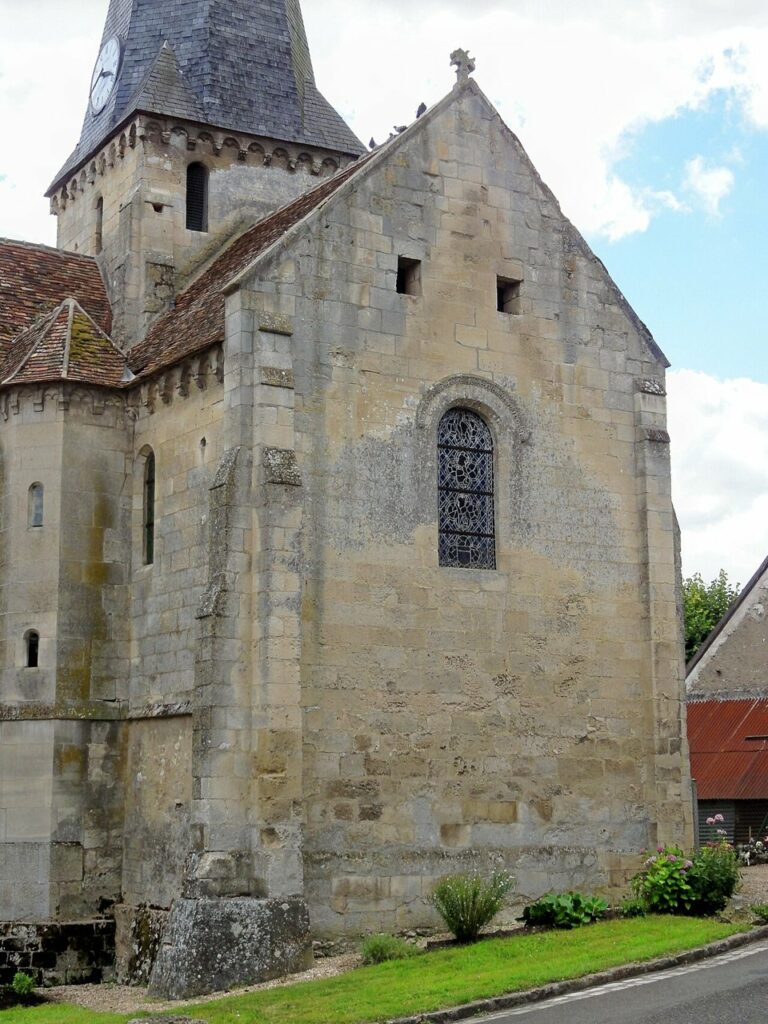
- Late 13th – early 14th centurySouth transept arm and its large window
- Mid-16th centuryA plan to vault the nave, eventually abandoned
- 1910Listed as a historic monument
- 1920–1923First major restoration
- 2016–2019Roof timbers treated and roof renewed
In pictures












The church’s treasures
- Romanesque portal: chequered tympanum and zigzags, mid-12th century
- Double liturgical piscina: early 13th century, rare in the region
- Virgin and Child with a bird: stone, 14th century (listed)
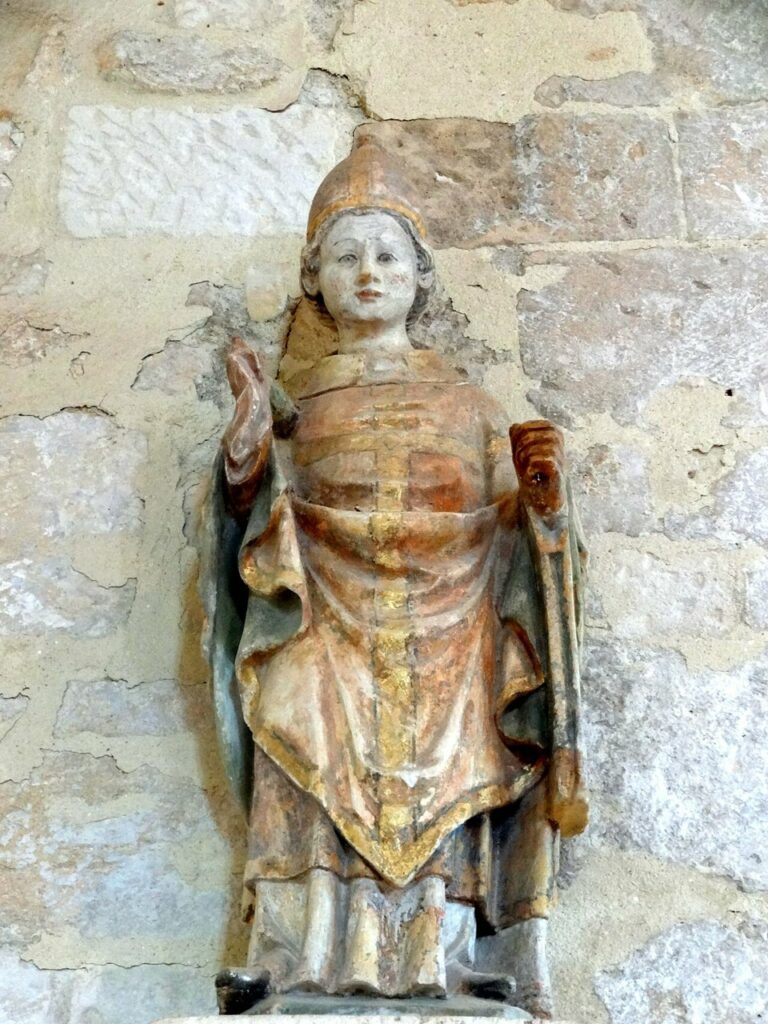
- Statue of a holy bishop: painted stone, 14th century (listed)
- Bell: bronze, 18th century (listed)
Find out more
Open a section to read the details.
Detailed history
- 1130–1164According to a charter of the Abbey of Saint-Martin in Pontoise, Hugh, Archbishop of Rouen, confirms to that abbey the lesser tithe of Brignancourt: that on garlic, onions, flax and hemp.
- February 1789The parish priest, Pillard, is summoned to the assembly of the clergy and signs the minutes of the assembly of inhabitants; the village has 27 households. The list of grievances denounces those who combine several incomes or occupations, tithe, farm or mill, when a single one would be enough to live on.
- RevolutionThe parish leaves the Diocese of Rouen for the new Diocese of Versailles.
- 1907The Commission des antiquités de Seine-et-Oise publishes a study of the double piscina.
- 1920–1923The architect Gabriel Ruprich-Robert restores the church: buttresses are rebuilt on the south side of the nave, the Renaissance window is blocked up, and a Romanesque-looking window is created from scratch.
- 1927–1968Three further restoration campaigns, in 1927–1930, 1954–1955 and 1965–1968, are led by Jules Formigé, then by Sylvain Stym-Popper.
- 1966The parish becomes part of the new Diocese of Pontoise.
- 2016–2019The roof timbers are treated against insects in 2016, then the roof is renewed with the help of the State, the Département and the Region.
- 2022The redesigned coat of arms of the commune bears the keys of Saint Peter, the titular saint of the church.
Architecture
The plan of this small country church is not symmetrical: a single rectangular nave, a chancel of two rib-vaulted bays, closed by a straight wall, and a single transept arm, on the south side. There is no door to the west. You enter through the south portal, at the top of a flight of ten steps.
In 1906 a historian judged this portal the best preserved of a group of six portals with a double row of zigzags. The tympanum is carved with lozenges, each containing two smaller lozenges and a tiny disc. Another author cites this portal among the examples of Norman-inspired decoration in the former Seine-et-Oise.
The bell tower never received a true belfry stage, for want of sufficiently solid supports. It carries a timber spire covered in slate. Like the chancel, it is crowned by a Beauvais-type cornice, a series of small carved arcades. That of the bell tower, whose arcades come down onto masks, closely resembles those of Nesles-la-Vallée and Santeuil.
Inside, the east end keeps its original capitals and a carved vault boss. The double piscina rests on a frieze of foliage. In the south transept arm, an arch appears to come from a former Romanesque doorway.
A study of 2008 on the timber roofs of Val-d'Oise identified at Brignancourt the trace of the Romanesque roof of the nave, from the first half of the 12th century: reused beams and the imprint of the original roof. It also notes a 15th-century ceiling in the nave.
- Late 11th – very early 12th centurySingle nave, unvaulted, and north wall of the first bay of the chancel, with small Romanesque windows.
- Mid-12th centuryRib vault of the first bay of the chancel, which became the base of the bell tower; south portal; upper stage of the bell tower.
- Late 12th – early 13th centurySecond bay of the chancel, with a flat east end, in place of the original apse; double piscina.
- Late 13th – early 14th centurySouth transept arm, lit by a large window in the late Rayonnant style.
- Mid-16th centuryAbandoned plan to vault the nave: buttresses, the west window and vault springers, with capitals carved with heads, remain from it.
- 19th – 20th centuryExternal stair turret of neo-Gothic appearance, then restorations.
Furnishings and works of art
- Virgin and Child14th century · listed in 1908Stone statue, 1.25 m high. The Virgin, crowned, stands in a gentle sway; the Child holds a bird, and mother and son exchange a glance.
- Statue of a holy bishop14th century · listed in 1966In painted stone, 94 cm high. Its old colours are well preserved. He has lost his crozier, and it is not known which saint he is.
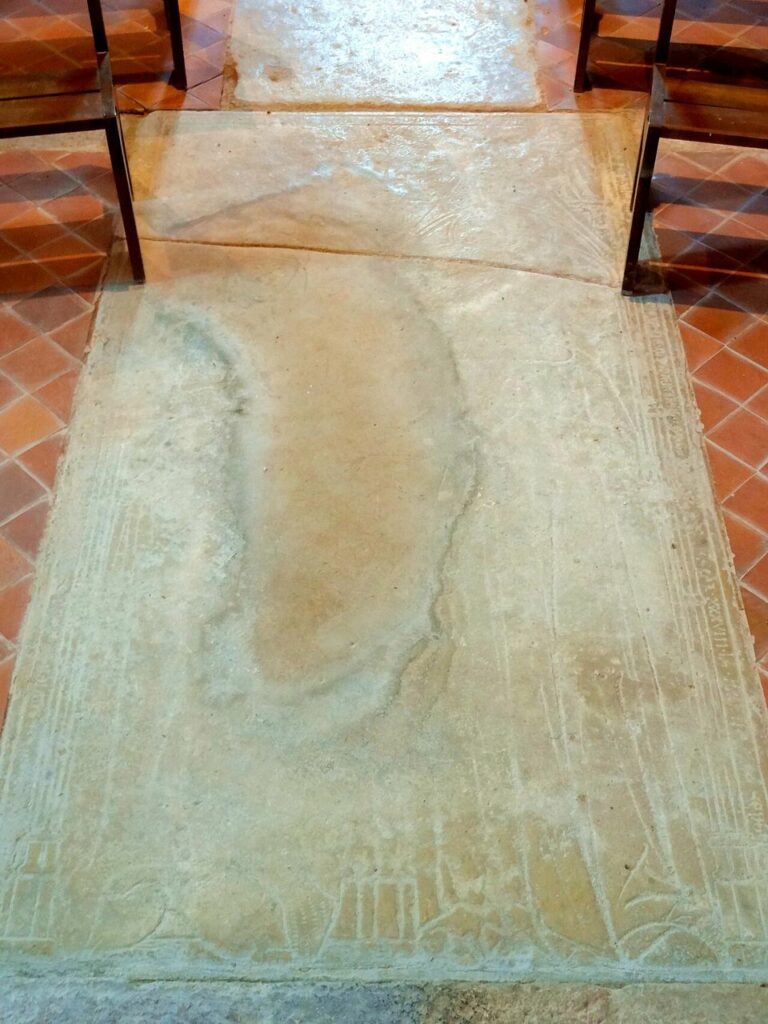
- Tomb slab of a lord and his lady13th centuryLarge engraved slab in the central aisle, worn by footsteps. The two deceased have not been identified.
Bells
The church has an 18th-century bronze bell, listed as a historic monument on 27 April 1944.
The parish in earlier times
Under the Ancien Régime, Brignancourt belongs to the deanery of Meulan, in the archdeaconry of the French Vexin and the Diocese of Rouen. In the mid-13th century, the register of Archbishop Eudes Rigaud names the church “Sancti Petri de Brignencuria”. The living brings in 20 livres parisis.
Did you know?
One of the “Romanesque” windows of the nave is not old at all: it was invented by the architect who restored the church in the 1920s.
In the chancel, a small door opens only onto a cupboard hollowed out of the wall.
A small niche in the chancel is believed to have held the relics deposited at the consecration of the altar.
Further reading
Other photos and documents about this church can be found on other websites; we cannot reproduce them all here, but you can look at them there:
- Ministère de la Culture (POP): record and photos of the churchRecord of the church, listed in 1910, with 29 photos: carved south portal, bell tower, chancel, piscina and Virgin and Child.
- Wikimedia Commons: freely licensed photos of the churchSome sixty freely licensed photos: Romanesque portal (tympanum, chevron mouldings, grimacing head), Romanesque windows, chancel; two old photographs (Ruprich-Robert, Martin-Sabon) and a plan.
- Wikipedia: article on the churchVery detailed article (more than 60,000 characters): history, description of the interior and exterior, furnishings; about 75 illustrations and a bibliography.
- Ministère de la Culture (POP): protected object in the church14th-century Virgin and Child, listed in 1908: 2 photos. The other protected objects are a 14th-century statue of a holy bishop and an 18th-century bell.
- Brignancourt town hall: history and heritageTown hall page: a paragraph on the church (Latin-cross plan, carved portal); the page also proposes a date for the bell tower and mentions an 18th-century restoration and an underground passage.
Sources for this page
- Base Mérimée, notice PA00080010 « Église » (Brignancourt) — link
- Base Palissy, notices PM95000096, PM95000097, PM95000098, PM95000854 — link
- B. Duhamel, Guide des églises du Vexin français, Valhermeil, 1988, p. 76-77
- V.-J. Gautier, Pouillé du diocèse de Versailles, 1876, p. 48 et 255 (Gallica, cité par Wikipédia) — link
- M. Gillet, « Piscine dans l'église de Brignancourt », Commission des antiquités et des arts de Seine-et-Oise, t. XVII, 1907 (Gallica, cité par Wikipédia) — link
- P. Coquelle, « Les clochers romans… » (1903) et « Les portails romans du Vexin français et du Pincerais » (1906), Mémoires de la Soc. hist. de Pontoise (Gallica, cités par Wikipédia) — link
- Wikipédia, « Église Saint-Pierre-aux-Liens-et-Saint-Étienne de Brignancourt » — link
- Paroisse de Marines, Calendrier des messes et fêtes — link
- Région Île-de-France, aide au patrimoine : « Réfection de la couverture de l'église Saint-Pierre-aux-Liens » (Brignancourt), voté en 2018, délibération CP2019-080 — link
- M. M. Miles, photothèque ipernity, mot-clé Brignancourt (notes de visite, source non officielle) — link
- Wikimedia Commons, catégorie « Église Saint-Pierre-aux-Liens-et-Saint-Étienne de Brignancourt » — link
- Paul Coquelle, « Les portails romans du Vexin français et du Pincerais », MSHAPV, t. XXVII, 1906, p. 41-60 — Internet Archive — link
- Paul Coquelle, « Les clochers romans du Vexin français et du Pincerais », Mémoires de la Société historique et archéologique de Pontoise et du Vexin (MSHAPV), t. XXV, 1903 (classification p. 65) — Internet Archive — link
- Léon Plancouard, « La cloche de Marines (Seine-et-Oise) », Bulletin monumental, t. 72, 1908, p. 66-77 (note 2 p. 66 : liste des cloches du canton de Marines antérieures à la Révolution) — link
- Louis Régnier, compte rendu de l'excursion à Chars, Bouconvilliers, Nucourt et Magny (1886), MSHAPV — Internet Archive — link
- Mairie de Brignancourt, « Histoire et patrimoine » (d'après un guide de l'office de tourisme du Val de Viosne) — link
- Mairie de Brignancourt, comptes rendus des conseils municipaux 2016-2019 (dont le 15/10/2019) — link
- Mairie de Brignancourt, « Un blason retravaillé pour Brignancourt » (2022) — link
- Polyptychum Rotomagensis diœcesis (pouillé dit d'Eudes Rigaud, milieu du XIIIe s.), dans Recueil des historiens des Gaules et de la France, t. XXIII, Paris, 1876, doyenné de Meulan — link
- J. Depoin (éd.), Cartulaire de l'abbaye de Saint-Martin de Pontoise, fasc. 2, Pontoise, 1896, charte CXXII (confirmation par Hugues, archevêque de Rouen, 1130-1164) et note 379 — link
- Les élections du bailliage secondaire de Pontoise en 1789, Société historique du Vexin, 1909 (assignations du clergé ; procès-verbal et cahier de Brignancourt) — link
- J. Vergnet-Ruiz, « La corniche beauvaisine », Bulletin monumental, t. 127-4, 1969, p. 307-322 — link
- E. Lefèvre-Pontalis, « Les influences normandes au XIe et au XIIe siècle dans le nord de la France », Bulletin monumental, t. 70, 1906, p. 3-37 (note citant les portails de Brignancourt, Le Heaulme, Santeuil…) — link
- « Un portail à statues-colonnes oublié », Bulletin monumental, t. 130-1, 1972, p. 45-50 — link
- Mairie de Chars, annonce « Concert de la chorale La Lanterne, 23 novembre 2025 », 14/11/2025 — link
- « L'évolution des charpentes d'églises du Val-d'Oise, du XIe au XXe siècle », Revue archéologique du Centre de la France, t. 47, 2008 (étude d'archéologie du bâti ; auteurs non nommés, personnes vivantes ; relue le 20/11/2026) — link
Page compiled from the databases of the French Ministry of Culture and the Inventaire du patrimoine, and from documents of the parish, the diocese and the commune; checked in November 2026. An error, a memory, a photo to share? Contribute.
Have you noticed an error, would you like to add further information, or share photos you have taken of this church? Our team would be grateful if you let us know: contribute to this page (form in French).