
Our 38 churches › Bréançon

Patron saints
Saints Crispin and Crispinian
martyred brothers, patrons of shoemakers
Liturgical feast
25 October
Historic monument
Listed (1980)
many protected works
Address
Rue de l'Église, 95640 Bréançon
Directions
Upcoming Masses
- Saturday 21 November, 6:00 pm
- Saturday 9 January, 6:00 pm
- Saturday 8 May, 6:00 pm
A Gothic church behind a classical façade
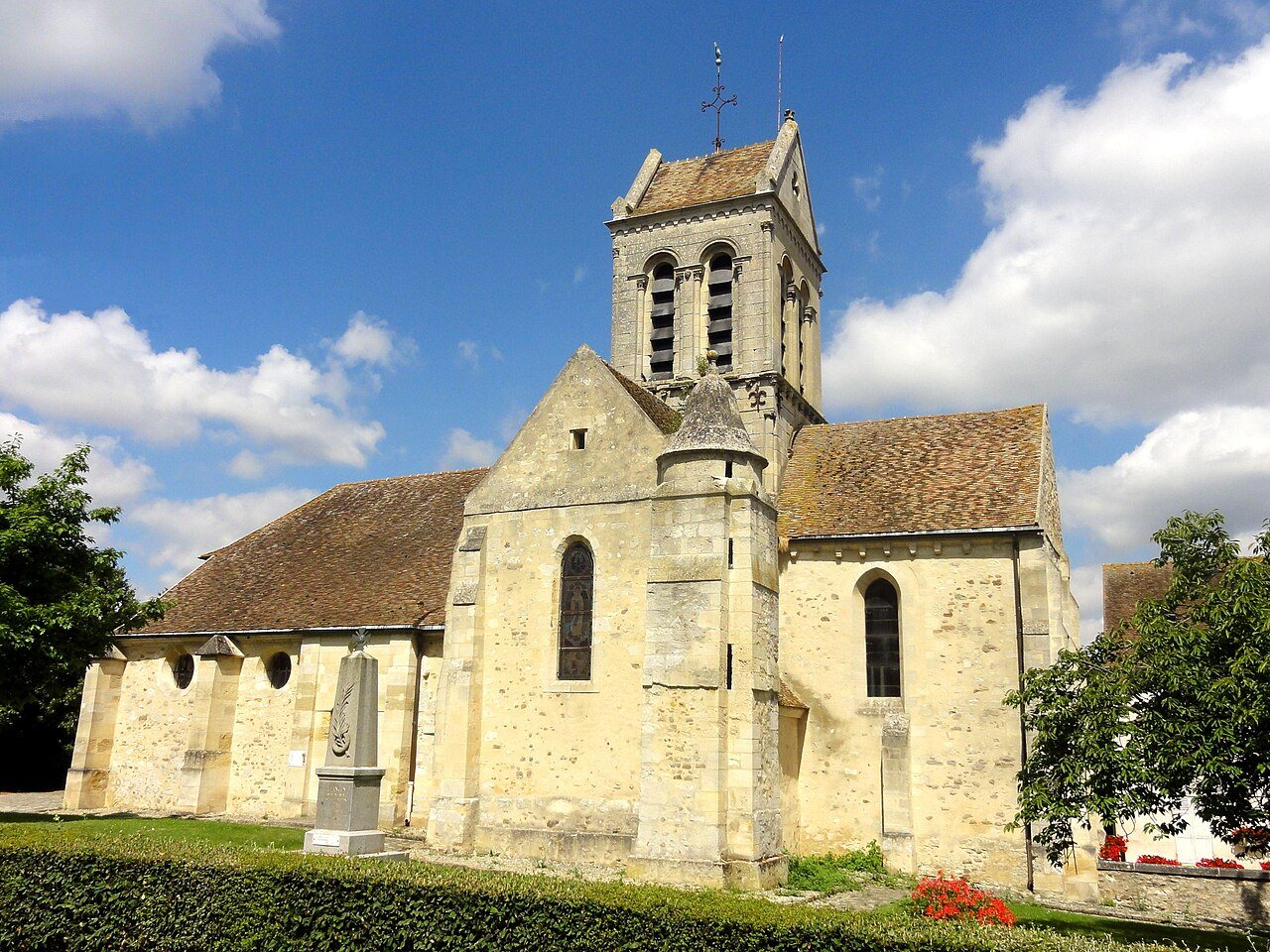
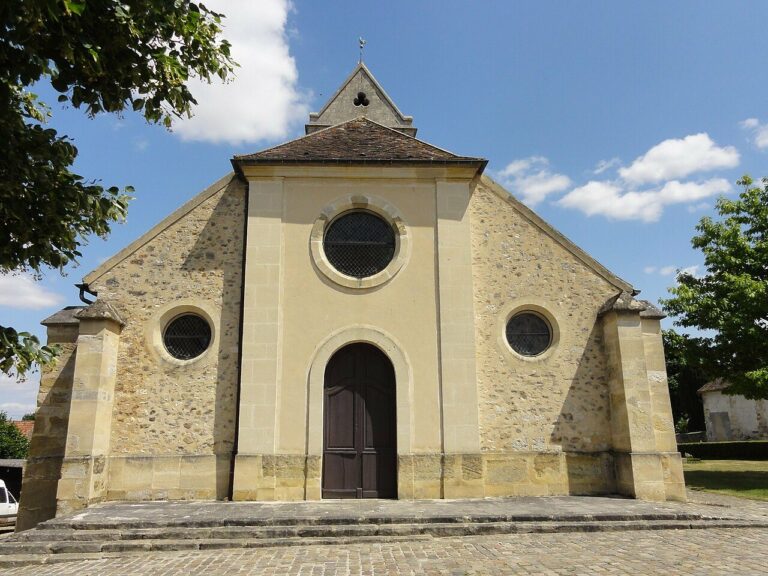
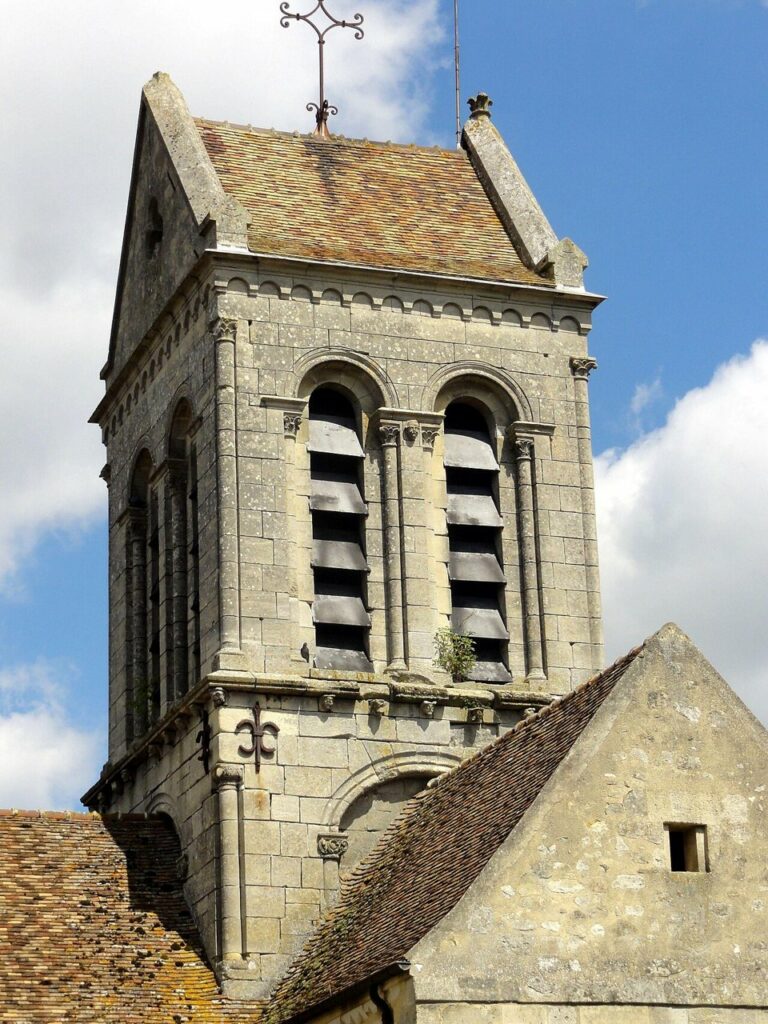
In the centre of Bréançon, surrounded by its old churchyard, now a garden, Saint-Crépin-Saint-Crépinien Church raises its saddleback bell tower, so characteristic of the Vexin. Do not be fooled by its classical façade, rebuilt in 1774: behind it hides a true Gothic church from the late 12th and early 13th centuries.
In the chancel and beneath the bell tower, look at the capitals carved with foliage, witnesses to the moment when Romanesque art gave way to Gothic. Listed as a historic monument since 1980, the church was extensively restored at the end of the 19th century, when the upper stage of the bell tower was rebuilt.
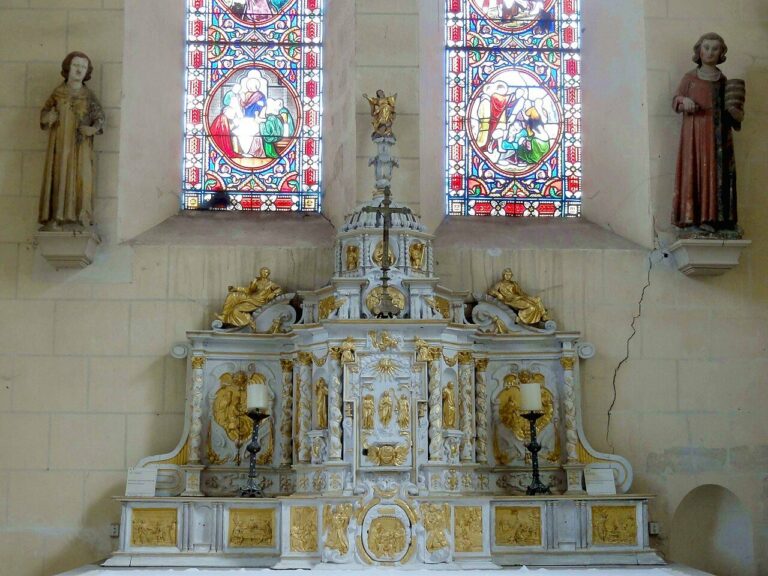
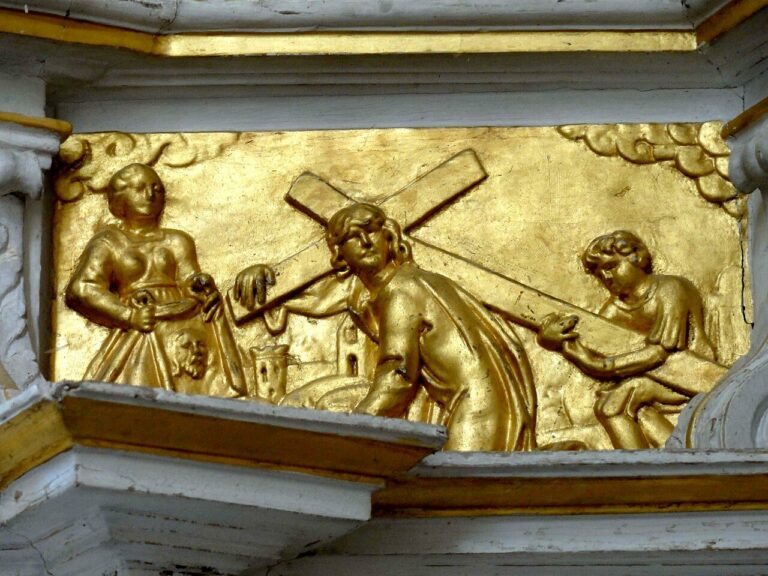
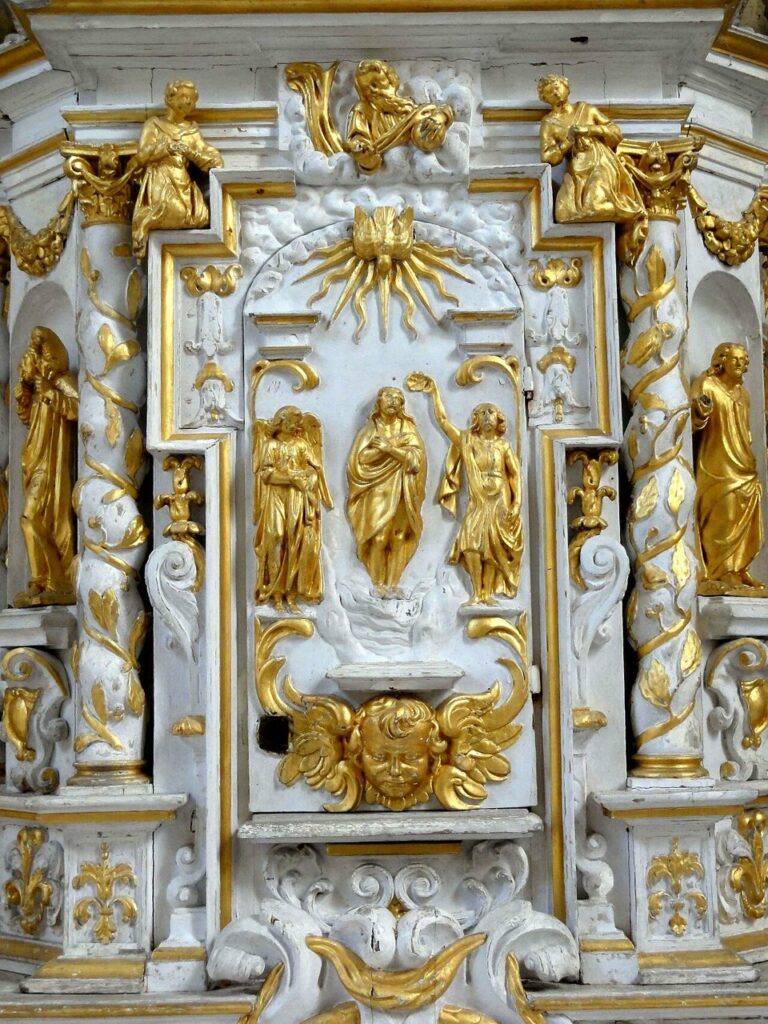
Its furnishings are full of stories. The high altar is crowned by a spectacular 17th-century tabernacle, which came from Argenteuil, covered with small carved and gilded biblical scenes. A 14th-century Virgin and Child bears the gentle nickname “Marguerite”, in memory of the wife of Saint Louis. In the chancel, two statues of the same period depict the church's patrons, Saints Crispin and Crispinian.
A surprising story: the church once owned a painting of the Assumption made in 1684 by a princess who became Abbess of Maubuisson; already judged to be at risk at the beginning of the 20th century, since it was not protected from damp, it disappeared during the Second World War.
Saints Crispin and Crispinian, patron saints of the church
According to tradition, Crispin and Crispinian were two Christian brothers who came from Rome to Gaul at the end of the 3rd century to evangelise the region of Soissons. So as to live without being a burden to anyone, they worked as shoemakers: ever since, they have been the patrons of shoemakers, bootmakers and tanners. They are said to have been martyred at Soissons under the Emperor Maximian. Their feast is kept on 25 October, and two 14th-century statues depict them in the chancel of the church.
Key dates
- Late 12th – early 13th centuryConstruction of the Gothic church, from the chancel towards the nave
- Mid-13th centuryThe church already bears the name of Saint Crispin; the Archbishop of Rouen himself appoints its parish priest
- 1587Casting of the bell that is now listed
- 1684The Abbess of Maubuisson paints an Assumption for the church
- 1774The façade and the walls of the aisles are rebuilt
- 1789On 25 February the assembly of inhabitants meets in front of the church entrance
- c. 1872The parish priest acquires the tabernacle from Argenteuil
- Late 19th centuryMajor restoration; the upper stage of the bell tower is rebuilt
- 1937–1940Disappearance of the painting of the Assumption, entrusted to the Louvre for restoration
- 1980The church is listed as a historic monument
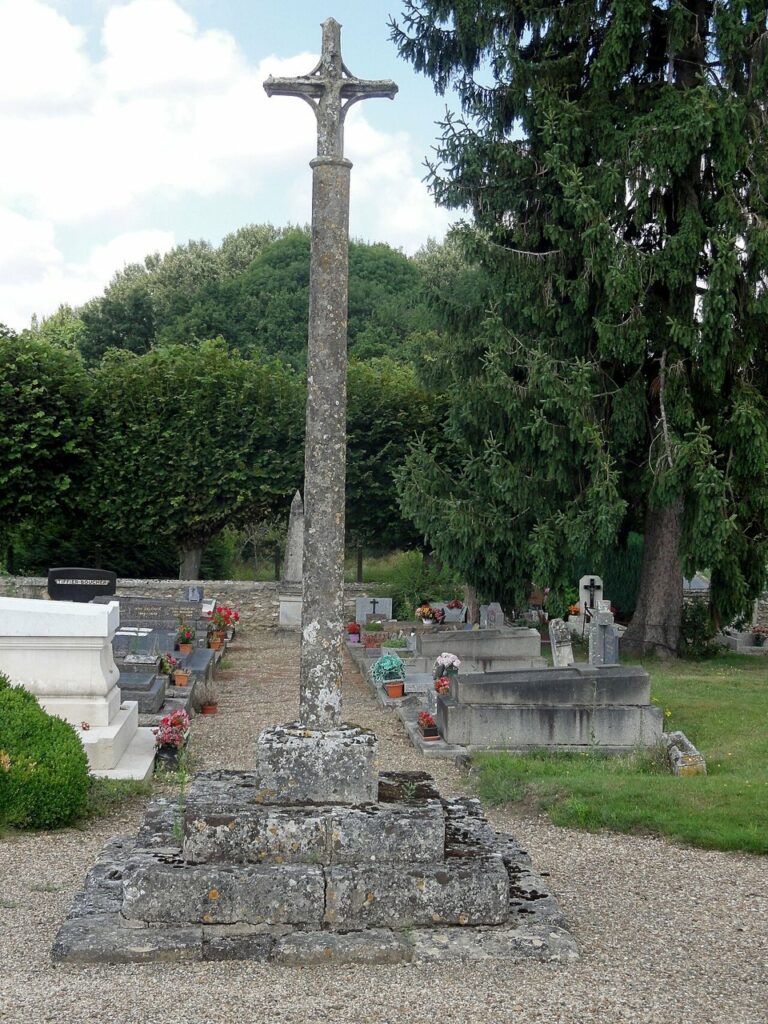
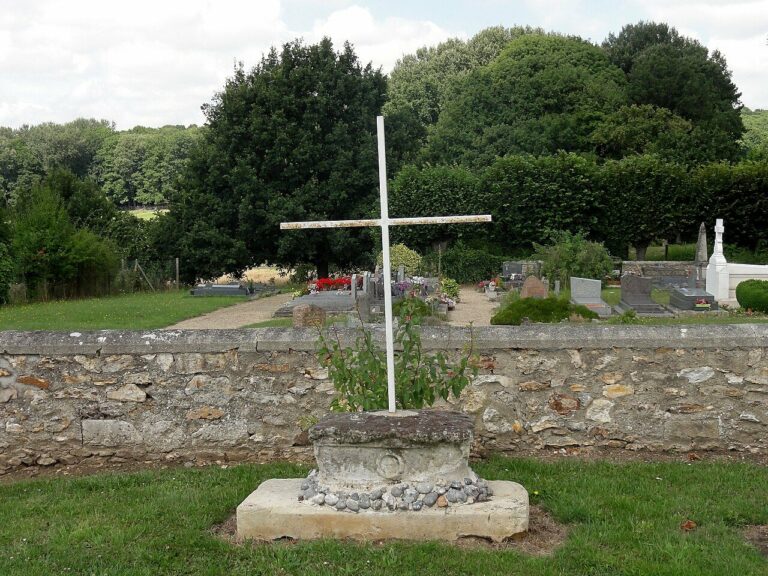
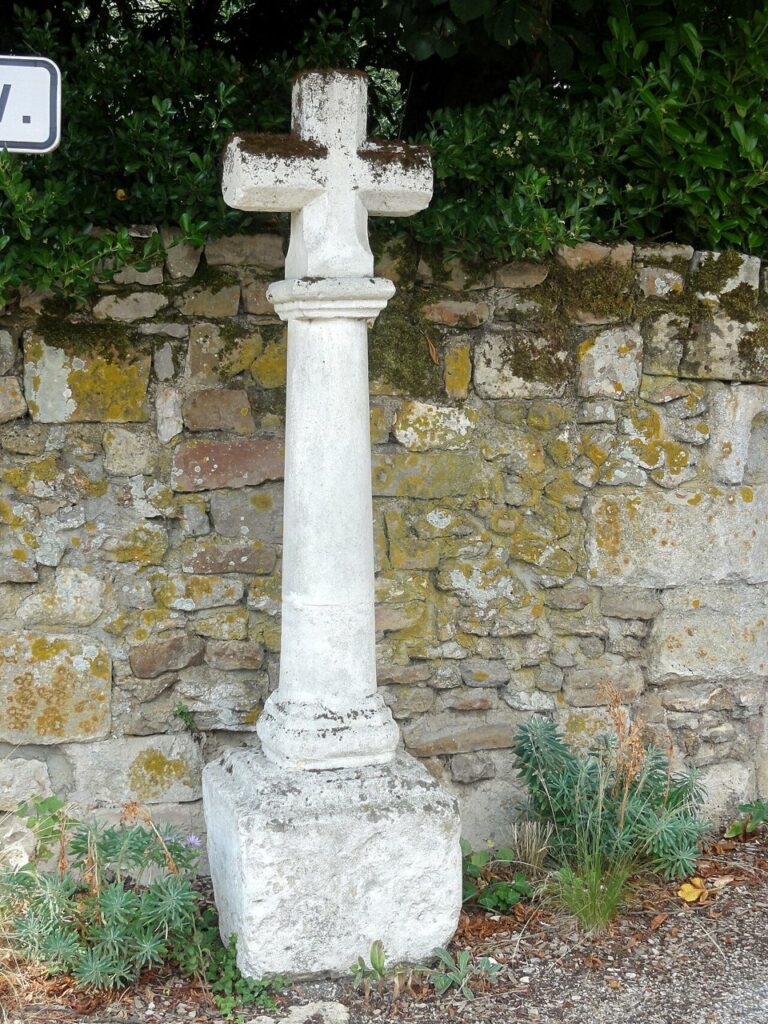
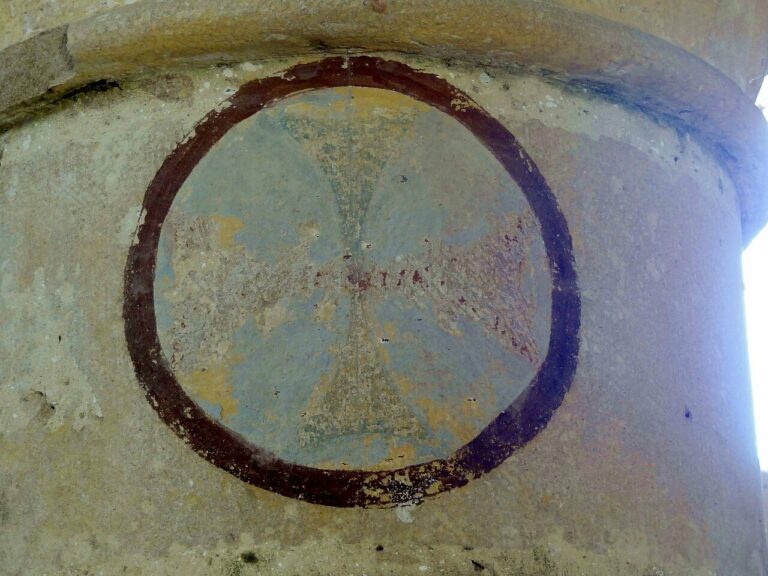
In pictures


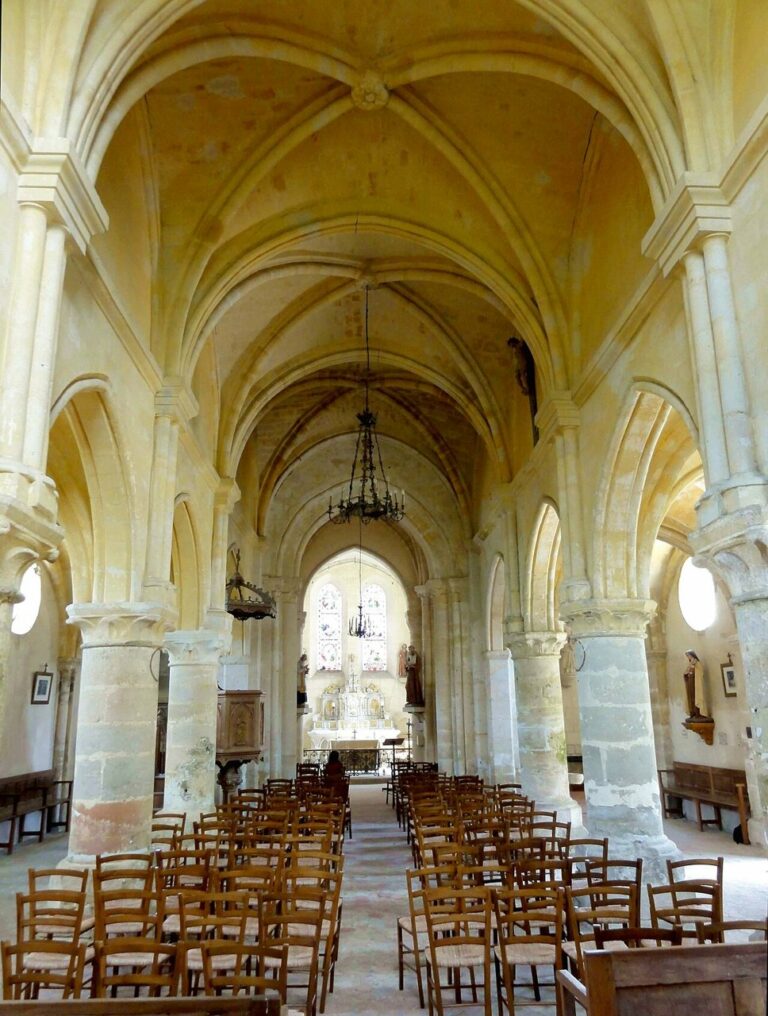

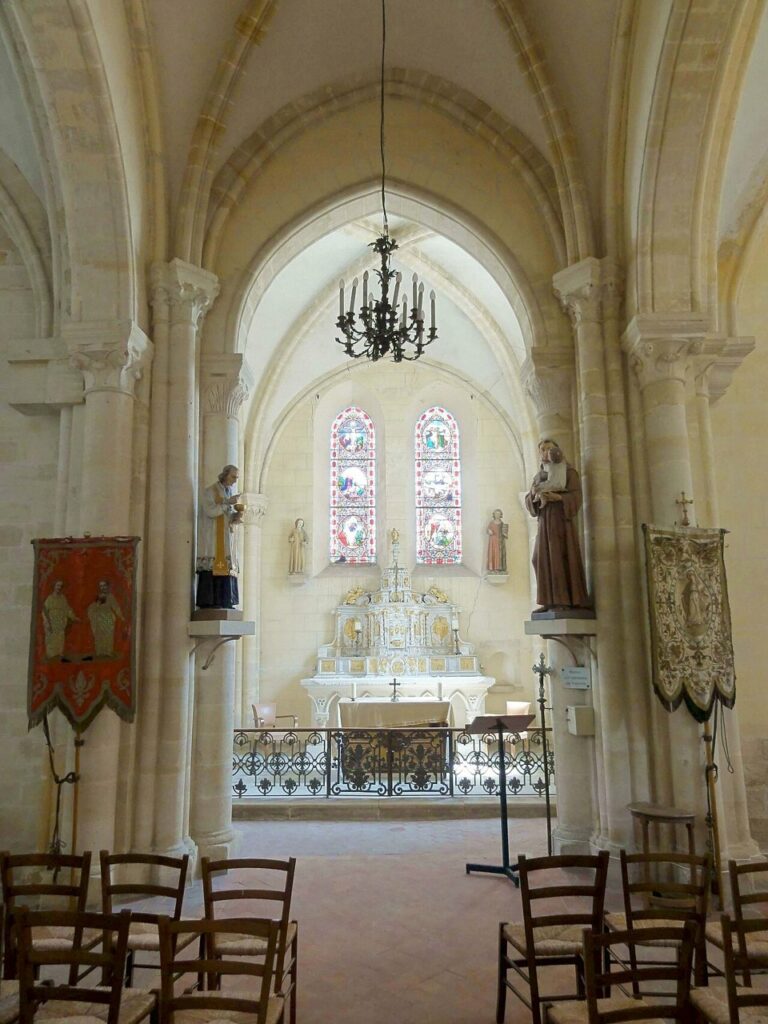

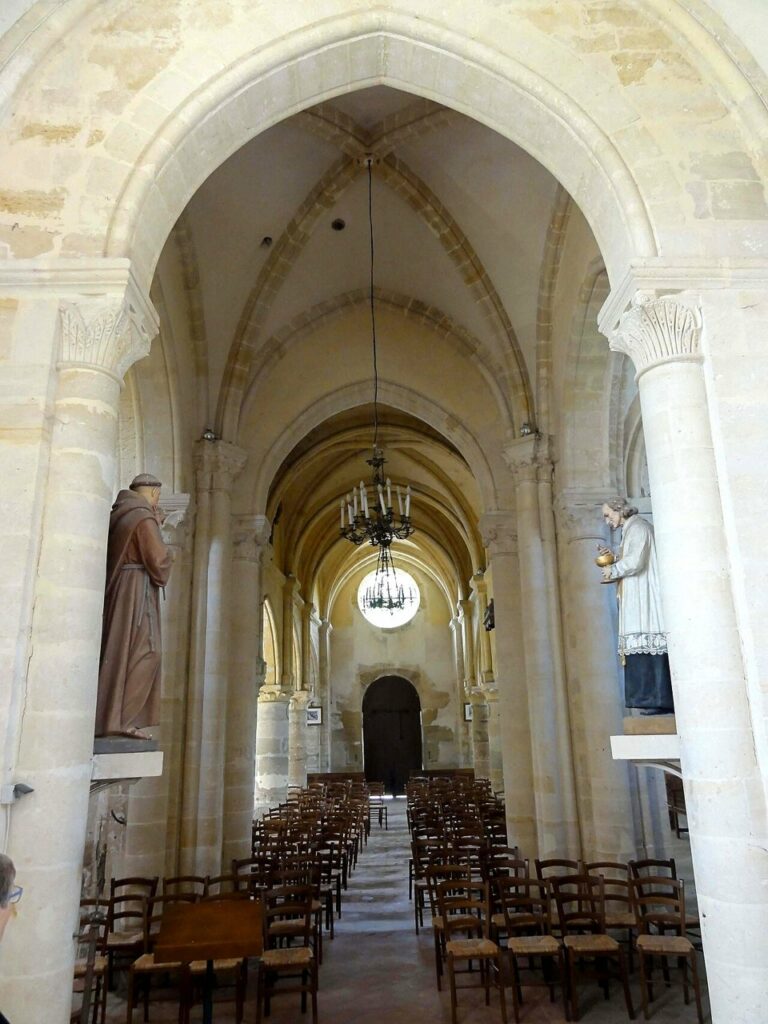

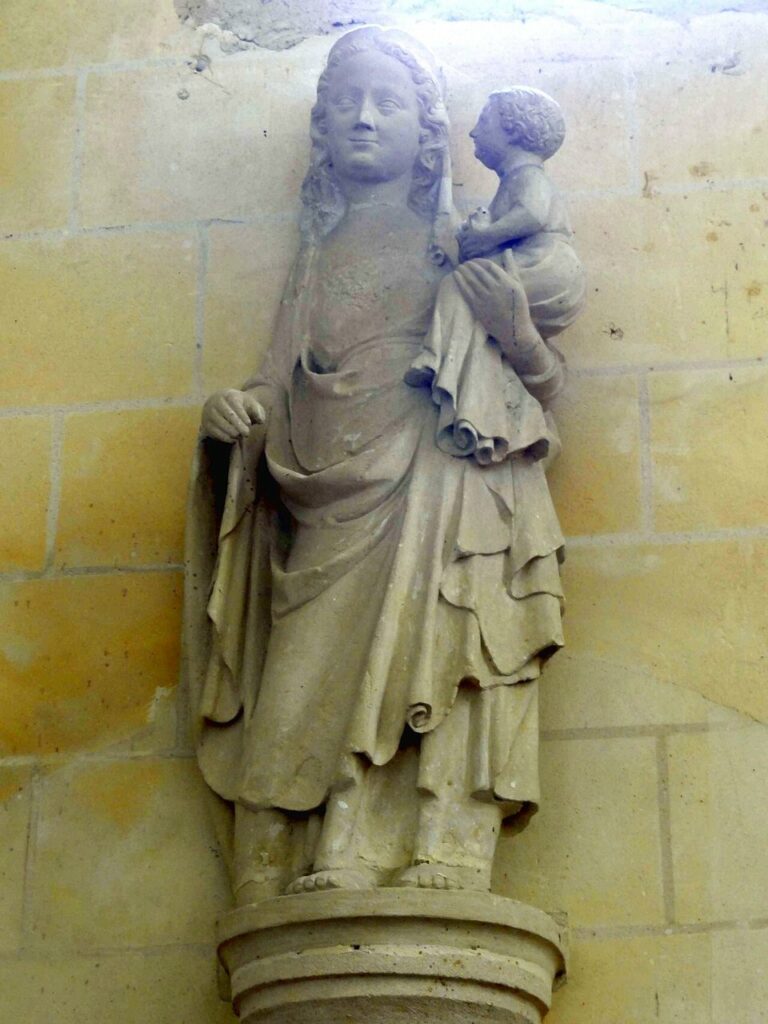











The church’s treasures
- Winged tabernacle of the high altar: carved, painted and gilded wood, 17th century, from Argenteuil (listed)
- Virgin and Child known as “Marguerite”: 14th century (listed)
- Statues of Saint Crispin and Saint Crispinian: polychrome stone, 14th century (listed)
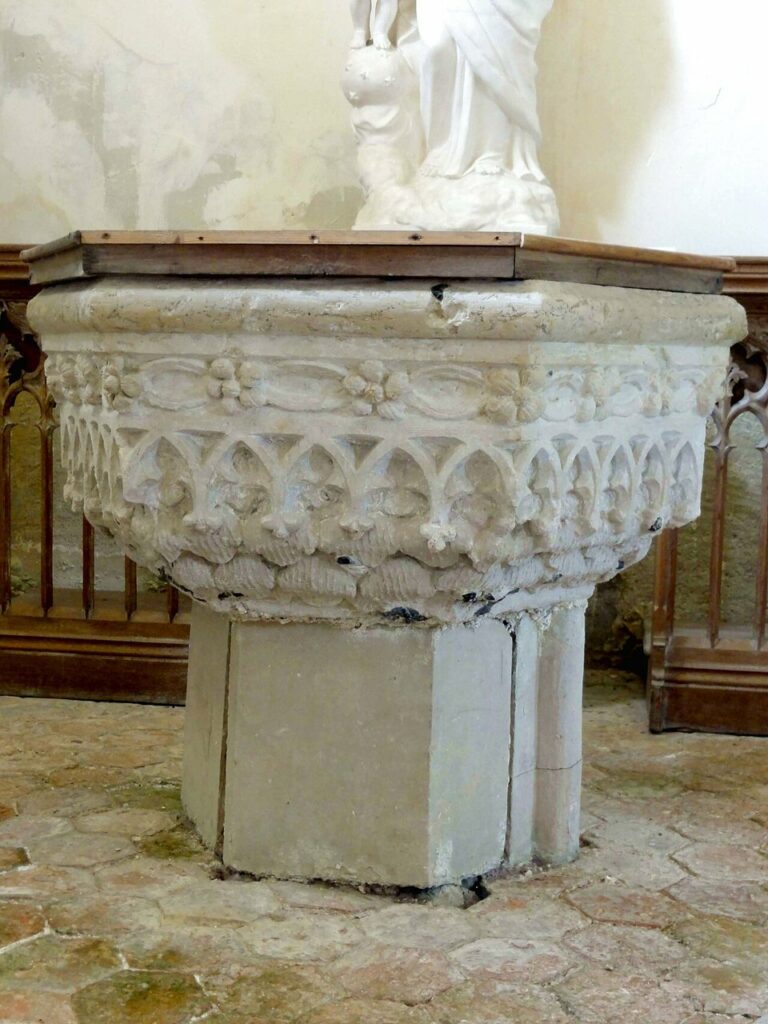
- Baptismal font: hexagonal bowl with blind arcading, early 16th century (listed)
- Bell: bronze, 1587 (listed)
- Painted altar frontal: 18th century (registered)
Further reading
Other photos and documents about this church can be found on other websites; we cannot reproduce them all here, but you can look at them there:
- Wikimedia Commons: freely licensed photos of the churchSome sixty freely licensed photos: façades, bell tower, chevet, a scale model of the church; interior (nave, aisles, transept arms, apse, consecration crosses) and protected objects.
- Wikipédia: article on the churchVery well-documented article: history, description, and detailed furnishings (baptismal font, painting, statues, winged tabernacle); some sixty illustrations.
- Ministère de la Culture (POP): protected object in the churchStatues of the patron saints Crispin and Crispinian (14th century): 2 photos. The church has 9 protected objects, including the Virgin known as Marguerite and a winged tabernacle reported stolen.
- Ministère de la Culture (POP): record and photos of the churchRecord of the church, listed in 1980; 6 photos: south-east view, nave, baptismal font, tabernacle and Virgin and Child.
- Wikipédia (German): article on the churchEntry in German (about 260 words): Romanesque architecture, capitals, windows, plan, baptismal font, altarpiece and sculptures, with a reference to Patrimoine des communes.
Sources for this page
- Base Mérimée, notice PA00080009 « Église Saint-Crépin-Saint-Crépinien » — link
- Base Palissy, notices PM95000090 à PM95000095, PM95000776, PM95001493, PM95001494 — link
- Wikipédia, « Église Saint-Crépin-Saint-Crépinien de Bréançon » — link
- B. Duhamel, Guide des églises du Vexin français, Valhermeil, 1988, p. 75-76
- S. Charon et al., Le patrimoine des communes du Val-d'Oise, Flohic, 1999, t. II, p. 626-631
- Agence des bâtiments de France, Notice sur l'église de Bréançon, Pontoise, 1994
- V. J. Gautier, Pouillé du diocèse de Versailles, 1876, p. 47 et 254 (cité par Wikipédia) — link
- Paroisse de Marines, calendar of Masses and feasts 2026-2027 — link
- Paroisse de Marines, dépliant Journées du patrimoine 2026 — link
- Mairie de Bréançon, page « Histoire & Patrimoine » — link
- MSHAPV, t. III-IV (1881), procès-verbaux et chroniques — Internet Archive — link
- MSHAPV, procès-verbaux du conseil 1904-1905 (vœux de classement) — Internet Archive — link
- Léon Plancouard, « La cloche de Marines (Seine-et-Oise) », Bulletin monumental, t. 72, 1908, p. 66-77 (note 2 p. 66 : liste des cloches du canton de Marines antérieures à la Révolution) — link
- Paul Coquelle, « Les clochers romans du Vexin français et du Pincerais », Mémoires de la Société historique et archéologique de Pontoise et du Vexin (MSHAPV), t. XXV, 1903 (classification p. 65) — Internet Archive — link
- Diocèse de Pontoise (catholique95.fr), « Journées du patrimoine 2026 » : églises de la paroisse de Marines ouvertes — link
- Wikipédia en allemand, « St-Crépin-St-Crépinien (Bréançon) » (d'après Flohic, 1999, p. 627-629) — link
- Mairie de Bréançon, page « Actualités » (fête de la Pomme du 12/10/2025) — link
- Polyptychum Rotomagensis diœcesis (pouillé dit d'Eudes Rigaud, milieu du XIIIe s.), dans Recueil des historiens des Gaules et de la France, t. XXIII, Paris, 1876, doyenné de Meulan — link
- J. Depoin (éd.), Cartulaire de l'abbaye de Saint-Martin de Pontoise, fasc. 2, Pontoise, 1896, charte CXXII (confirmation par Hugues, archevêque de Rouen, 1130-1164), p. 96-97 et note 37 — link
- A. Longnon, Pouillés de la province de Rouen, Paris, 1903, pouillé de 1337 (doyenné de Meulan) et index « Roonel » — link
- Procès-verbal de rédaction de la coutume du bailliage de Senlis, 16 août 1539, comparution du clergé de la châtellenie de Pontoise, MSHAPV t. VIII (recueil t. VII-VIII), p. 37-39 — link
- Les élections du bailliage secondaire de Pontoise en 1789, Société historique du Vexin, 1909 (assignations du clergé ; procès-verbal de Bréançon, 25 février 1789) — link
- Commission des antiquités et des arts de Seine-et-Oise, Album des objets mobiliers artistiques classés de Seine-et-Oise, t. I, Paris, Picard, 1910, texte explicatif et pl. 12 — link
- Base Palissy, export complet palissy.csv du 20/11/2026, notice PM95000094 (champ « lieu de déplacement ») — link
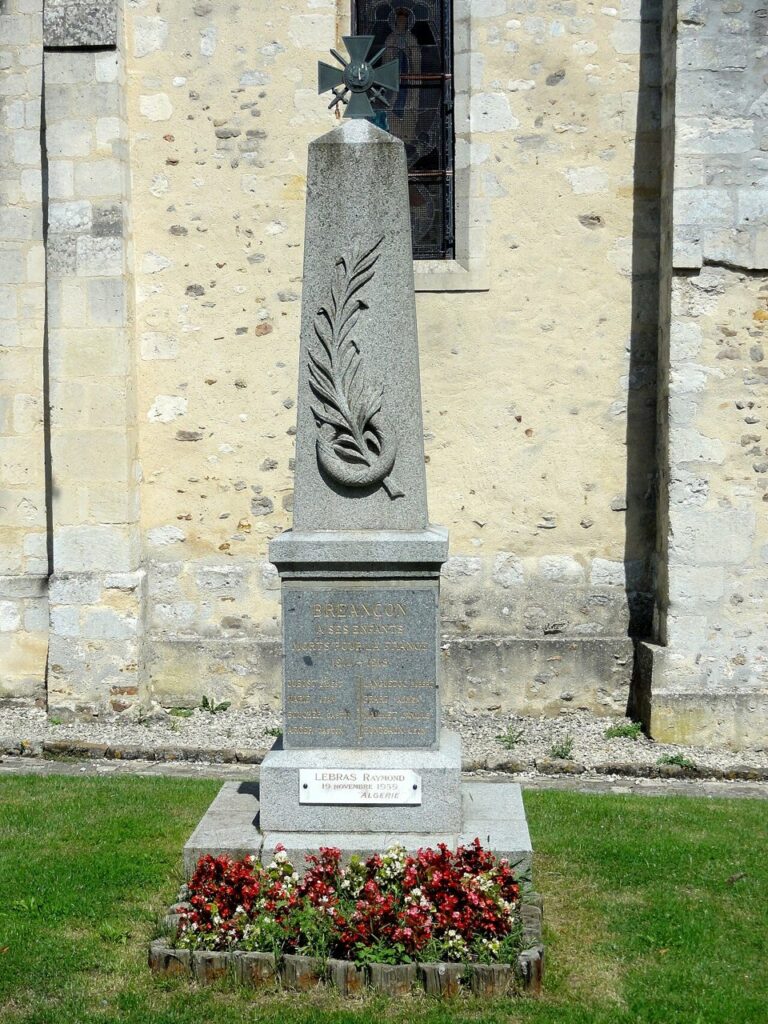
- Wikimedia Commons, fichiers « Bréançon (95), monument aux morts, devant l'église, rue de la Liberté » et « … monument aux morts au cimetière » (P.poschadel, 2013, CC BY-SA 3.0) — link
Page compiled from the databases of the French Ministry of Culture and the Inventaire du patrimoine, and from documents of the parish, the diocese and the commune; checked in November 2026. An error, a memory, a photo to share? Contribute.
Have you noticed an error, would you like to add further information, or share photos you have taken of this church? Our team would be grateful if you let us know: contribute to this page (form in French).