
Our 38 churches › Seraincourt

Patron saint
Saint Sulpice
Bishop of Bourges
Historic monument
Listed (1930)
statue of Saint Sulpice listed, high altar registered
Address
Rue du Vexin, 95450 Seraincourt
at the junction with the Rue des Vallées, in the centre of the village
Directions
Upcoming Masses
- Saturday 28 November, 6:00 pm
- Saturday 30 January, 6:00 pm
- Saturday 12 June, 6:00 pm
One of the oldest Romanesque faces of the Vexin
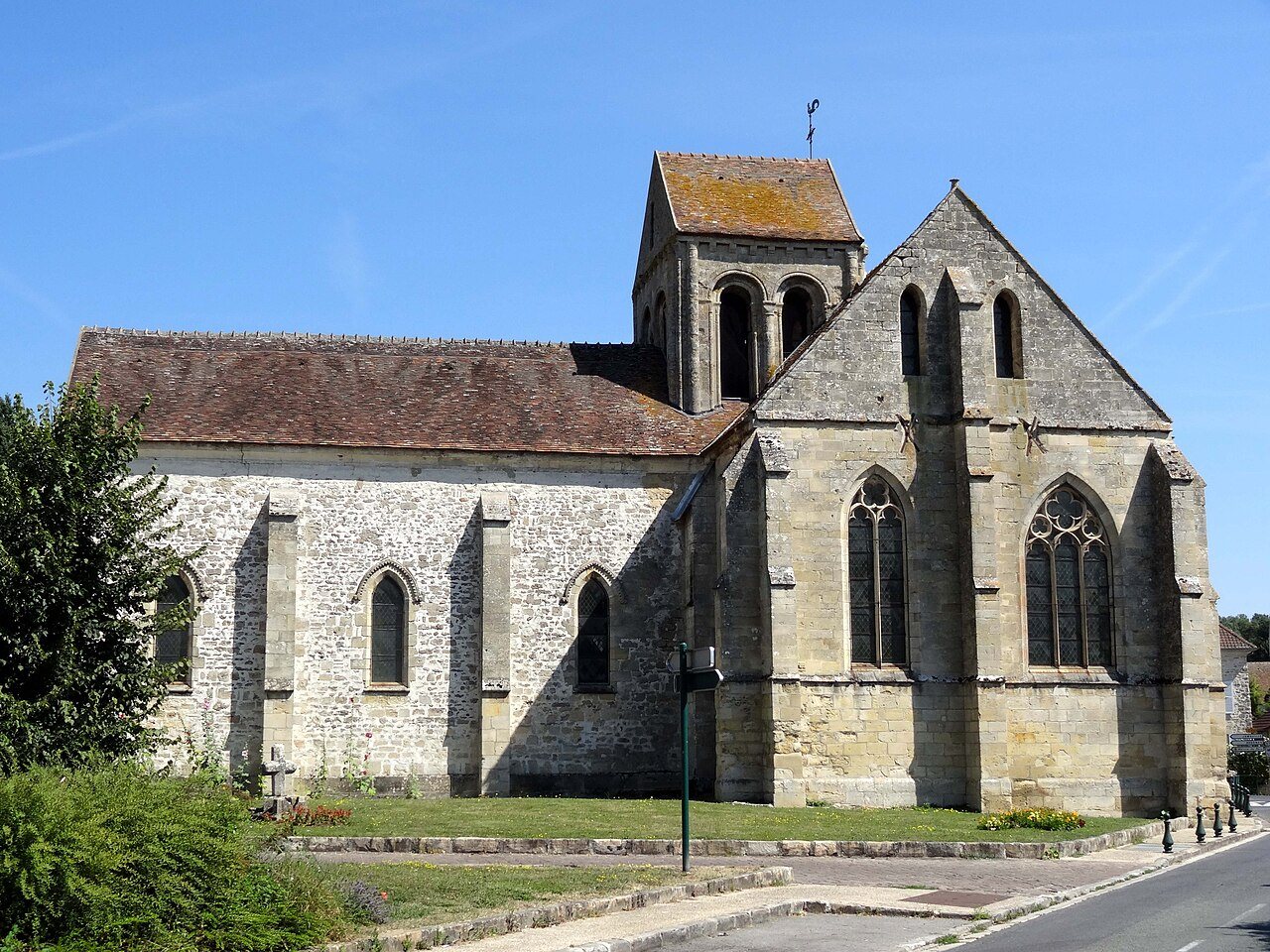
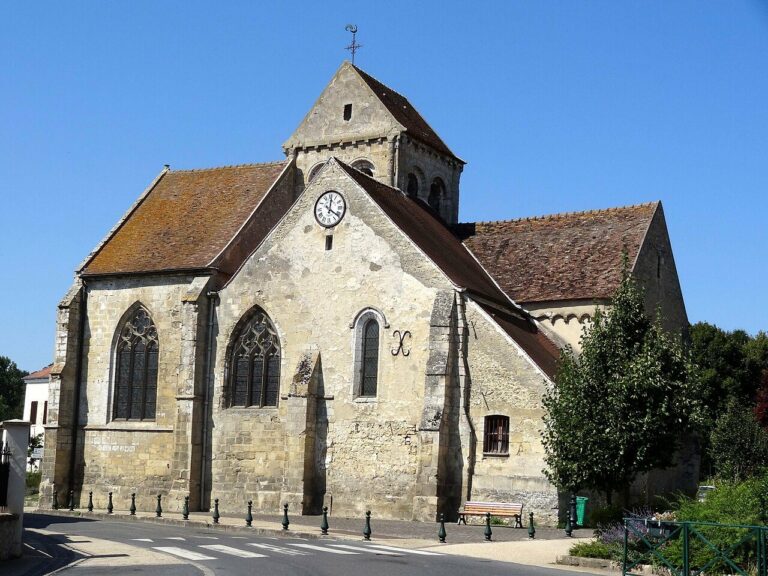
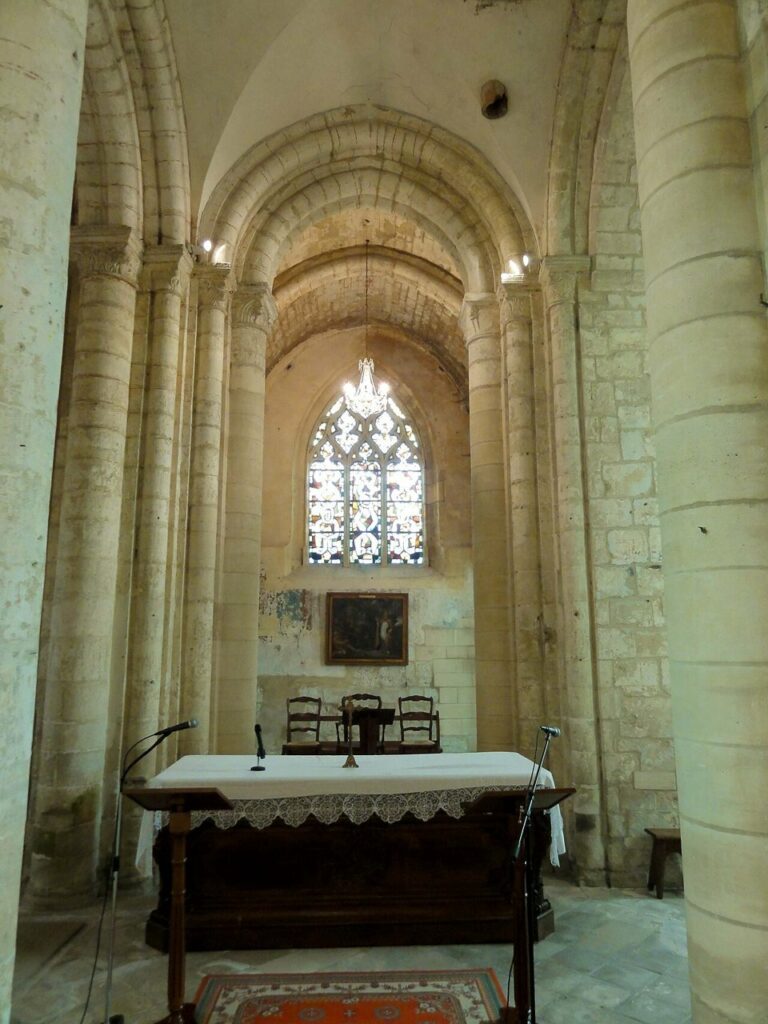
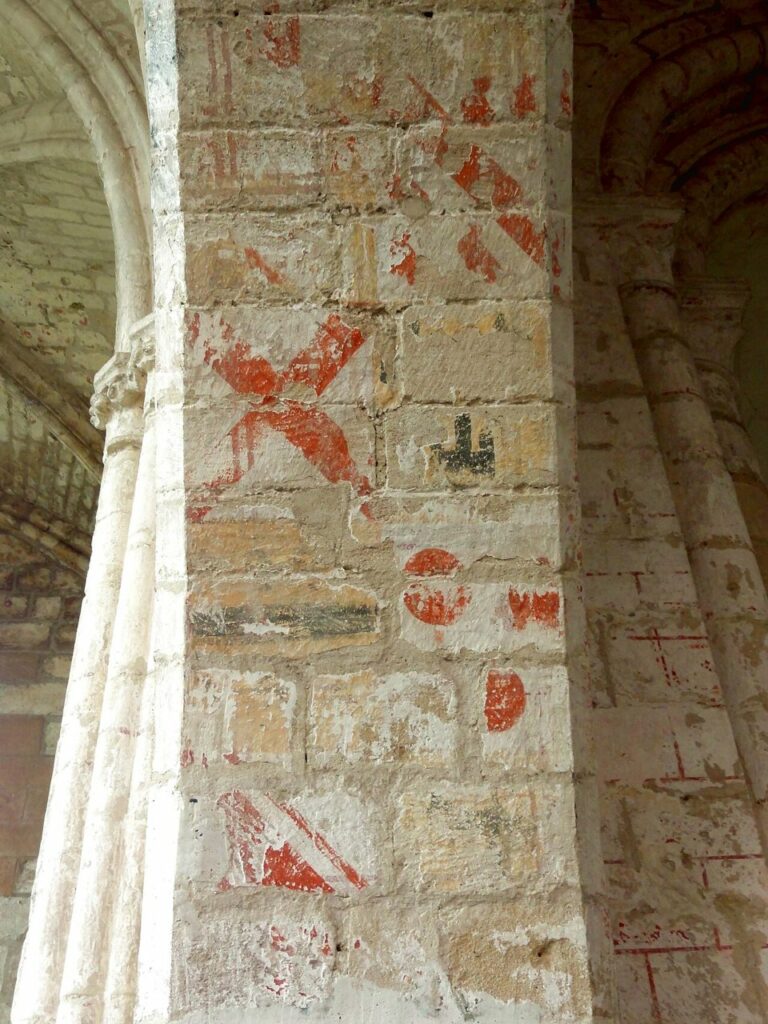
At the main crossroads of the village, Saint-Sulpice Church in Seraincourt hides, behind a mixed exterior, some of the oldest architecture in the Vexin. Its barrel-vaulted chancel and its saddleback-roofed Romanesque bell tower, built in the 12th century, are among the finest Romanesque survivals in the region; in the north transept arm, a small Romanesque doorway has come down through the centuries.
Around 1170, the church was entrusted to the Premonstratensian canons, who served it until the Revolution and enlarged it with a transept arm and a chapel on the north side. In the 14th century an elegant Gothic chapel was added on the south side, while the present nave, rebuilt in 1863, reuses the stones of the old one.
In the mid-13th century, the register of parishes of the Archbishop of Rouen describes Saint-Sulpice Church, served by two Premonstratensian canons from the Abbey of Dommartin, for about a hundred parishioners. The parish also had a chapel dedicated to Saint John, at Rueil.
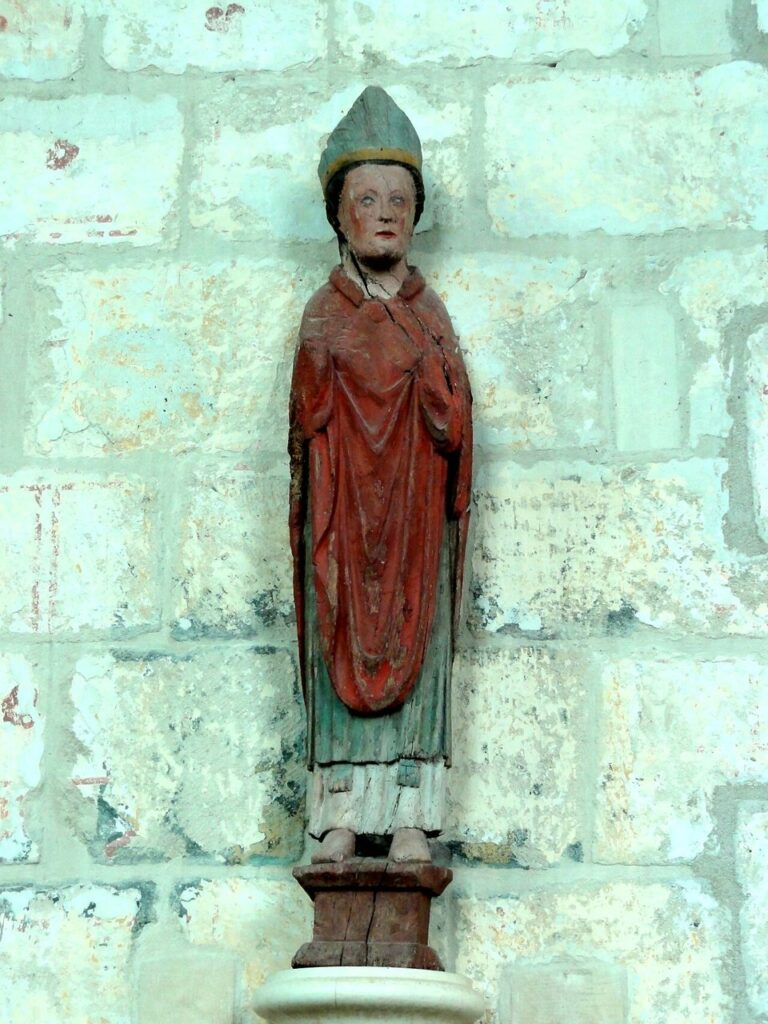
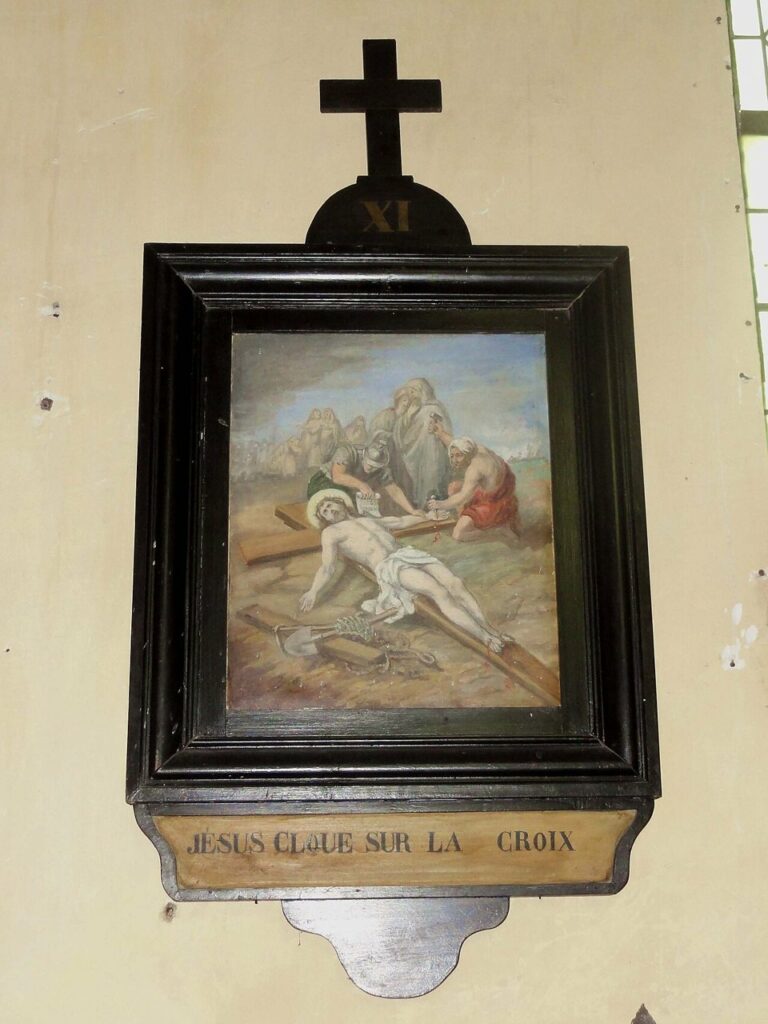
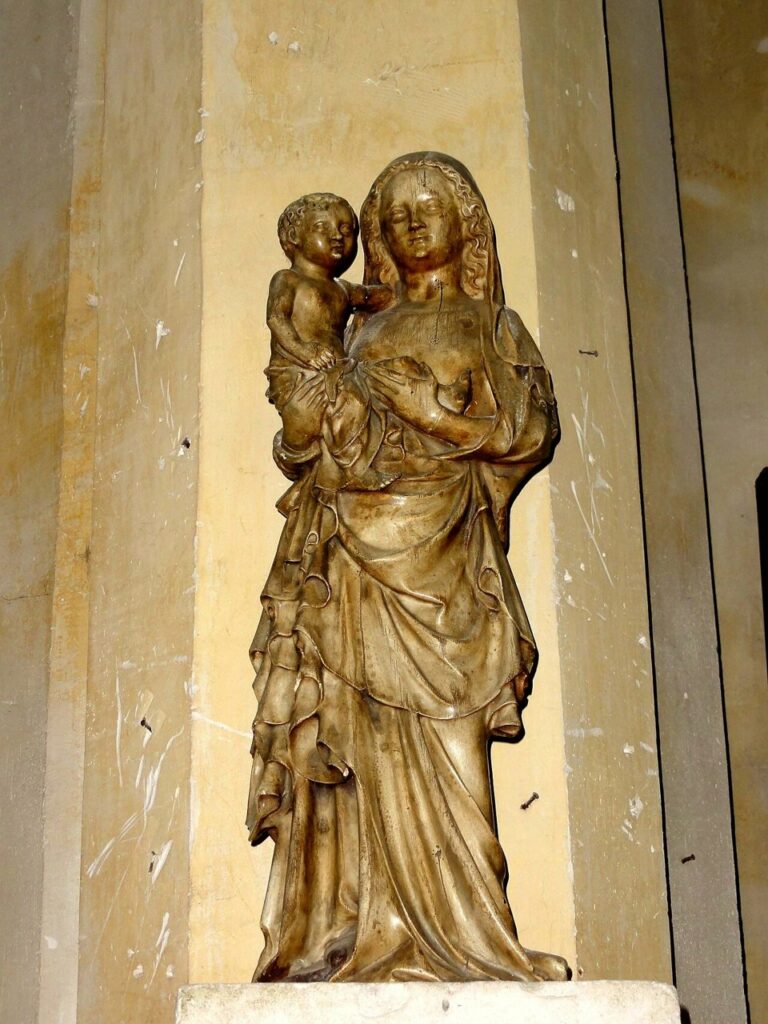
Listed as a historic monument in 1930, the church keeps a moving wooden statue of Saint Sulpice, carved in the Middle Ages, a fine 18th-century high altar and Stations of the Cross donated in 1879. It is dedicated to Saint Sulpice, Bishop of Bourges.
Saint Sulpice, patron saint of the church
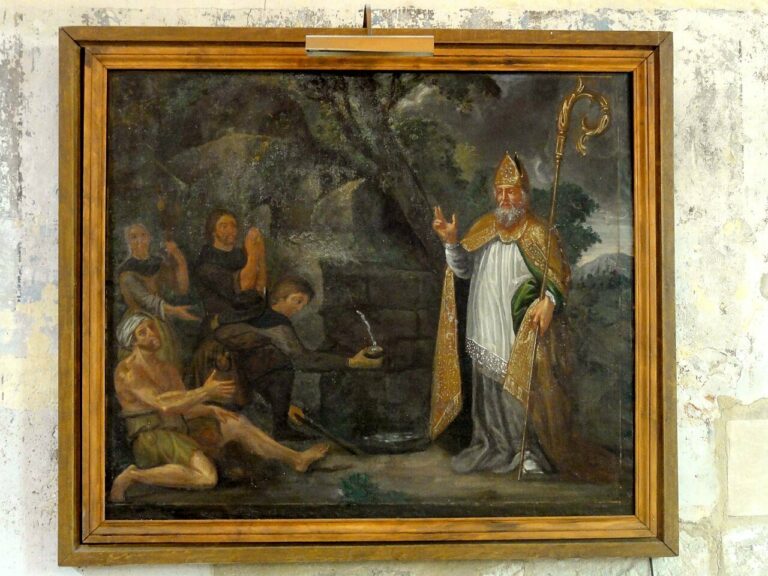
Two holy bishops of Bourges bore the name Sulpice: Sulpice Severus and Sulpice the Pious, who died in 647. The latter, first a chaplain to King Clotaire II, is remembered for his charity towards the poor. The church keeps a medieval statue of Saint Sulpice and an 18th-century painting showing him performing miracles. Nearby Sagy has the same patron saint.
Key dates
- 12th centuryConstruction of the barrel-vaulted chancel and the saddleback-roofed Romanesque bell tower.
- c. 1170The church is entrusted to the Premonstratensian canons, who serve it until the Revolution.
- Mid-13th centuryTwo Premonstratensian canons serve the parish, which has about a hundred faithful
- 14th centuryConstruction of the large south chapel, in the Rayonnant Gothic style.
- c. 1500The Flamboyant window of the east end is opened.
- 1791–1793The Premonstratensians cease to serve the parish; the priory and the presbytery are sold as national property.
- 1863The nave is rebuilt with the materials of the old one.
- 1930Listed as a historic monument.
- August 1944The stained-glass windows are blown out during the war.
In pictures








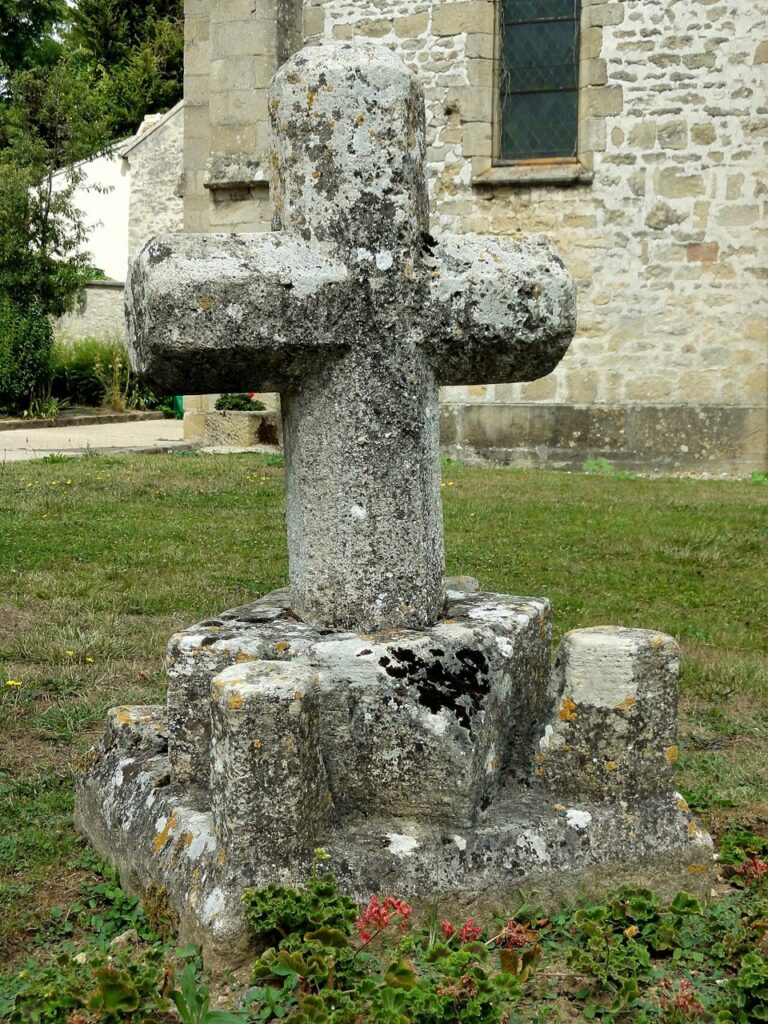

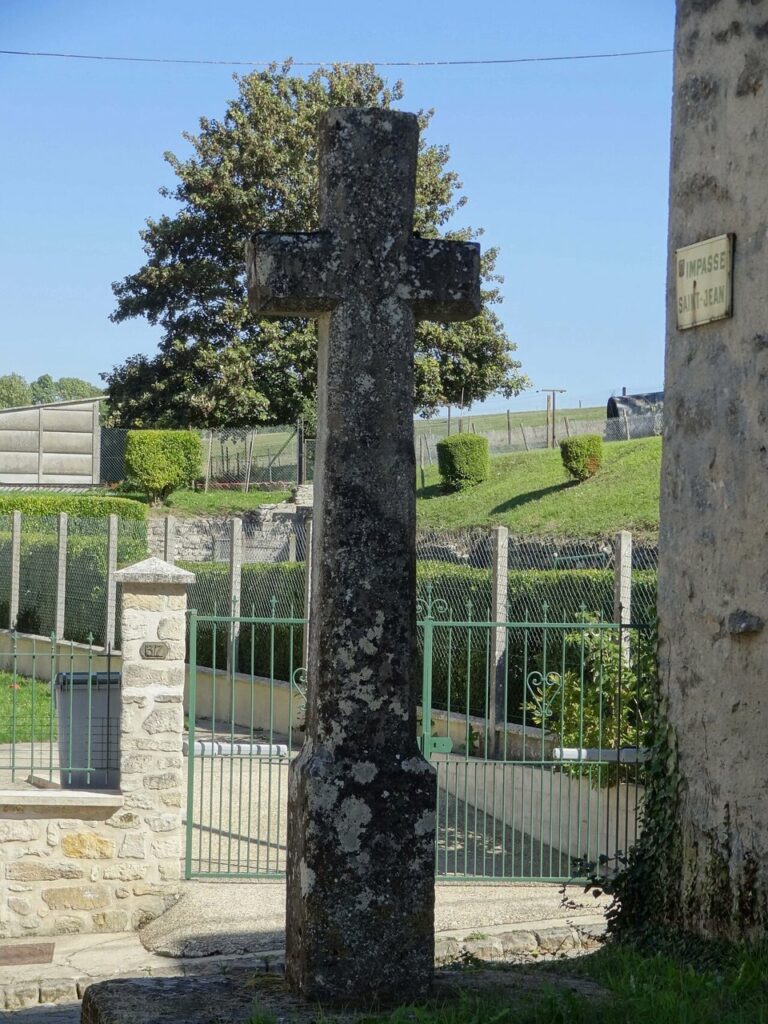

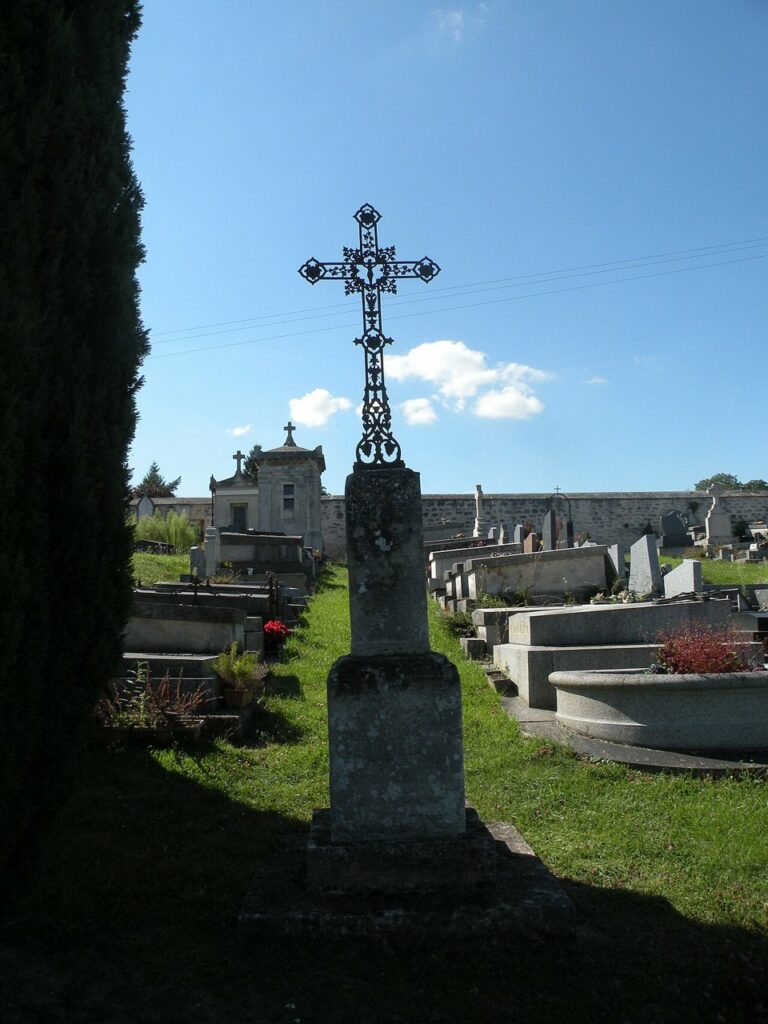

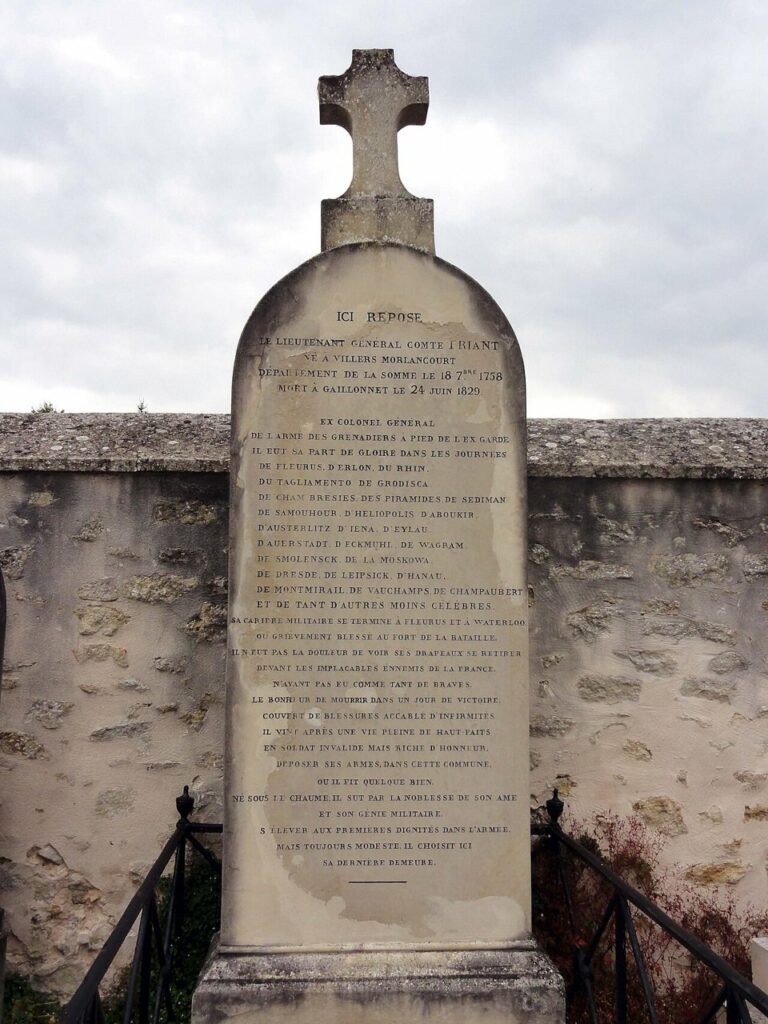





The church’s treasures
- Statue of Saint Sulpice: Polychrome wood, 12th–13th century (listed)
- High altar: Carved oak in the form of a tomb, first half of the 18th century (registered)
- Painting of Saint Sulpice: The saint as miracle-worker, 18th century
- Stations of the Cross: Painted and donated in 1879 by a former steward of the court of Parma
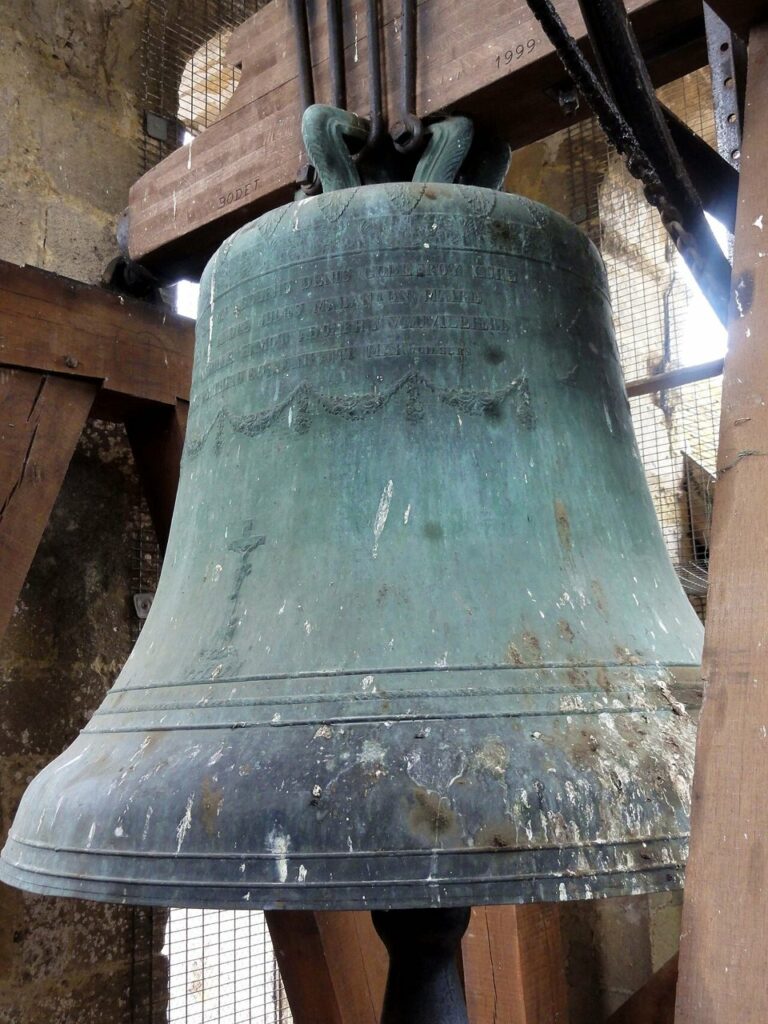
- Bell Jeanne Marie Ivonne: Cast in 1877 in Dreux
- Tomb of General Friant: In the cemetery, grave of General Louis Friant (1758–1829), a stop on the heritage trail
Further reading
Other photos and documents about this church can be found on other websites; we cannot reproduce them all here, but you can look at them there:
- Wikimedia Commons: freely licensed photos of the churchMore than 70 freely licensed photos: bell tower, chevet and clock face, side chapels, portals, weathervane, cross; interior (base of the bell tower, chapels, roof space).
- Wikipédia: article on the churchVery comprehensive article (more than 80,000 characters): history of the parish, building campaigns, restorations, description; more than 70 illustrations.
- Ministère de la Culture (POP): record and photos of the churchRecord of the church, listed in 1930, with 10 photos: south façade and bell tower, portal, north transept, vaults, interior of the nave and chancel.
- Seraincourt town hall: monumentsThe commune's “Monuments” page: presentation of Saint-Sulpice Church, served by the Premonstratensians from 1175 to 1791, and of its Romanesque parts, with photos.
- Ministère de la Culture (POP): protected object in the churchStatue of Saint Sulpice (12th–13th century), patron of the church: 2 photos. The other protected objects are the 18th-century high altar and a bell reported stolen.
Sources for this page
- POP – Mérimée PA00080209 ; Palissy PM95000667, PM95000668, PM95001308 — link
- Wikipédia, « Église Saint-Sulpice de Seraincourt » — link
- Wikipédia, « Seraincourt (Val-d'Oise) » — link
- Nominis (CEF) – Saint Sulpice le Pieux — link
- P. Coquelle, « Les portails romans du Vexin français et du Pincerais », Mémoires de la Société historique et archéologique de Pontoise et du Vexin (MSHAPV), t. XXVII — link
- P. Coquelle, « Les clochers romans du Vexin français et du Pincerais », MSHAPV, t. XXV — link
- L. Plancouard, « La cloche de Marines (Seine-et-Oise) », Bulletin monumental — link
- J. Verrier, « Les dommages de guerre aux édifices classés et inscrits », Bulletin monumental (liste Seine-et-Oise 😉 — link
- Commune de Seraincourt, bulletin municipal de juillet 2021 (travaux de l'église ; « Les Choppin de Seraincourt de 1625 à 1987 ») — link
- Seraincourt95.fr, « L'église » (11 mars 2021) — link
- Polyptychum Rotomagensis diœcesis (pouillé dit d'Eudes Rigaud, milieu du XIIIe s.), éd. dans Recueil des historiens des Gaules et de la France, t. XXIII, Paris, 1876 (doyenné de Meulan) — link
- A. Longnon (éd.), Pouillés de la province de Rouen, Paris, 1903, pouillé de 1337, doyenné de Meulan — link
- « Seraincourt (Val-d'Oise). Église Saint-Sulpice », chronique des fouilles médiévales (diagnostic archéologique), Archéologie médiévale, t. 28 — link
- L. Serbat, « Église de Seraincourt », chronique résumant P. Coquelle (Commission des antiquités et des arts de Seine-et-Oise, 1904, p. 86-96), Bulletin monumental, t. 68 — link
- « Marques d'appareillage à Seraincourt (Seine-et-Oise) et à Bezannes (Marne) », chronique, Bulletin monumental, t. 95 (d'après le Bulletin de la Société nationale des Antiquaires de France, 1935) — link
- « L'église Saint-Julien de Marolles-en-Brie et ses rapports avec l'architecture parisienne », Bulletin monumental, t. 144 — link
- A. Lapeyre, « Les chapiteaux historiés de l'église de Deuil », Bulletin monumental, t. 97-4 — link
- L. Plancouard, « Notice archéologique sur l'église du Bellay », Mémoires de la Société historique et archéologique de Pontoise et du Vexin, t. XXIV — link
- Commission des antiquités et des arts de Seine-et-Oise, Album des objets mobiliers artistiques classés de Seine-et-Oise, t. I, Paris, Picard (texte explicatif, XIVe siècle ; planche 21) — link
- POP – Palissy PM95001363 (ancien mécanisme d'horloge, mairie de Seraincourt), export officiel palissy.csv du 20/11/2026 — link
- Commune de Seraincourt, bulletin municipal de janvier 2026 (cérémonie du 11 novembre 2025 ; « Précis historique des combats » d'août 1944 rédigé par le maire de l'époque ; conseil municipal, plan communal de sauvegarde) — link
- Commune de Seraincourt, bulletin municipal de janvier 2025 (vie associative, 14 septembre 2024) — link
- Commune de Seraincourt, « Sentier du patrimoine – Maisons d'hôtes – Tourisme » — link
- Commune de Seraincourt, « Monuments » — link
Page compiled from the databases of the French Ministry of Culture and the Inventaire du patrimoine, and from documents of the parish, the diocese and the commune; checked in November 2026. An error, a memory, a photo to share? Contribute.
Have you noticed an error, would you like to add further information, or share photos you have taken of this church? Our team would be grateful if you let us know: contribute to this page (form in French).