
Our 38 churches › Frémécourt

Dedication
Our Lady (Notre-Dame)
Historic monument
Registered (1974)
6 protected works
Address
Near the town hall, 95830 Frémécourt
at the junction of the Rue de Cléry and the Rue des Petites-Fontaines
Directions
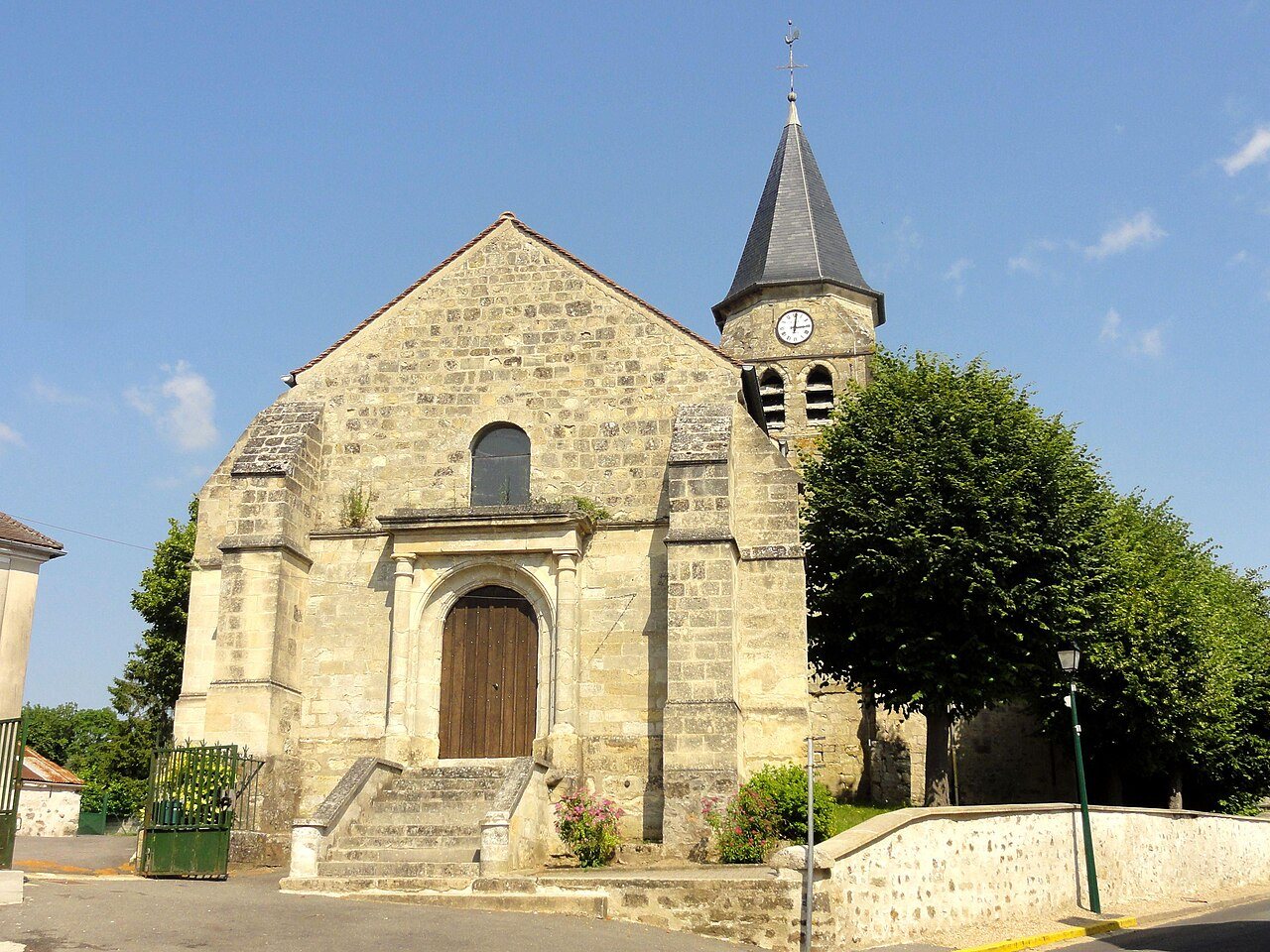
The church stands on a terrace, about ten steps above the crossroads.
Upcoming Masses
- Saturday 26 December, 6:00 pm
- Saturday 19 June, 6:00 pm
A Romanesque church with an off-centre bell tower
In the heart of Frémécourt, on the little square that is also home to the town hall, Notre-Dame Church overlooks the crossroads from the top of its terrace. It is dedicated to the Virgin Mary. This patronage is an old one: in the middle of the 13th century, the church of Saint Mary already appeared in the register of parishes of the diocese of Rouen, whose archbishop appointed the parish priest.
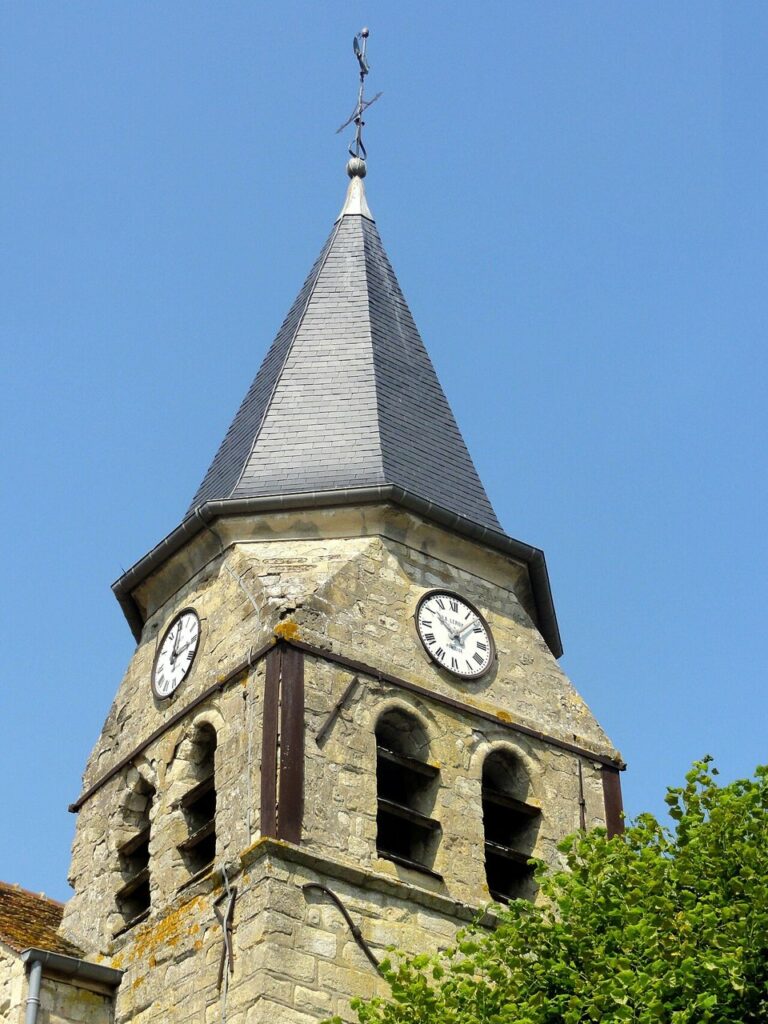
Its history can be read in its stones. The bell tower and part of the nave and transept date from the Romanesque period; a rare curiosity in the Vexin, the bell tower rises not above the crossing but above the south arm of the transept, and becomes octagonal at its top. The chancel was rebuilt around the middle of the 16th century, in the Renaissance style, with capitals and keystones bearing inventive motifs. In 1697 the church was so close to collapse that Mass was forbidden there: it was repaired around 1700, and the present portal dates from that time. The building has been registered as a historic monument since 1974.
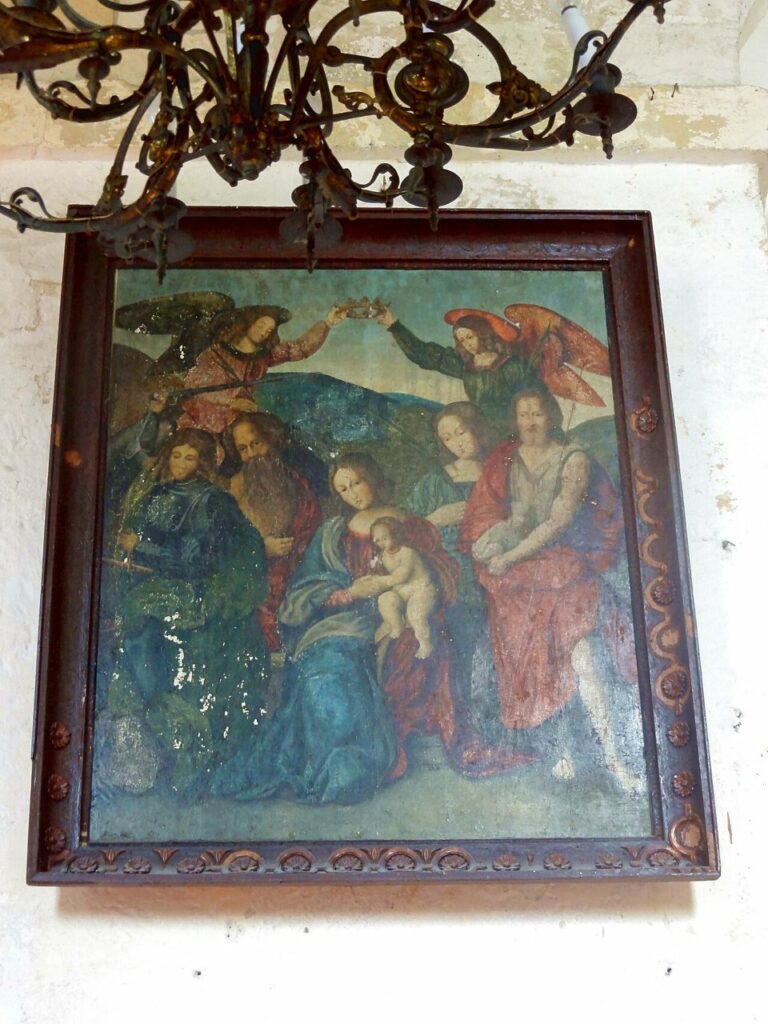
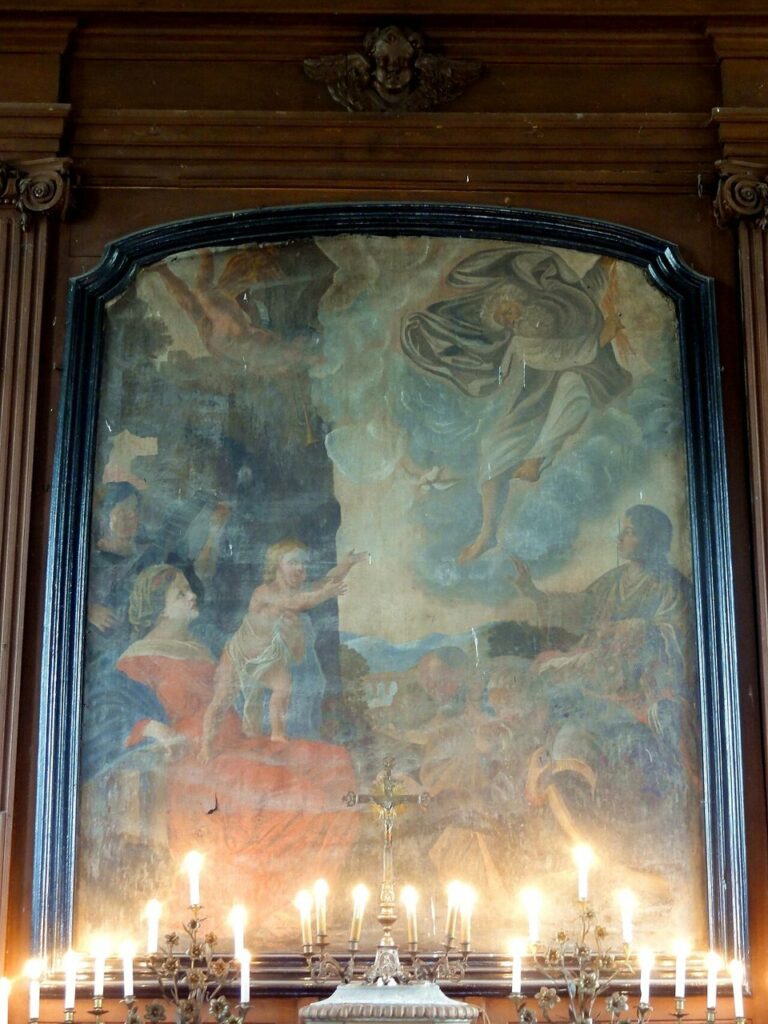
The church's treasure is its 14th-century baptismal font, finely carved with vine scrolls, fishes and fleurs-de-lis, where generations of village children have been baptised. Admire too the painting of the Virgin surrounded by saints, painted in the 16th century in the spirit of Italian art and protected since 1905, and the high altar altarpiece with its Adoration of the Magi.
A modest and endearing church, to be discovered at Mass or during the Heritage Days.
Our Lady, patroness of the church
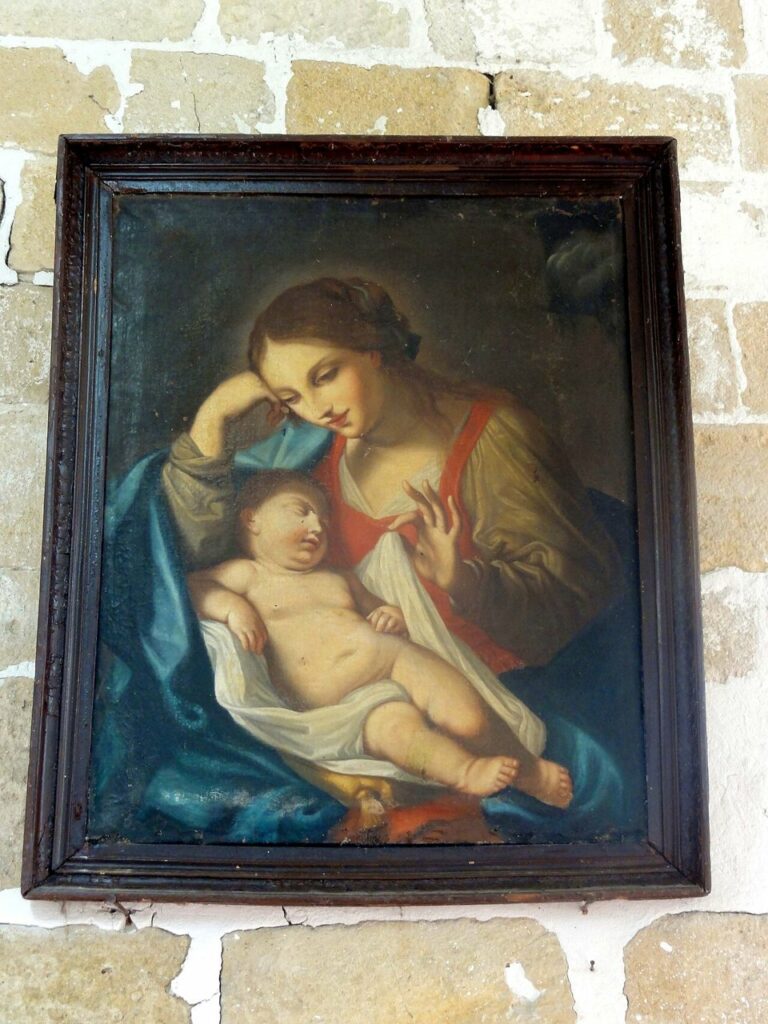
The church is placed under the patronage of the Virgin Mary, like many churches of the Vexin. The works preserved here reflect this Marian devotion: a 16th-century painting shows the Virgin and Child surrounded by Saint Michael, Saint John the Baptist, Saint Catherine and a hermit saint, and another painting, from the 17th century, depicts the Virgin and Child.
Key dates
- Romanesque periodBuilding of the bell tower, the nave and the transept
- Mid-13th centuryThe Archbishop of Rouen appoints the parish priest of the church of Saint Mary
- Mid-16th centuryNew Renaissance chancel and its two chapels
- 1697The church is close to collapse: Mass is forbidden there
- c. 1700Repairs and a new portal in the classical spirit
- 1905The painting of the Virgin surrounded by saints is listed
- 1907The baptismal font is listed
- 1974The church is registered as a historic monument
- 2015The high altar altarpiece and two paintings are registered
- 2019The bell-tower clock is set going again thanks to a public subscription
In pictures


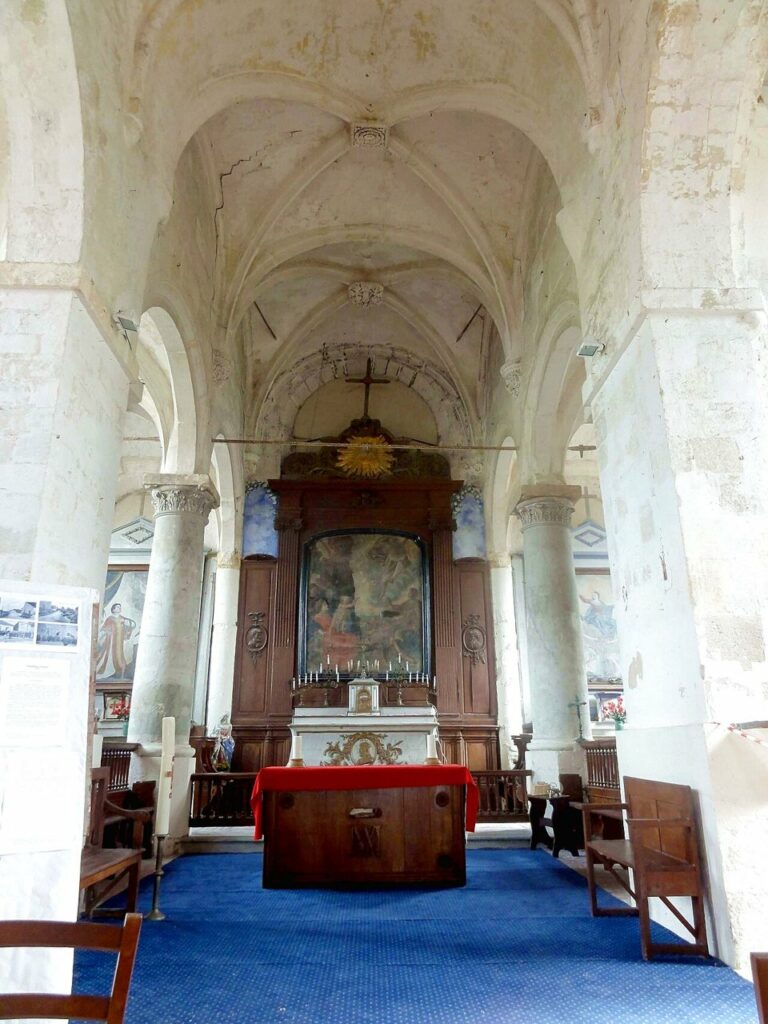

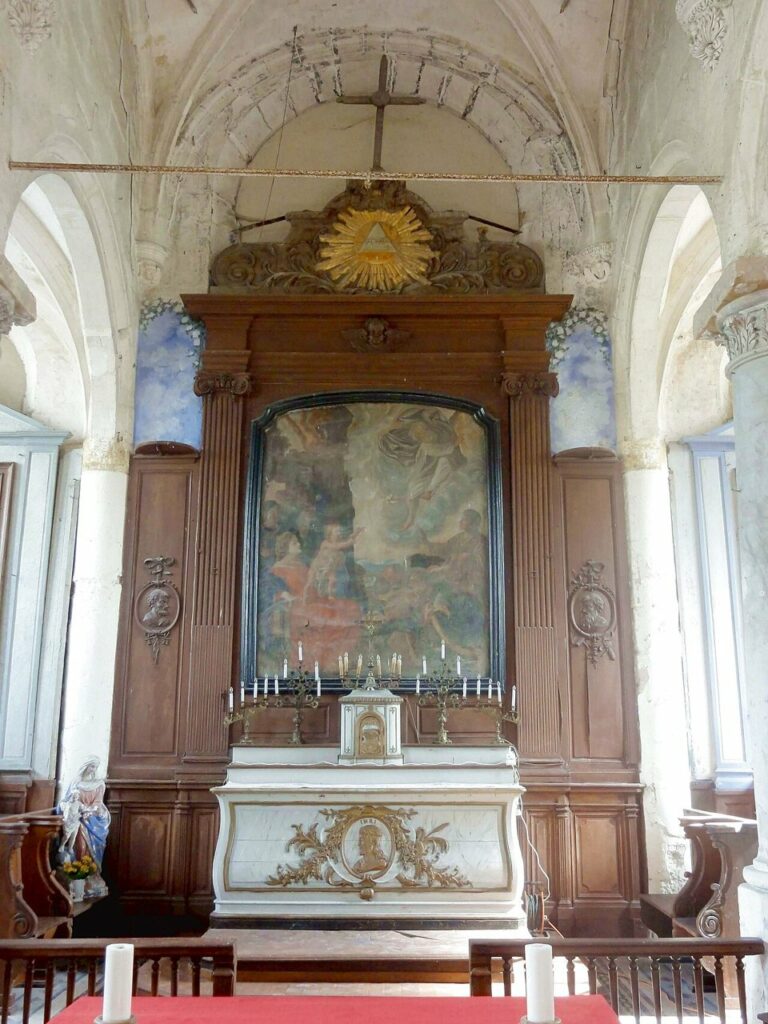

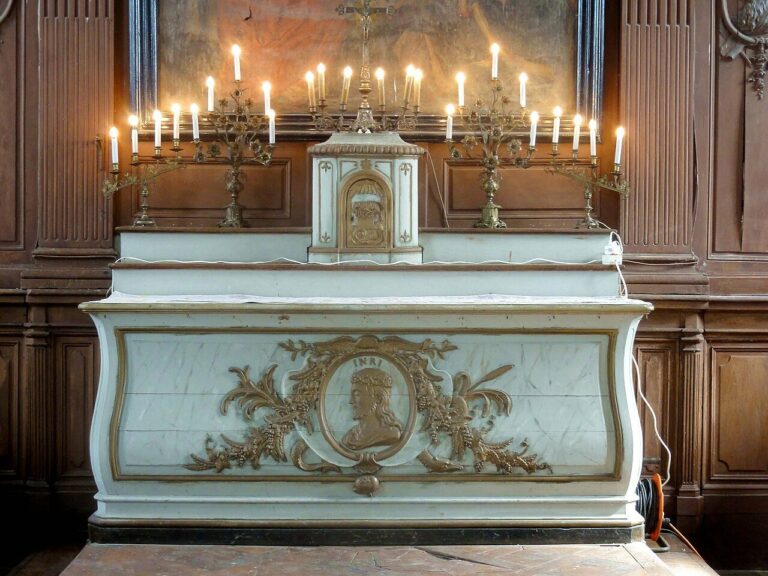

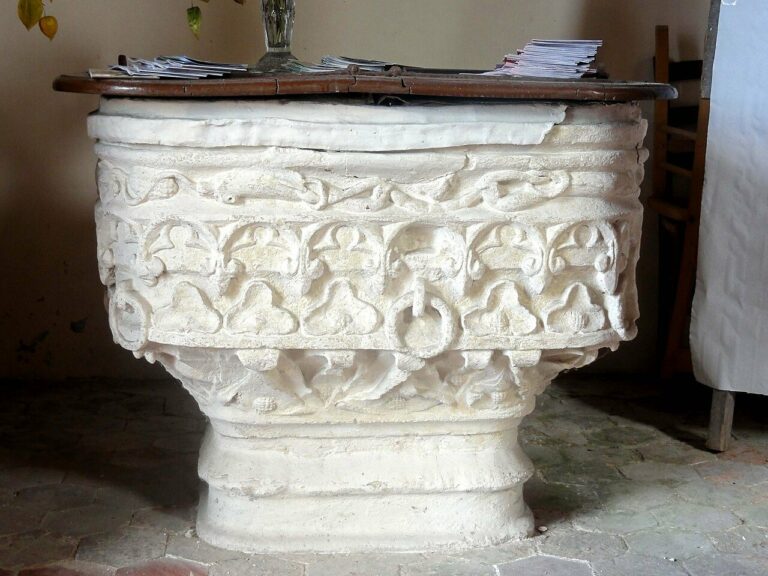











The church’s treasures
- Baptismal font: Basin carved with vine scrolls, fishes and fleurs-de-lis, 14th century (listed)
- The Virgin surrounded by saints: Painting on wood, 16th century (listed)
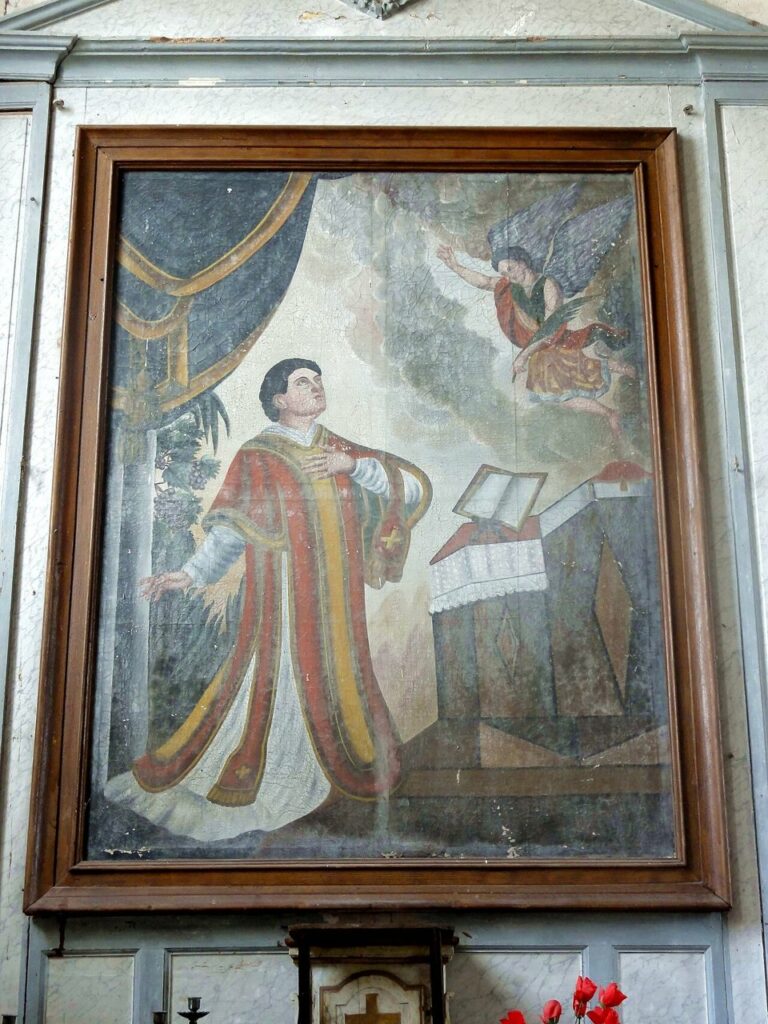
- High altar altarpiece: With its 17th-century painting of the Adoration of the Magi (registered)
- Virgin and Child: 17th-century painting (registered)
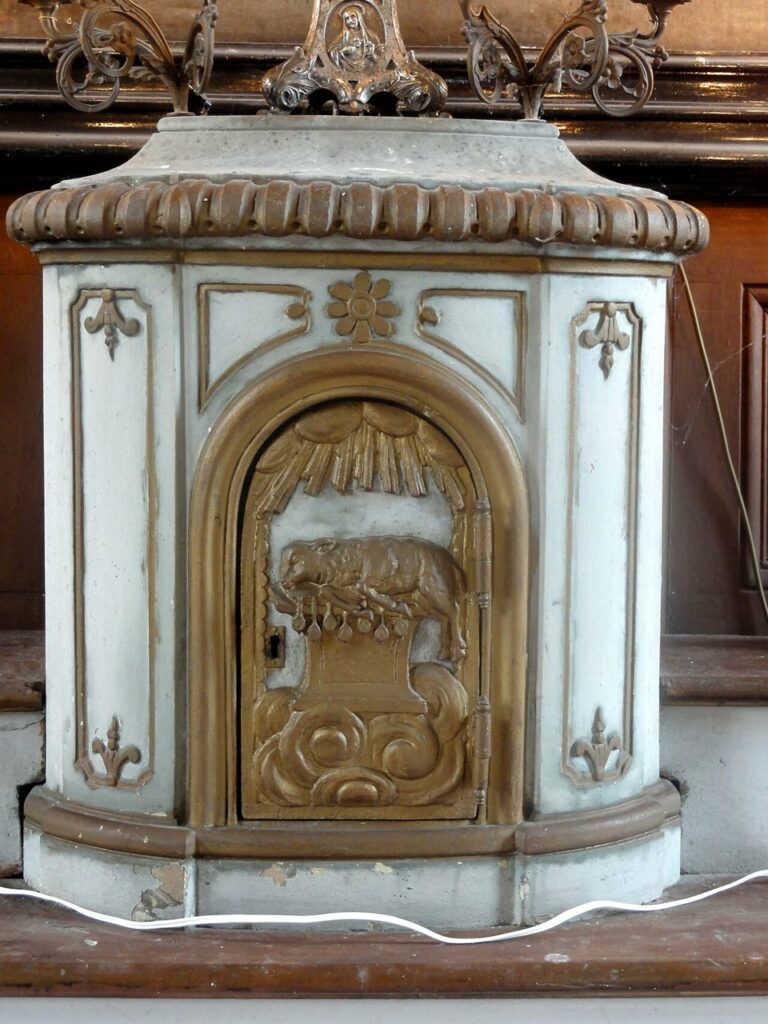
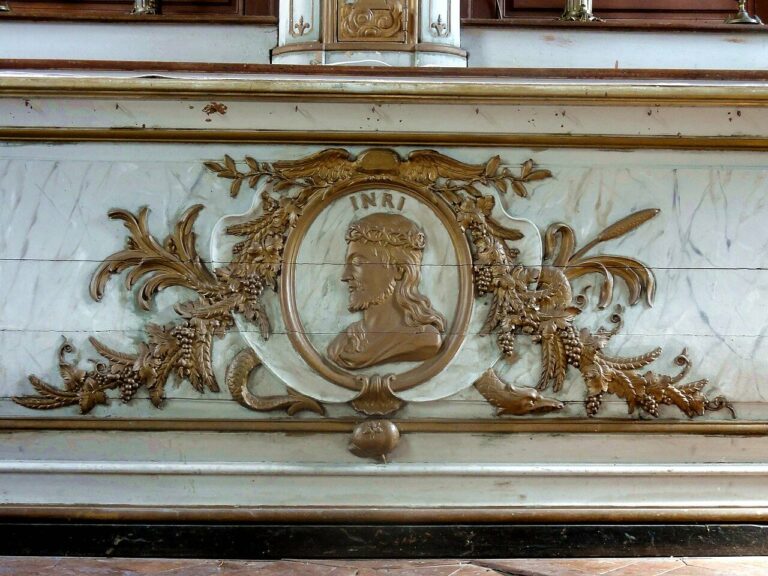
- Former high altar: Tomb-shaped altar and tabernacle with the Lamb of God, 18th century
Find out more
Open a section to read the details.
Detailed history
- Romanesque periodBuilding of the bell tower, the nave and the transept. Historians hesitate between the late 11th century and the 12th century.
- 1190First mention of the village. Its lord is named Eudes de Frémécourt.
- Mid-13th centuryThe register of parishes of the archdiocese of Rouen mentions the church of Sainte-Marie of “Fermecort”: the living is worth 20 livres parisis, for about 36 parishioners.
- Mid-16th centuryThe chancel is rebuilt in the Renaissance style, with its two chapels.
- September 1697The vicar general of Pontoise, Vincent de Marais, notes the poor state of the church. He forbids Mass there until it has been repaired.
- c. 1700Works: new portal, windows recut, repairs at the crossing and in the chancel.
- February 1789The parish priest, Lecauchois, who lives at the presbytery, is summoned to the assembly of the clergy of the bailiwick of Pontoise.
- RevolutionThe parish passes to the diocese of Versailles.
- 1905 and 1907Listing of the painting of the Virgin surrounded by saints (1905), then of the baptismal font (1907).
- 1966The parish joins the diocese of Pontoise.
- 1974On 28 June the church is registered as a historic monument.
- 1980sA small Romanesque window is rediscovered in the nave.
- 2010The wall supporting the green space beside the church is rebuilt, with the help of the regional nature park.
- 2014–2015Volunteers clean the church. The sacristy, in very poor condition, is entirely restored; its arches towards the chancel are glazed.
- 2015On 3 December the high altar altarpiece and two paintings are registered. On 11 October the church had hosted a first concert.
- 2018–2019Volunteers relay the floor in terracotta tiles. A public subscription makes it possible to restart the clock and its west dial, above the porch.
Architecture
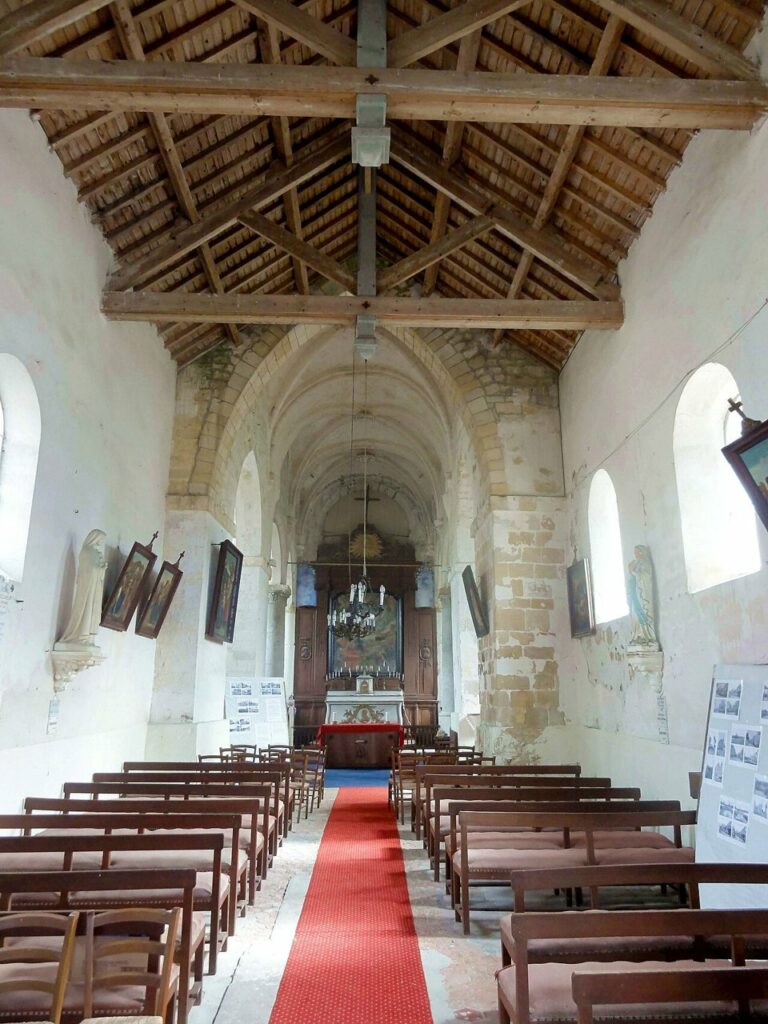
This is a country church, combining a nave and transept of Romanesque origin, much altered, with a small Renaissance chancel. It is built on a terrace, above the crossroads.
The Romanesque bell tower stands above the south arm of the transept, and not in the centre. Above the belfry stage it becomes octagonal. In 1903 a historian placed it among the Romanesque towers with a slate spire.
Around the crossing, pointed arches date from the Gothic period, as does the window of the south transept arm. The two transept arms have no vault. The whole interior is covered in limewash.
The nave portal, from around 1700, is classical in spirit; its decoration was never finished. In the chancel, the capitals and vault bosses carry original motifs, far removed from the usual Renaissance models.
- Romanesque periodBell tower, nave and transept.
- Gothic periodArches of the crossing and window of the south transept arm, perhaps 13th-century.
- Mid-16th centuryRenaissance chancel and its two side chapels.
- c. 1700Unfinished classical portal, windows recut.
Furnishings and works of art
- Baptismal font14th century · listed in 1907A limestone basin, the church's finest piece. It is carved with friezes in which vine scrolls alternate with a fish, small three-lobed arches and inverted fleurs-de-lis. It still has its fastening rings.
- The Virgin surrounded by saints16th century · listed in 1905A painting on wood. The Virgin and Child stands between Saint Michael, a hermit saint, Saint John the Baptist and Saint Catherine, in the manner of the Italian “sacred conversations”.
- High altar altarpiece17th – 19th centuries · registered in 2015It is decorated with Ionic pilasters and medallions of Saint Peter and Saint Paul. Its painting of the Adoration of the Magi is 17th-century.
- Virgin and Child17th century · registered in 2015A painting.
- Former high altar18th centuryA tomb-shaped altar and its tabernacle. It shows a medallion of Christ crowned with thorns, garlands and, on the door, the Lamb of God.
Bells
A bell of 1777 was in place in 1908. The scholar Louis Régnier described it in 1895: it measured 0.87 m in diameter and bore the signature of its founder, P. Charles Morel, of Gisors.
The parish in earlier times
In the 13th century the church was called Sainte-Marie: “Ecclesia Sanctae Mariae de Fermecort”. The Archbishop of Rouen conferred the living. An archdeacon, then standing in for Eudes Rigaud, entrusted it to the clerk Jean de Cent-Puits. The archbishop kept this right until the Revolution.
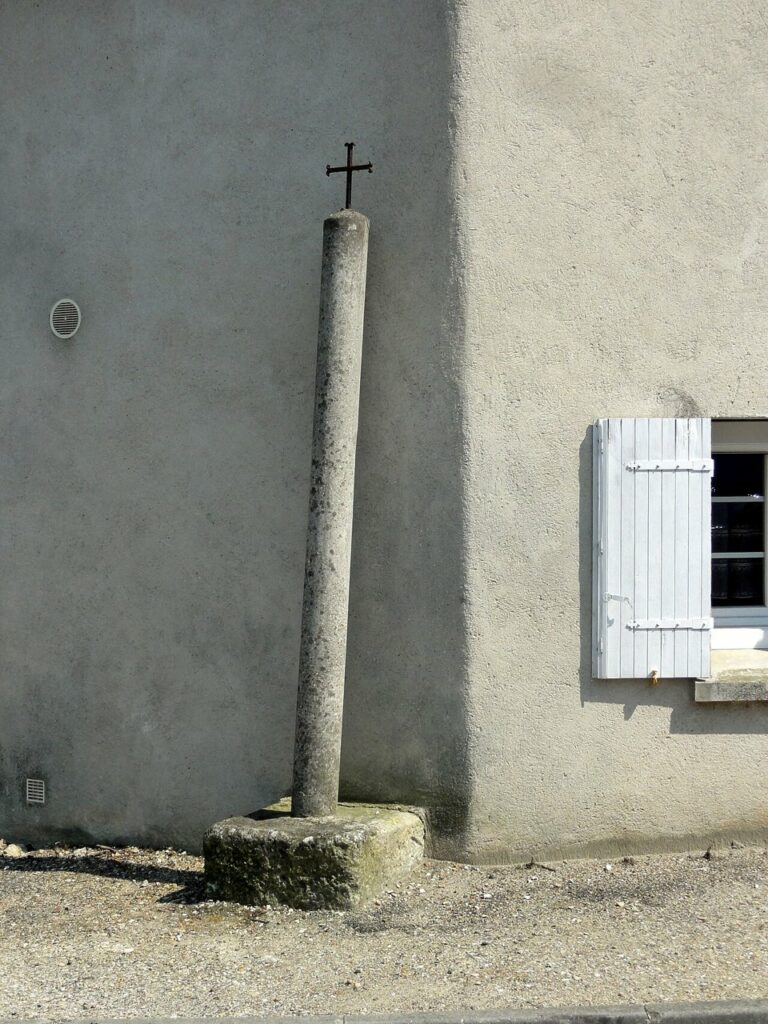
Wayside crosses and local heritage
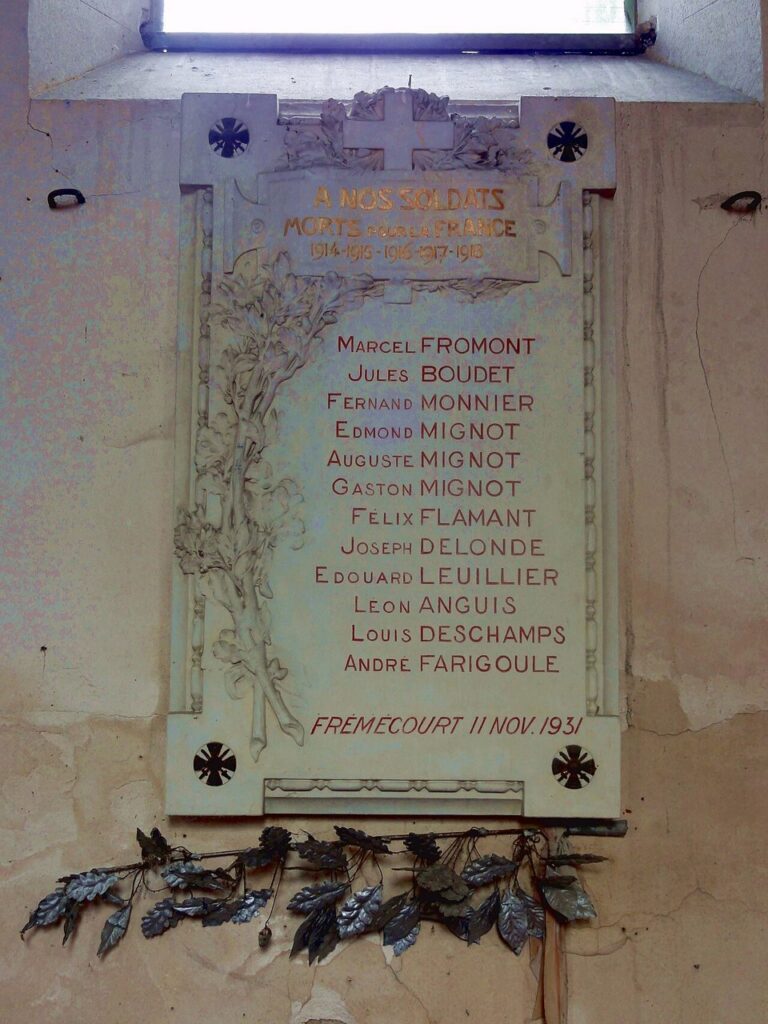
The parish war memorial is in the nave of the church.
Religious life and traditions
The village festival takes place in June, with the school fête and the Saint John's Eve bonfire.
The church also opens for the European Heritage Days: it hosted an exhibition of old postcards of the village in 2008, then a display on the former shops of Marines in 2010.
Did you know?
On the baptismal font, the vine evokes the Eucharist and the fish baptism.
Further reading
Other photos and documents about this church can be found on other websites; we cannot reproduce them all here, but you can look at them there:
- Ministère de la Culture (POP): record and photos of the churchRecord of the church, registered in 1974, with 28 photos: façades, portal, bell tower, nave and vaults, altarpieces and paintings, baptismal font, 16th-century painted panel.
- Ministère de la Culture (POP): protected object in the church16th-century painted panel: the Virgin and Child between Saint Michael, a hermit, Saint John the Baptist and Saint Catherine; 8 photos. 6 protected objects in all.
- Wikimedia Commons: freely licensed photos of the churchSome thirty freely licensed photos, mostly of the interior: nave, chancel and its main arcades, aisles, north transept arm, nave roof timbers, plus a plan.
- Wikipedia: article on the churchDetailed article: history, description (overview, interior, exterior) and furnishings of the church; some forty illustrations and a bibliography.
- Amis du Vexin français: Frémécourt entryThe association's entry on the commune: Notre-Dame Church, founded in the 12th century and rebuilt in the 17th, bell tower and nave walls preserved, façade never completed.
Sources for this page
- Base Mérimée, notice PA00080060 « Église » (Frémécourt) — link
- Base Palissy, PM95000261 à PM95000264, PM95001195, PM95001196 (Frémécourt) — link
- Wikipédia, « Église Notre-Dame-de-l'Assomption de Frémécourt » — link
- Wikipédia, « Frémécourt » — link
- Wikimedia Commons, catégorie « Église Notre-Dame-de-l'Assomption de Frémécourt » et sous-catégories (licences lues via l'API le 17/11/2026) — link
- Léon Plancouard, « La cloche de Marines (Seine-et-Oise) », Bulletin monumental, t. 72, 1908, p. 66-77 (note 2 p. 66 : liste des cloches du canton de Marines antérieures à la Révolution) — link
- MSHAPV, procès-verbaux du conseil 1904-1905 (vœux de classement) — Internet Archive — link
- Pierre Coquelle, « Les clochers romans du Vexin français et du Pincerais », Mémoires de la Société historique et archéologique de Pontoise et du Vexin (MSHAPV), t. XXV, 1903 (classification p. 65) — Internet Archive — link
- Commune de Frémécourt, bulletins « Frémécourtoisie » (n°3, 6, 13, 23, 28) — link
- Louis Régnier, « Cloches et fondeurs de cloches, notes recueillies dans les départements de l'Eure, de l'Oise et de Seine-et-Oise », Bulletin archéologique du Comité des travaux historiques et scientifiques, 1895, p. 399-457 — Internet Archive (Pierre-Charles Morel, second du nom, p. 448) — link
- Léon Plancouard, « Notice archéologique sur l'église du Bellay », Mémoires de la Société historique et archéologique de Pontoise et du Vexin, t. XXIV, 1902, p. 47-53 — Internet Archive — link
- Polyptychum Rotomagensis diœcesis (pouillé du diocèse de Rouen dit d'Eudes Rigaud, milieu du XIIIe siècle), éd. dans Recueil des historiens des Gaules et de la France, t. XXIII, Paris, 1876, p. 316 (doyenné de Meulan) — Internet Archive — link
- Ernest Mallet (éd.), Les élections du bailliage secondaire de Pontoise en 1789, Pontoise, Société historique du Vexin, 1909 (assignations du clergé, p. 71-76 ; procès-verbaux et cahiers des paroisses) — auteur d'après la notice Internet Archive — link
- Commune de Frémécourt, bulletins « Frémécourtoisie » n° 4 (novembre 2008), n° 5 (décembre 2008), n° 7 (novembre 2009), n° 9 (juin 2010), n° 10 (septembre 2010) et n° 12 (mars 2011) — link
- Commune de Frémécourt, bulletins « Frémécourtoisie » n° 20 (décembre 2014), n° 22 (juin 2015) et n° 23 (novembre 2015) — link
- Commune de Frémécourt, bulletins « Frémécourtoisie » n° 29 (janvier 2019) et n° 30 (juillet 2019) — link
- Wikimedia Commons, « Frémécourt (95), église Notre-Dame de l'Assomption, nef, monument aux morts de la paroisse » (2014, CC BY-SA 4.0) — link
Page compiled from the databases of the French Ministry of Culture and the Inventaire du patrimoine, and from documents of the parish, the diocese and the commune; checked in November 2026. An error, a memory, a photo to share? Contribute.
Have you noticed an error, would you like to add further information, or share photos you have taken of this church? Our team would be grateful if you let us know: contribute to this page (form in French).