
Tuesday 22 June 2027, the Church celebrates
Saint Paulinus of Nola, Bishop; Saint John Fisher and Saint Thomas More, Martyrs
Tuesday 22 June 2027 · Tuesday of the 12th week in Ordinary Time · Optional memorial · liturgical colour: green
Saint Paulinus of Nola, Bishop
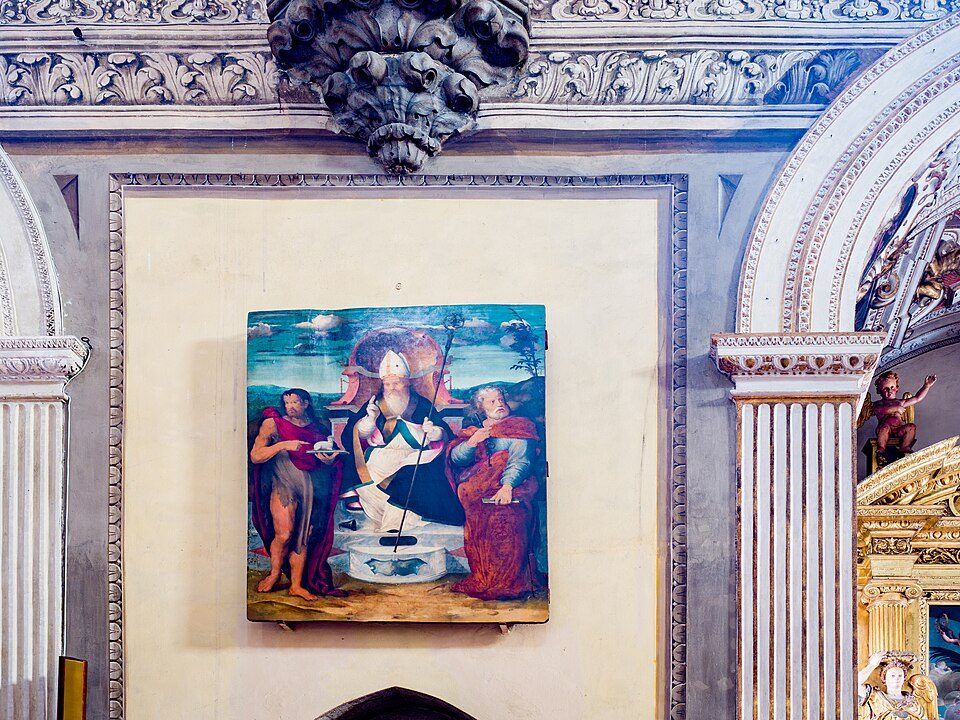

Paulinus was born around 353 in Aquitaine, at Bordeaux, into a wealthy family of the Roman nobility, and became governor of Campania, in Italy. Converted and baptised, and married to a Christian woman, he was tried by the death of their little child; the couple then sold their great possessions for the benefit of the poor and withdrew to Nola, near the tomb of Saint Felix, for a life of prayer. As a priest, then Bishop of Nola, he showed himself very close to the poor. A friend of Saint Augustine, with whom he corresponded, he was also a great Christian poet writing in Latin. He died in 431.
In Bordeaux, Paulinus received a solid literary education from the poet Ausonius. While still young, he became governor of Campania, where the simple faith of the people at the tomb of the martyr Saint Felix touched him deeply: he had a road built for the pilgrims and a hospice for the poor. He then put himself under the teaching of Saint Ambrose in Milan, and received baptism in Bordeaux from the hands of Bishop Delphinus. He married Therasia, a Christian from Spain.
The death of their son, a few days after his birth, led them to give themselves entirely to Christ. Ordained a priest in Barcelona, Paulinus settled with Therasia near the basilica of Saint Felix, in a life of prayer, poverty and reading of Scripture shared with friends. Having become Bishop of Nola around 409, he welcomed the poor into his monastery as Christ himself and called them his “patrons”. He courageously supported his people at the time of the Gothic invasions.
His poems and his rich correspondence reveal a faith nourished by the Word of God and a great sense of spiritual friendship: he was linked with Saint Martin, Saint Ambrose, Saint Jerome and Saint Augustine. He had the new basilica of Saint Felix decorated with paintings accompanied by captions, to instruct the pilgrims. Benedict XVI saw in his witness a beautiful image of the Church as a mystery of communion.
A saying
“To my mind the only art is the faith, and Christ is my poetry”
- Further reading: At Cimitile, near Nola, the remains of the basilicas that he had enlarged and decorated around the tomb of Saint Felix can still be seen.
Sources: Nominis (Conférence des évêques de France) — Saint Paulin de Nole · Wikipedia — Paulin de Nole · Vatican — Benoît XVI, audience générale du 12 décembre 2007 : saint Paulin de Nole · Vatican News — Saints du jour, 22 juin
Saint John Fisher, Bishop, and Saint Thomas More, Martyrs
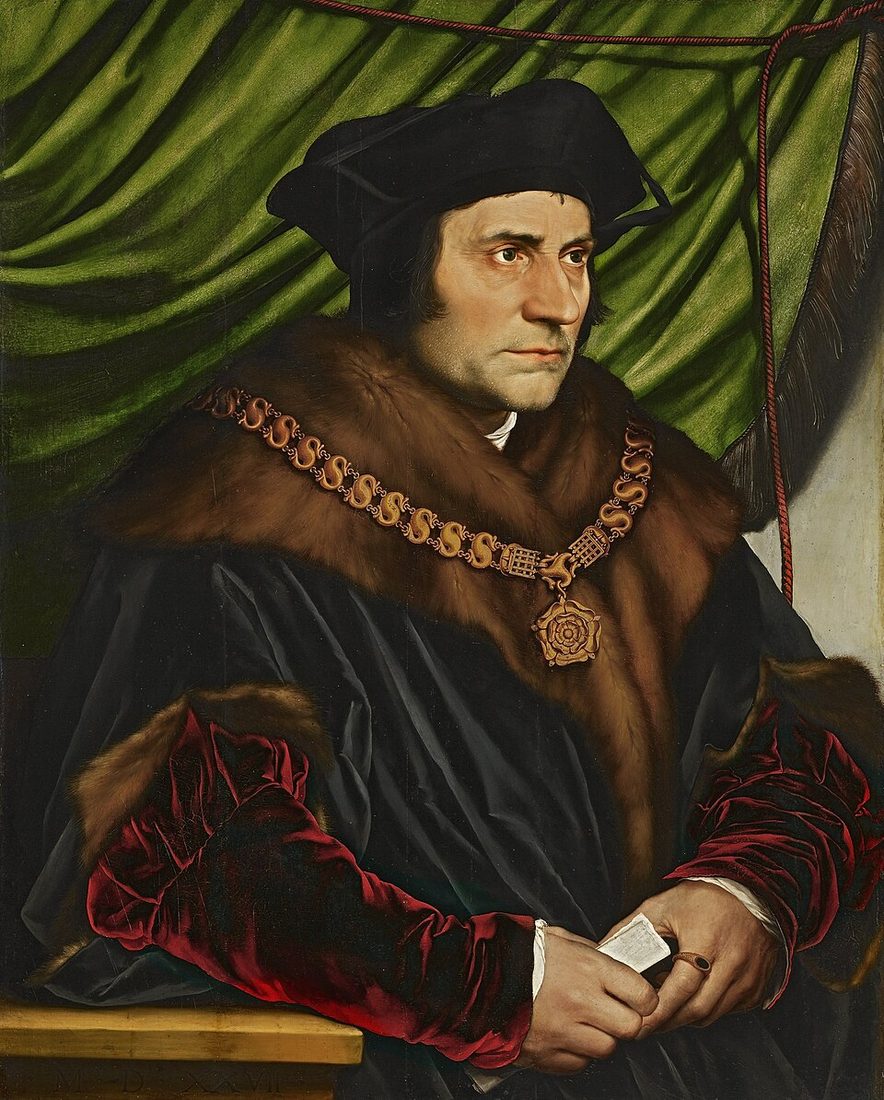

John Fisher, Bishop of Rochester and Chancellor of the University of Cambridge, and Thomas More, lawyer, humanist and Lord Chancellor of the Kingdom of England, were friends. Both refused to approve King Henry VIII’s divorce and to recognise him as head of the Church of England in place of the Pope. Imprisoned in the Tower of London, they were beheaded in 1535: John Fisher on 22 June, Thomas More on 6 July. A father and the author of Utopia, Thomas More was proclaimed patron saint of political leaders by John Paul II in 2000.
John Fisher was born at Beverley, in Yorkshire; a priest in 1491, he became in 1504 Bishop of Rochester and Chancellor of the University of Cambridge, where he brought Erasmus. Thomas More, born in London in 1478, the son of a judge, studied at Oxford, then law in London; for a time he considered the life of a Carthusian before choosing life in the world. A brilliant lawyer and humanist, a friend of Erasmus, he was appointed Chancellor by Henry VIII.
Thomas More refused to take the oath demanded by the King, who had him imprisoned in the Tower of London in 1534. John Fisher, who also refused to submit, shared the same fate; during his captivity, Pope Paul III created him a cardinal, but this mark of esteem angered the King, who had him tried and executed the following month. During his trial, Thomas More defended the indissolubility of marriage and the freedom of the Church in the face of the State. Beatified in 1886 by Leo XIII, both were canonised in 1935 by Pius XI, for the fourth centenary of their martyrdom. John Paul II saw in Thomas More an example of the primacy of conscience over power.
A saying
“His life teaches us that government is above all an exercise of virtue.”
- Patron of: Thomas More is the patron saint of statesmen and politicians.
- Further reading: John Paul II’s apostolic letter of 31 October 2000 traces the life and witness of Thomas More.
Sources: Nominis (Conférence des évêques de France) — Saint John Fisher · Nominis (Conférence des évêques de France) — Saint Thomas More · Wikipedia — John Fisher · Wikipedia — Thomas More · Jean-Paul II, lettre apostolique proclamant saint Thomas More patron des responsables de gouvernement (31 octobre 2000) · Vatican News · Catholic Encyclopedia (1909)
Today's Gospel (Mt 7:6, 12-14)
“Therefore, whatever you desire for men to do to you, you shall also do to them”
Jesus speaks of the narrow gate that leads to life. Saint Paulinus, Saint John Fisher and Saint Thomas More chose it, each according to his vocation.
Read all of the day's readings on aelf.org (in French)
Liturgical calendar: AELF; Gospel quotations: World English Bible (public domain)
Key
feast of one of our parish churches · today
- green: Ordinary Time
- purple: Advent and Lent
- white: Christmas, Easter, feasts of the Lord, of the Virgin Mary and of the saints
- red: the Passion, Pentecost, apostles and martyrs
- rose (optional): 3rd Sunday of Advent and 4th Sunday of Lent