
Sunday 6 June 2027, the Church celebrates
10th Sunday in Ordinary Time
Sunday 6 June 2027 · 10th Sunday in Ordinary Time · liturgical colour: green
In our parish
- Saint Claude, Bishop: Chapelle Saint-Claude de Theuville
Saint Claude, Bishop
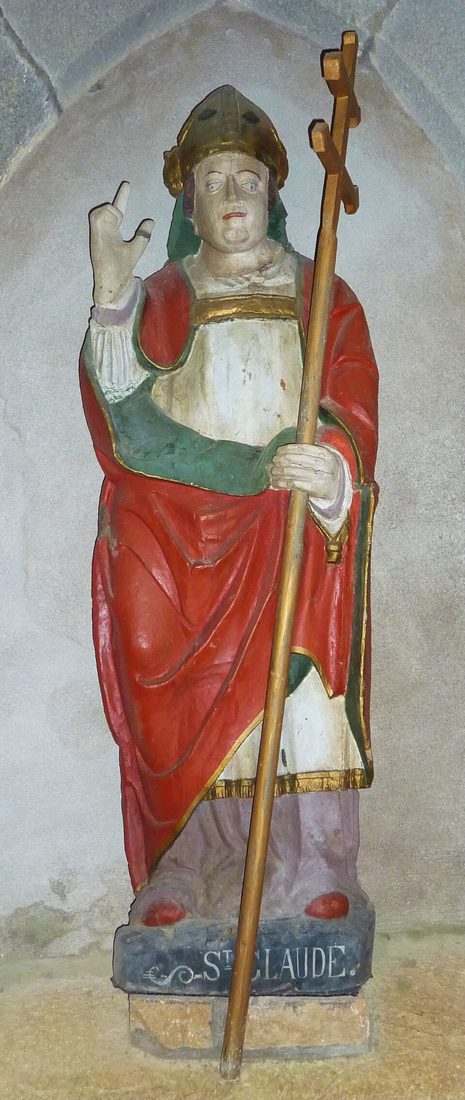

Saint Claude lived in the 7th century in the Jura. According to tradition, he was born at Salins, was first a soldier, then became a monk at the monastery of Condat, of which he was abbot. It is said that he was also Bishop of Besançon for a few years, before returning to the monastic life. He died around the year 700 (the Roman Martyrology gives “around 703”); his tomb became a great place of pilgrimage, and the abbey and then the town took his name: Saint-Claude, in the Jura. The chapel of Theuville is dedicated to him.
History offers few certainties about Saint Claude. He was abbot of the monastery of Condat, also called Saint-Oyend-de-Joux, for a very long period in the second half of the 7th century; he saw to the needs of the abbey and extended its influence. According to tradition, he was also a bishop for a few years, before returning to the solitude of the monastery.
His renown began above all after his death. Some five centuries later, his body was found intact, and the abbey became a great place of pilgrimage, visited notably by King Louis XI and Saint Francis de Sales. In 1794, during the Revolution, his relics were burned: only a forearm escaped the flames.
- Patron of: He is the patron saint of the diocese of Saint-Claude and, traditionally, of turners and pipe makers.
- Further reading: In Saint-Claude, in the Jura, the cathedral keeps in a reliquary the saint’s forearm, the only part to survive the fire of 1794.
Happy feast day to all named Claude!
Sources: Nominis (Conférence des évêques de France) — Saint Claude · Wikipedia — Claude de Besançon · Vatican News, saint du jour (6 juin) · Diocèse de Saint-Claude (Église du Jura) : Qui est saint Claude ?
10th Sunday in Ordinary Time
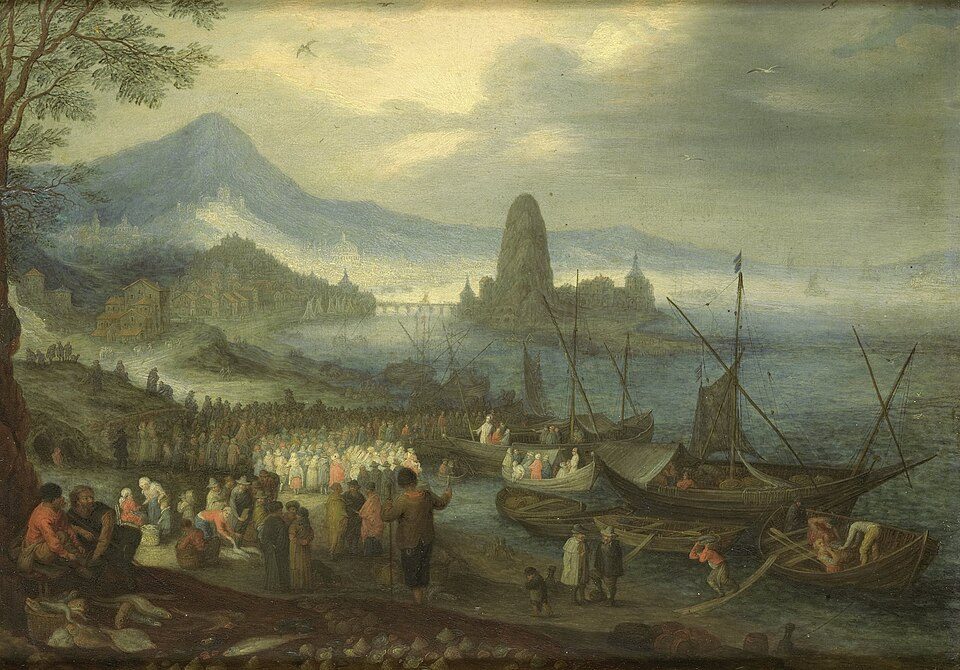

After Eastertide, the Church has entered Ordinary Time, whose Sundays are numbered and whose liturgical colour is green, a sign of hope. There is nothing commonplace about this season: week after week, it has us follow Jesus in his public life, his words and his deeds. This year, it is the Gospel according to Saint Mark that is read on most Sundays.
After Easter, Pentecost, and then the feasts of the Most Holy Trinity and of Corpus Christi, this 10th Sunday is the first since February on which the liturgy returns to the green of Ordinary Time. The following Sundays resume the continuous reading of the Gospel according to Saint Mark, the shortest of the four Gospels. Mark tells his story in a lively and concrete style, as attentive to Jesus’ deeds as to his words.
Today’s Gospel shows Jesus besieged by the crowd, to the point of no longer having time to eat. Some of those close to him think he has lost his mind, and scribes who have come from Jerusalem accuse him of acting by the power of the devil. Jesus answers them that a kingdom divided cannot stand, and that Satan cannot cast out Satan. Finally, he proclaims a new family, open to all who do the will of God.
Sources: AELF — Messe du 2027-06-06 · Wikipedia — Temps ordinaire · AELF – Messe du 2027-06-06 · Église catholique en France – Le temps ordinaire · Église catholique en France – Quelles sont les couleurs du temps liturgique ?
Today's Gospel (Mk 3:20-35)
“For whoever does the will of God is my brother, my sister, and mother.”
Jesus declares that those who do the will of God are his family. Saint Claude, patron saint of the chapel of Theuville, sought this will in the monastic life.
Read all of the day's readings on aelf.org (in French)
Liturgical calendar: AELF; Gospel quotations: World English Bible (public domain)
Key
feast of one of our parish churches · today
- green: Ordinary Time
- purple: Advent and Lent
- white: Christmas, Easter, feasts of the Lord, of the Virgin Mary and of the saints
- red: the Passion, Pentecost, apostles and martyrs
- rose (optional): 3rd Sunday of Advent and 4th Sunday of Lent