
Tuesday 25 May 2027, the Church celebrates
Saint Bede the Venerable, Saint Gregory VII, Saint Mary Magdalene de’ Pazzi
Tuesday 25 May 2027 · Tuesday of the 8th week in Ordinary Time · Optional memorial · liturgical colour: green
Saint Bede the Venerable, Priest and Doctor of the Church
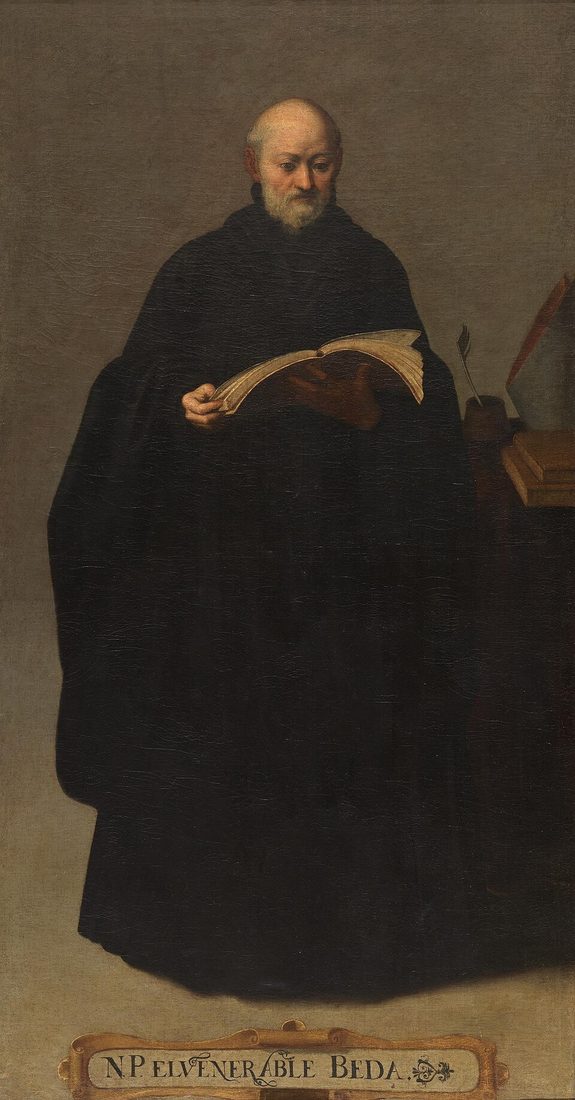

Bede was born around 672 in the north of England. Entrusted at the age of seven to the Benedictine monastery of Wearmouth, he spent his life at the neighbouring monastery of Jarrow, devoted to prayer, study and teaching. A renowned scholar, he wrote commentaries on the Bible and a famous Ecclesiastical History of the English People, which makes him the first historian of England. He died at Jarrow in 735; the Church counts him among her Doctors.
Bede spent his whole life in the monastery, between the prayer of the Office sung each day in church and intellectual work. He studied the text of the Bible closely and commented on it, seeking Christ everywhere in it as the key to all of Scripture. In his homilies, he taught the faithful to celebrate the mysteries of the faith with joy and to live them day by day. He also explained the Our Father and the Creed to the people in the language of his region.
As a historian, he made the birth of Christ the reference point of time: it is thanks to him that the custom of counting the years “from the Incarnation of the Lord” spread. Already in his lifetime he was called “venerable”; after his death, Saint Boniface, the apostle of Germany, asked several times for copies of his works. Though ill, he went on working until his last day, notably on a commentary on the Gospel of John. He died on 26 May 735, which was Ascension Day that year.
A saying
“[…] I have always lived in this monastery, devoting myself intensely to the study of Scripture and, while I observed the discipline of the Rule and the daily commitment to sing in church, it was always sweet to me to learn, to teach or to write.”
- Further reading: In England, Durham Cathedral keeps his memory: his remains were transferred there in the 11th century.
Sources: Nominis (Conférence des évêques de France) — Saint Bède le Vénérable · Wikipédia — Bède le Vénérable · Benoît XVI, audience générale du 18 février 2009 (Bède le Vénérable) · Vatican News — Saint Bède le Vénérable
Saint Gregory VII, Pope
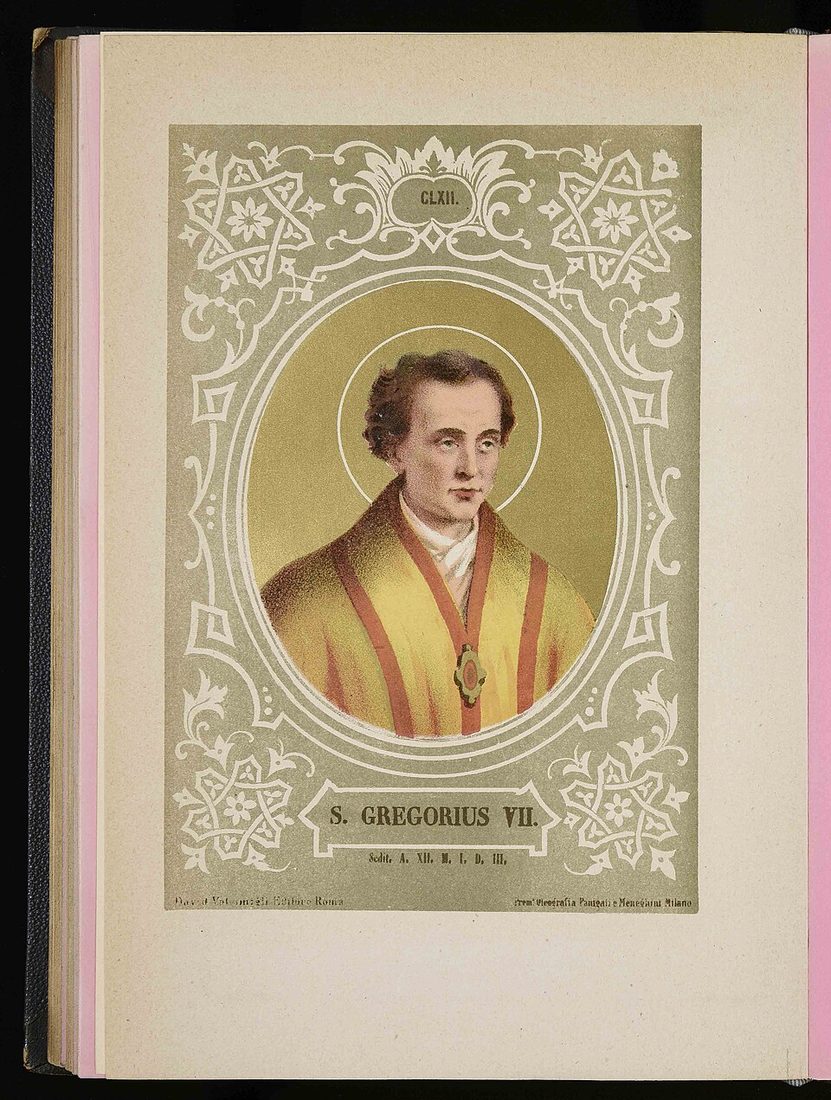

Hildebrand, born in Tuscany at the beginning of the 11th century, was first a monk, then became the adviser of several popes. Elected Pope in 1073 under the name of Gregory VII, he led a great reform of the Church: he fought against abuses among the clergy and defended the freedom of the Church against the power of princes. This struggle set him against the Emperor Henry IV, who came to do penance before him at Canossa before taking up the fight again. Driven out of Rome, Gregory VII died in exile in Salerno in 1085.
Hildebrand was born at Sovana, in Tuscany, and led the monastic life in Rome. Entrusted with various missions, he assisted the popes of his time in the reform of the Church. He was elected Pope on 22 April 1073.
The reform he led, known as the “Gregorian” reform, fought the abuses of the clergy and upheld its holiness. Above all, it attacked the appointment of bishops by princes, which provoked the Investiture Controversy with Henry IV. Excommunicated, Henry came as a penitent to Canossa in 1077 to obtain his pardon, before taking up the fight again and installing an antipope.
Forced to leave Rome, Gregory VII died in Salerno on 25 May 1085. According to tradition, his last words were: “I have loved justice and hated iniquity; that is why I die in exile.” His work was carried on by his successors.
- Further reading: He rests in Salerno, in the Cathedral of Saint Matthew.
Sources: Nominis (Conférence des évêques de France) — Saint Grégoire VII · Wikipédia — Grégoire VII · Vatican News : saints du 25 mai · Catholic Encyclopedia (1909)
Saint Mary Magdalene de’ Pazzi, Virgin
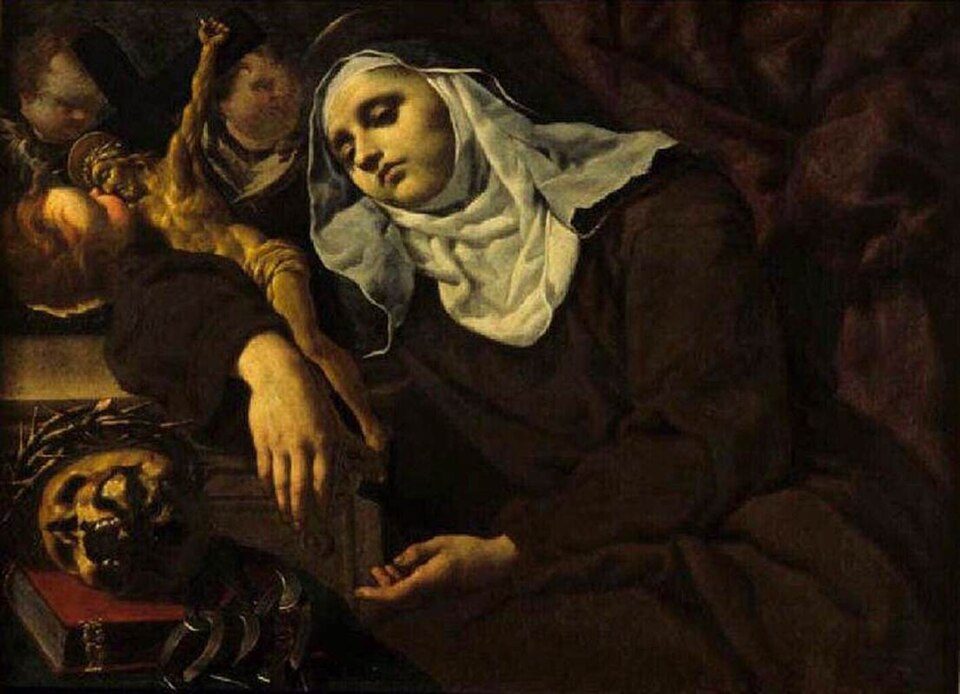

Catherine de’ Pazzi was born in 1566 in Florence, into a great noble family. Drawn to prayer from an early age, she entered the Carmel of her city, where she took the name of Mary Magdalene. There she led a hidden life of prayer and self-denial, marked by profound mystical graces, and prayed unceasingly for the renewal of the Church. She also helped her sisters to make progress on the path of holiness. She died in Florence on 25 May 1607.
Baptised with the name Catherine, she showed a deep attraction to prayer from childhood. She received her First Communion in 1576 and, a few days later, consecrated herself to the Lord by a promise of virginity. Little drawn to the worldly life of her milieu, she entered the Carmel of Santa Maria degli Angeli in Florence at the age of sixteen.
Gravely ill, she was allowed to make her vows earlier than planned, in 1584. Then began a period of ecstasies, the account of which her sisters recorded in several manuscripts. There followed five years of inner trials, during which she dictated twelve letters, perhaps never sent, calling the Pope, cardinals, her archbishop and other leaders of the Church to the renewal of the Church.
From 1590, she devoted herself to the formation of the novices and became a point of reference for the whole community, which saw her as a mother. Her last three years were marked by tuberculosis and great suffering, which she lived in union with Christ. Beatified less than twenty years after her death, she was canonised in 1669.
A saying
“Come and love Love!”
- Further reading: Her body is preserved in Florence, in the monastery dedicated to her, in the Careggi district.
Sources: Nominis (Conférence des évêques de France) — Sainte Marie-Madeleine de Pazzi · Wikipédia — Marie-Madeleine de Pazzi · Benoît XVI — Lettre pour le IVe centenaire de la mort de sainte Marie-Madeleine de Pazzi, 29 avril 2007 · Vatican News — Sainte Marie-Madeleine de Pazzi, carmélite
Today's Gospel (Mk 10:28-31)
“But many who are first will be last, and the last first.”
Peter points out that the disciples have left everything to follow Jesus. Bede, Gregory VII and Mary Magdalene de’ Pazzi, each in their own way, gave everything to Christ.
Read all of the day's readings on aelf.org (in French)
Liturgical calendar: AELF; Gospel quotations: World English Bible (public domain)
Key
feast of one of our parish churches · today
- green: Ordinary Time
- purple: Advent and Lent
- white: Christmas, Easter, feasts of the Lord, of the Virgin Mary and of the saints
- red: the Passion, Pentecost, apostles and martyrs
- rose (optional): 3rd Sunday of Advent and 4th Sunday of Lent