
Friday 23 April 2027, the Church celebrates
Saint George, Martyr
Friday 23 April 2027 · Friday of the 4th week of Easter · Optional memorial · liturgical colour: white
In our parish
- Saint George, Martyr: Église Saint-Georges du Heaulme
Saint George, Martyr
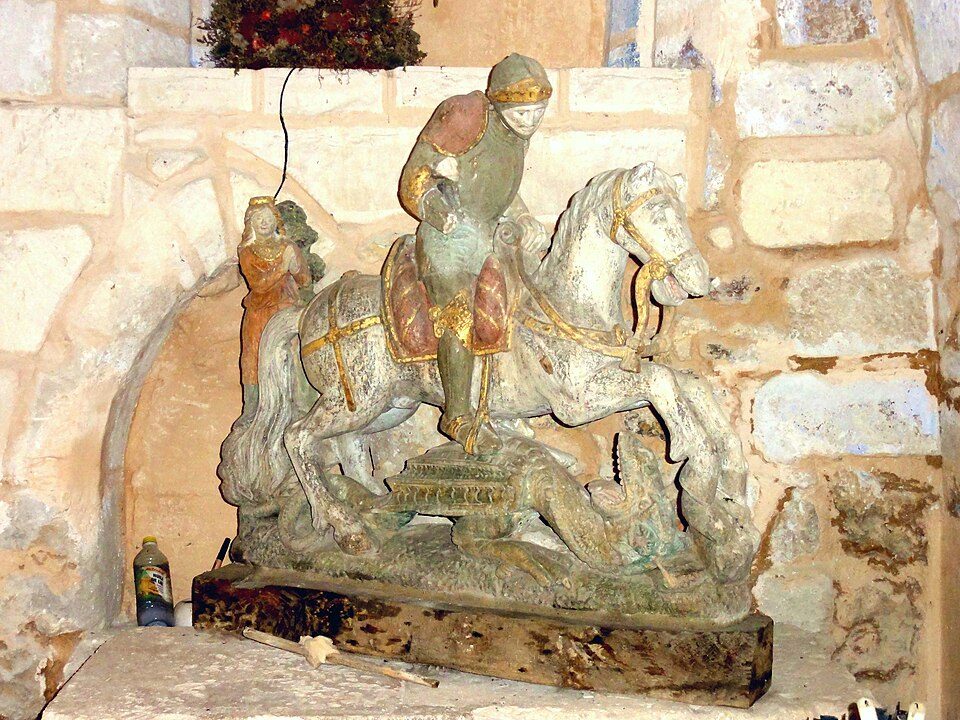

George is a martyr of the early centuries, put to death probably around 303, during the persecution of Emperor Diocletian; since Antiquity, his cult has been associated with Lydda, in Palestine. According to tradition, he was an officer in the Roman army and refused to deny Christ. Little is known for certain about his life, but he was venerated very early, in the East as in the West, and countless churches are dedicated to him. The famous fight with the dragon is a legend of the Middle Ages, an image of the victory of good over evil. He is the patron saint of England, of horsemen, of soldiers and of scouts.
According to tradition, George came from Cappadocia, in Asia Minor, and served as an officer in the imperial army. When Diocletian required soldiers to offer sacrifices to the gods of the empire, he is said to have refused and confessed his faith in Christ, for which he was executed. A basilica was built over his tomb at Lydda, present-day Lod.
His cult spread very quickly: as early as the 4th century, a church was dedicated to him in Constantinople, and a century later there were some forty in Egypt. Eastern Christians call him “the great martyr”. For lack of reliable historical data, in 1969 the Church made his feast an optional memorial in the universal calendar, without any lessening of popular devotion. The Crusaders did much to make him popular in the West, especially among French and English knights. In France, dozens of towns and villages and a great many churches bear his name.
- How to recognise: He is depicted as a knight in armour, often on horseback, fighting the dragon of the legend with his lance.
- Patron of: He is the patron saint of England and Ethiopia, of horsemen, of soldiers and of scouts.
- Further reading: In Rome, the church of San Giorgio al Velabro has kept a relic of his skull since the 8th century.
Happy feast day to all named George, Georgette, Jordi, Yuri!
Sources: Nominis (Conférence des évêques de France) · Vatican News · Wikipédia · POP (ministère de la Culture)
Saint Adalbert, Bishop and Martyr
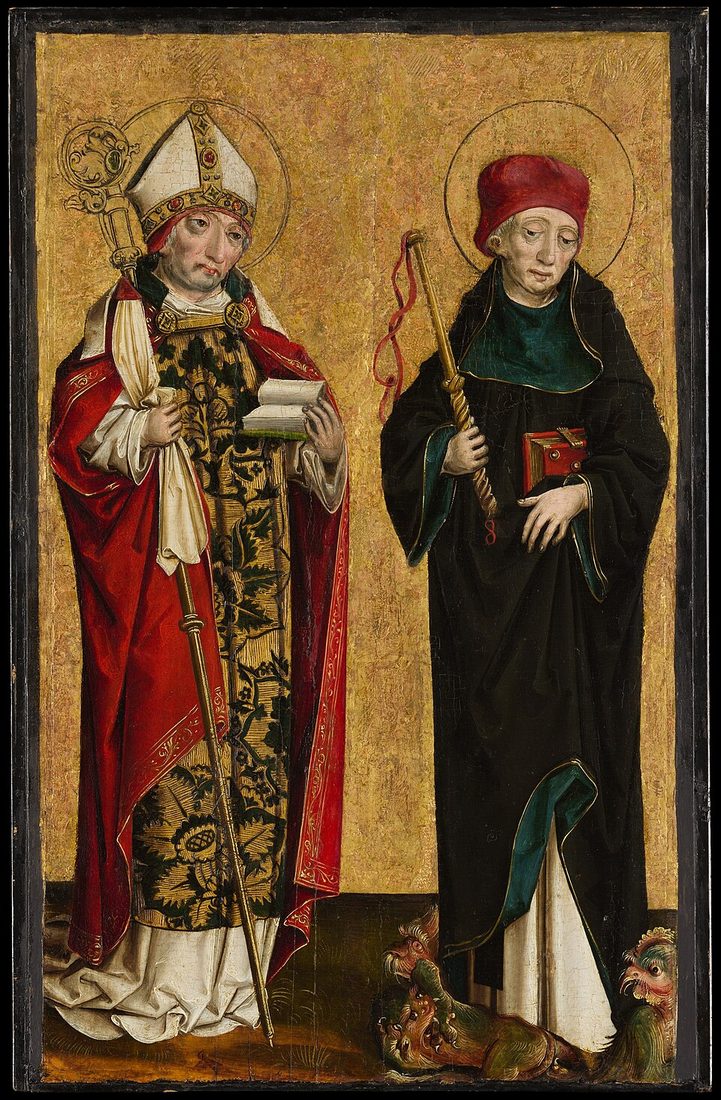

Adalbert, whose Czech name was Vojtěch, was born in Bohemia in the 10th century. After studying in Magdeburg, he became Bishop of Prague, but met strong resistance in his diocese. He then withdrew to Rome, where he became a monk. He later set out again to proclaim the Gospel to the still pagan peoples on the shores of the Baltic Sea, where he was killed in 997. He is honoured as one of the patron saints of Poland and Bohemia.
The son of a great Bohemian family, Adalbert was given the name Vojtěch. Having become Bishop of Prague, he carried out his office with great self-denial, but his efforts to reform morals and root out pagan customs came up against the conduct of part of his clergy. Discouraged by the meagre results, he left for Rome and became a monk there on the Aventine; when he returned to Prague, he was once again very badly received.
He then turned to mission. Welcomed in Poland, he set out with a few companions to proclaim the Gospel to the Prussians, a Baltic people, still pagan, who lived near the Baltic Sea. In 997, near Gdańsk, he was attacked by pagans who pierced him with their lances.
His relics are venerated in Gniezno, in Poland. He was proclaimed a saint only two years after his death. In 1997, the millennium of his death, and again in 1999, the millennium of his canonisation, Pope John Paul II came to celebrate these anniversaries in Poland.
A saying
“Christ was glorified by Saint Adalbert through his fervent life and a heroic death.”
John Paul II, homily in Gdańsk for the close of the millennium of Saint Adalbert, 5 June 1999
- Patron of: He is one of the patron saints of Poland.
- Further reading: His relics are venerated in Gniezno, in Poland, the chief centre of his cult.
Sources: Nominis (Conférence des évêques de France) · Vatican News · Wikipédia · Jean-Paul II, homélie à Gdańsk, 5 juin 1999 (vatican.va)
Today's Gospel (Jn 14:1-6)
“I am the way, the truth, and the life.”
Jesus is the Way, the Truth and the Life. Saint George, patron saint of the church of Le Heaulme, and Saint Adalbert followed him to the point of giving their lives.
Read all of the day's readings on aelf.org (in French)
Liturgical calendar: AELF; Gospel quotations: World English Bible (public domain)
Key
feast of one of our parish churches · today
- green: Ordinary Time
- purple: Advent and Lent
- white: Christmas, Easter, feasts of the Lord, of the Virgin Mary and of the saints
- red: the Passion, Pentecost, apostles and martyrs
- rose (optional): 3rd Sunday of Advent and 4th Sunday of Lent