
Wednesday 17 March 2027, the Church celebrates
Saint Patrick
Wednesday 17 March 2027 · Wednesday of the 5th week of Lent · Optional memorial · liturgical colour: purple
Saint Patrick, Bishop
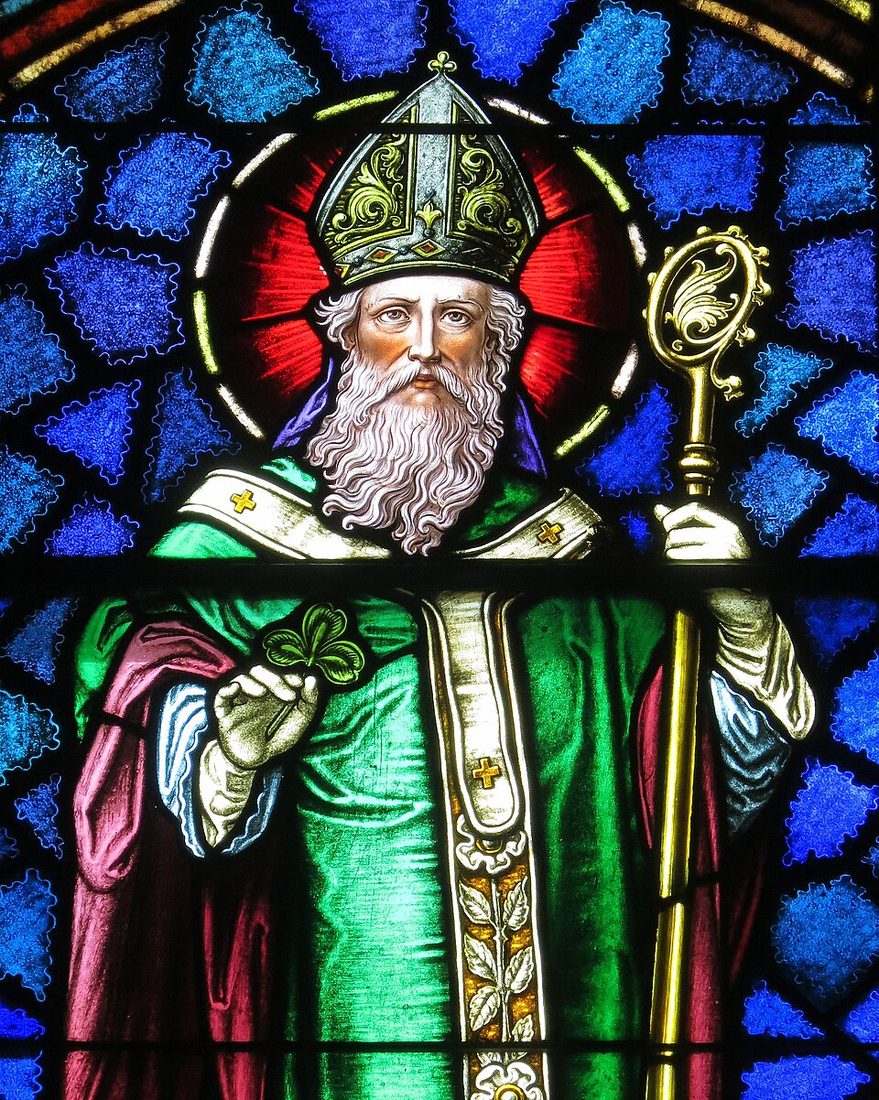

Patrick is born in Britain, in Roman times. At about the age of sixteen he is captured by pirates and sold as a slave in Ireland; after six years he manages to escape and return to his family. He then feels called to go back and proclaim Christ in the land of his captivity. Having become a bishop, he evangelises Ireland and gives the Church there a solid organisation; according to tradition, he explained the Trinity using a shamrock leaf. He dies around 461 and is the patron saint of Ireland.
Patrick grows up in a Christian family in Roman Britain, present-day Great Britain. Captured at about sixteen and taken to Ireland, he lives through six years of servitude. It is in this trial that his faith grows and becomes ardent prayer: he himself tells, in his Confession, that he prayed day and night, even in the woods and on the mountain. After his escape he travels on foot the long road to the coast and succeeds in returning home.
A few years later, in a dream, he hears the call of the Irish begging him to come back. Ordained a bishop, he lands in Ireland, according to tradition in 432. For nearly forty years, despite opposition and even imprisonment, he preaches, baptises a great many Irish people, encourages monastic life and establishes his see at Armagh. Knowing the language and customs of the country since his captivity, he is able to present Christ with great sensitivity.
He dies in 461, according to the traditional date, leaving a solidly organised Church and many monasteries. His Confession, in which he himself tells of his spiritual journey, has come down to us. His feast is kept on 17 March, the anniversary of his death according to tradition.
A saying
“Saint Patrick was the first Primate of Ireland. But above all he was the one who was able to instil into the Irish soul a religious tradition so deep that every Christian in Ireland can rightly call himself the heir of Saint Patrick.”
John Paul II, Address to the Diplomatic Corps, Dublin, 29 September 1979
- How to recognise: He is often depicted holding a cross and a shamrock leaf, with which, according to tradition, he explained the Trinity; he is also shown driving out snakes.
- Patron of: He is the patron saint of Ireland.
- Further reading: According to Vatican News, his remains were buried in the cathedral of Down, a town since called Downpatrick.
Happy feast day to all named Patrick, Patricia!
Sources: Nominis (Conférence des évêques de France) · Vatican News · Wikipédia · Vatican — Jean-Paul II, discours au Corps diplomatique, Dublin, 29 septembre 1979 · Diocèse de Tournai — « Identifier un saint » (attributs iconographiques)
Today's Gospel (Jn 8:31-42)
“If therefore the Son makes you free, you will be free indeed.”
Jesus promises true freedom to those who remain in his word. Saint Patrick, once a slave, devoted his life to proclaiming this freedom to the Irish.
Read all of the day's readings on aelf.org (in French)
Liturgical calendar: AELF; Gospel quotations: World English Bible (public domain)
Key
feast of one of our parish churches · today
- green: Ordinary Time
- purple: Advent and Lent
- white: Christmas, Easter, feasts of the Lord, of the Virgin Mary and of the saints
- red: the Passion, Pentecost, apostles and martyrs
- rose (optional): 3rd Sunday of Advent and 4th Sunday of Lent