
Wednesday 3 February 2027, the Church celebrates
Saint Blaise, Bishop and Martyr
Wednesday 3 February 2027 · Wednesday of the 4th week in Ordinary Time · Optional memorial · liturgical colour: green
Saint Blaise, Bishop and Martyr
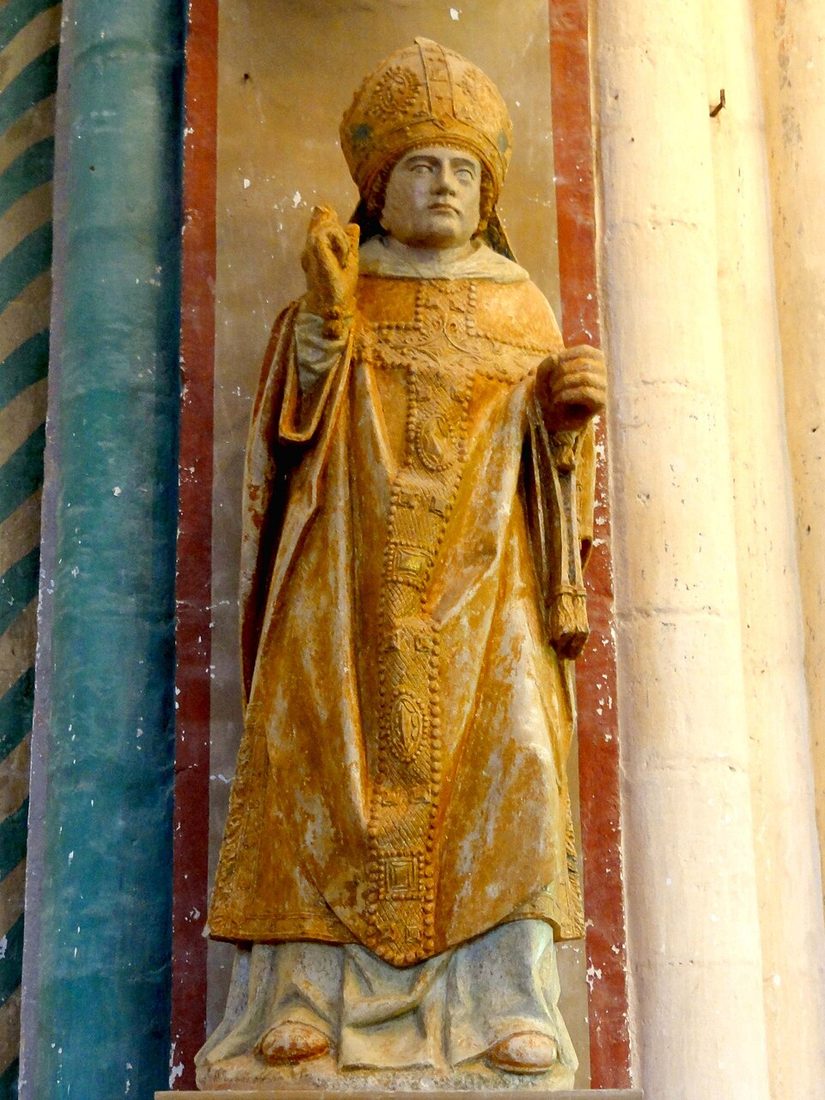

Blaise was Bishop of Sebaste, in Armenia, at the beginning of the 4th century. According to tradition he had first been a physician, and he died a martyr in the time of the Emperor Licinius, around 320. He has long been invoked for ailments of the throat.
Little is known for certain about Blaise, apart from his time as bishop in Sebaste and his martyrdom, which tradition places around 320. The ancient accounts, legendary in character, show him living in a cave in the mountains, where he cared for people and wild animals alike. Arrested, he is said to have been tortured before being beheaded.
According to tradition, as he was being led before the governor, he saved a child who was choking on a fishbone. This is the origin of the “blessing of Saint Blaise”, given for the protection of the throat, with two crossed candles held before the throat. His cult spread very widely; pilgrims to Santiago de Compostela held him in particular veneration.
- Patron of: He is invoked for ailments of the throat; he is also the protector of the city of Dubrovnik, in Croatia, as John Paul II recalled in 2003.
- Further reading: In Metz, the Church of Saint-Eucaire keeps some of his relics, venerated each year on his feast day with the blessing of small loaves.
Happy feast day to all named Blaise!
Sources: Nominis (Église catholique en France) · Wikipédia · Vatican News — Saint Blaise, évêque de Sébaste et martyr · Jean-Paul II, homélie à Dubrovnik, 6 juin 2003 (vatican.va)
Saint Ansgar, Bishop
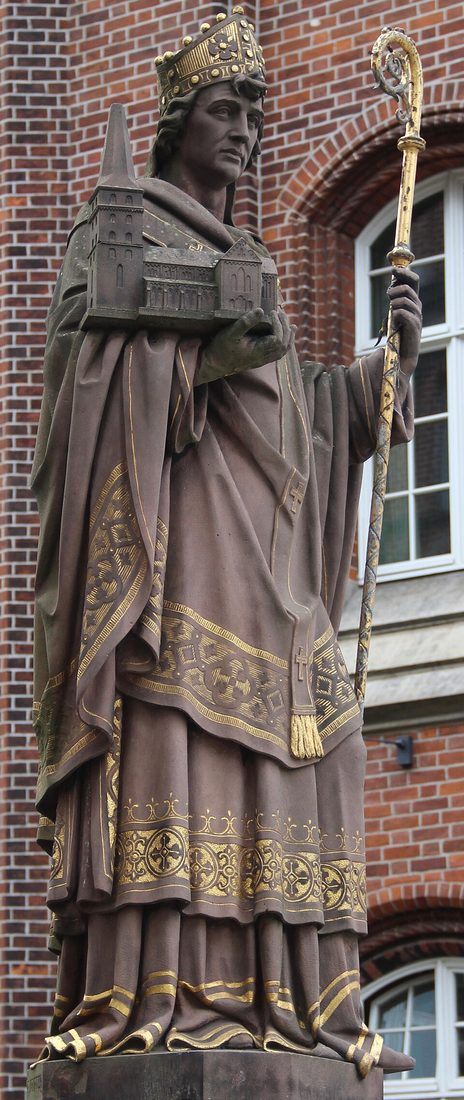

Born at the beginning of the 9th century, Ansgar (or Oscar) becomes a monk at the Abbey of Corbie, in Picardy. He is sent to proclaim the Gospel to the peoples of the North, in Denmark and then in Sweden. Bishop of Hamburg and later of Bremen, he pursues his mission despite many difficulties and dies in Bremen in 865.
Ansgar, also called Anskar or Oscar, is formed at the Benedictine Abbey of Corbie, then a very lively centre of learning and holiness. Sent to the “men of the North”, he proclaims the Gospel first in Denmark, then in Sweden, where he founds a monastery on the island of Björkö, north-west of present-day Stockholm. He is thus one of the first to attempt the evangelisation of Scandinavia.
Having become Bishop of Hamburg, he is sent by Pope Gregory IV as legate for the whole of Northern Europe; later he is also entrusted with the Diocese of Bremen. He pursues his mission in Denmark and Sweden despite many difficulties, until his death in Bremen in 865, worn out by his labours. His successor, Saint Rimbert, wrote his life. Ansgar is also venerated by the Eastern Churches.
- Further reading: The Life of Saint Ansgar, written by his successor Saint Rimbert, is published in French by Éditions du Cerf.
Happy feast day to all named Ansgar, Oscar!
Sources: Nominis (Église catholique en France) · Wikipédia · Vatican News — Saint Anschaire (Oscar), évêque de Hambourg et de Brême
Today's Gospel (Mk 6:1-6)
“He went around the villages teaching.”
Despite being rejected at Nazareth, Jesus continues to proclaim the Good News; Saint Ansgar and Saint Blaise also persevered.
Read all of the day's readings on aelf.org (in French)
Liturgical calendar: AELF; Gospel quotations: World English Bible (public domain)
Key
feast of one of our parish churches · today
- green: Ordinary Time
- purple: Advent and Lent
- white: Christmas, Easter, feasts of the Lord, of the Virgin Mary and of the saints
- red: the Passion, Pentecost, apostles and martyrs
- rose (optional): 3rd Sunday of Advent and 4th Sunday of Lent