
Monday 21 December 2026, the Church celebrates
Saint Peter Canisius, Priest and Doctor of the Church
Monday 21 December 2026 · Monday 21 December, Advent weekday · Optional memorial · liturgical colour: purple
Saint Peter Canisius, Priest and Doctor of the Church
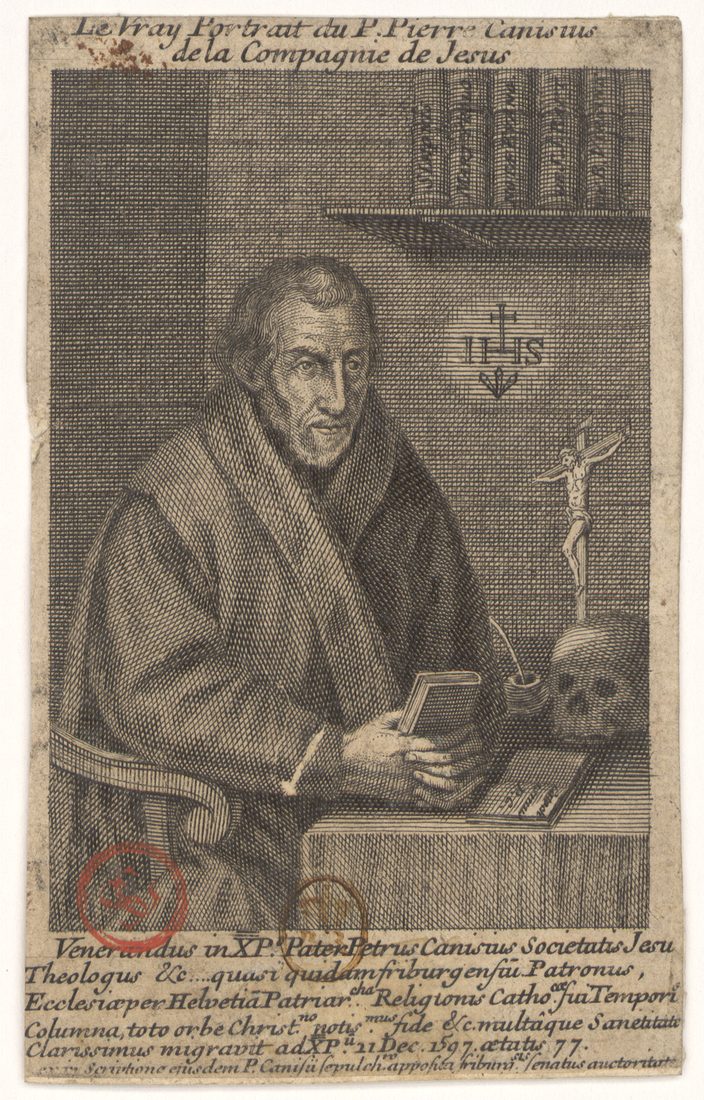

Born in 1521 in Nijmegen, in the Netherlands, Peter studied in Cologne; in 1543 he met Peter Faber, one of the first companions of Ignatius of Loyola, and entered the very young Society of Jesus. At the time of the Protestant Reformation, he travelled through Germany, Austria and Switzerland to preach, teach and found colleges. His catechisms, simple and clear, were read for generations. He died in Fribourg, in Switzerland, in 1597. Pope Pius XI canonised him and proclaimed him a Doctor of the Church in 1925.
The son of the burgomaster of Nijmegen, Peter was born on 8 May 1521. As a student in Cologne, he frequented the city’s Carthusians, a centre of intense spiritual life. After making the Spiritual Exercises under the guidance of Peter Faber, he entered the Society of Jesus on 8 May 1543, in Mainz; he was ordained a priest in Cologne in 1546. As theologian to the Bishop of Augsburg, he took part in the Council of Trent.
In 1549, Saint Ignatius sent him to Germany; before leaving, he prayed in Saint Peter’s Basilica and felt himself confirmed in this mission. He taught at the University of Ingolstadt, administered the diocese of Vienna for a time, visited the sick and prisoners, and founded many colleges, such as the one in Prague in 1556. Benedict XVI stressed that he knew how to combine fidelity to the faith with respect for each person, avoiding the harshness of tone that was common among Christians in his day.
His three catechisms, written between 1555 and 1558, went through two hundred editions in his lifetime and shaped the faith of the faithful until the 20th century. In 1580 he withdrew to Fribourg, where he devoted himself to preaching and writing until his death. Pope Leo XIII called him the “second Apostle of Germany”.
A saying
“You know, Lord, in how many ways and how often on that same day you entrusted Germany to me, which I was later to continue to be concerned about and for which I would have liked to live and die”
- Further reading: His relics are venerated in Fribourg, in Switzerland: in the Church of Saint Michael, adjoining the college he founded, and, since 2021, in a reliquary in the Cathedral of Saint Nicholas.
Happy feast day to all named Peter, Pierrette, Perrine!
Sources: Nominis (Conférence des évêques de France) · Vatican News · Wikipedia · Vatican — Benoît XVI, audience générale du 9 février 2011 : saint Pierre Canisius
Today's Gospel (Lk 1:39-45)
“Blessed is she who believed, for there will be a fulfilment of the things which have been spoken to her from the Lord!”
Elizabeth recognises Mary’s faith. Saint Peter Canisius devoted his life to handing on this faith, simply and clearly, through his catechisms.
Read all of the day's readings on aelf.org (in French)
Liturgical calendar: AELF; Gospel quotations: World English Bible (public domain)
Key
feast of one of our parish churches · today
- green: Ordinary Time
- purple: Advent and Lent
- white: Christmas, Easter, feasts of the Lord, of the Virgin Mary and of the saints
- red: the Passion, Pentecost, apostles and martyrs
- rose (optional): 3rd Sunday of Advent and 4th Sunday of Lent