
Monday 23 November 2026, the Church celebrates
Saint Clement I, Pope and Martyr
Monday 23 November 2026 · Monday of the 34th week in Ordinary Time · Optional memorial · liturgical colour: green
Saint Clement I, Pope and Martyr
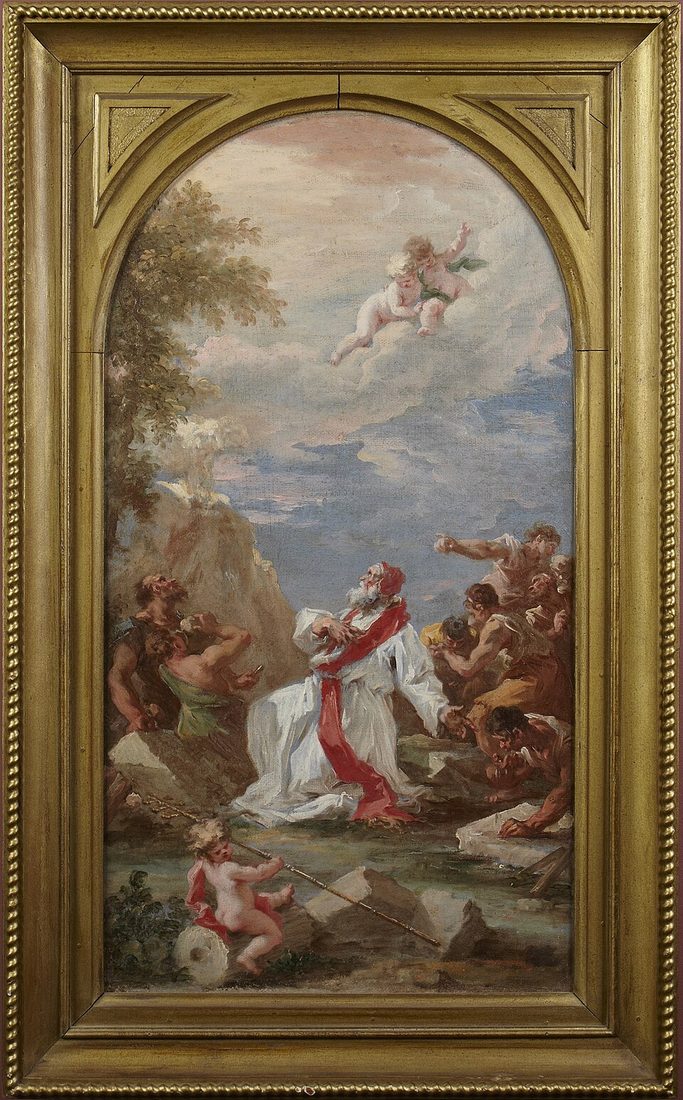

Clement was one of the first Bishops of Rome, at the end of the 1st century: tradition counts him as the fourth Pope, after Peter, Linus and Cletus. We owe him a letter addressed to the Christians of Corinth to bring them back to peace and concord, one of the oldest Christian writings outside the New Testament. According to a later tradition, he is said to have been exiled to the Crimea and to have died there a martyr. In the 9th century, Saints Cyril and Methodius brought back to Rome relics that they held to be his.
According to Saint Irenaeus of Lyon, Clement had known the Apostles and still had their preaching ringing in his ears. His letter to the Corinthians was written shortly after the persecution of the Emperor Domitian, around 96. In Corinth, a few young men had deposed the community’s presbyters: Clement reminds the Christians of humility and brotherly love, and explains that the leaders of the Church succeed the Apostles according to the order willed by God.
This letter was held in such esteem that it was read publicly in the assemblies. In it we find, for the first time in a Christian text, the word “lay”, which designates a member of the People of God. It ends with a great prayer in which the Christians, barely out of persecution, pray for those who govern them: it is the oldest prayer of this kind after the New Testament.
A saying
“We are a holy portion […] let us therefore do all that holiness requires.”
Letter to the Corinthians, 30:1, quoted by Benedict XVI, General Audience of 7 March 2007
- Patron of: He is traditionally the patron saint of mariners.
- Further reading: In Rome, near the Colosseum, the Basilica of San Clemente, where he is venerated, preserves beneath the present church a 4th-century church and remains from the 1st century.
Happy feast day to all named Clement, Clementine!
Sources: Nominis (Conférence des évêques de France) · Wikipédia · Benoît XVI, audience générale du 7 mars 2007 (saint Clément, évêque de Rome) · Vatican News, saint du jour (23 novembre) · Basilique Saint-Clément de Rome (site officiel)
Saint Columban, Abbot
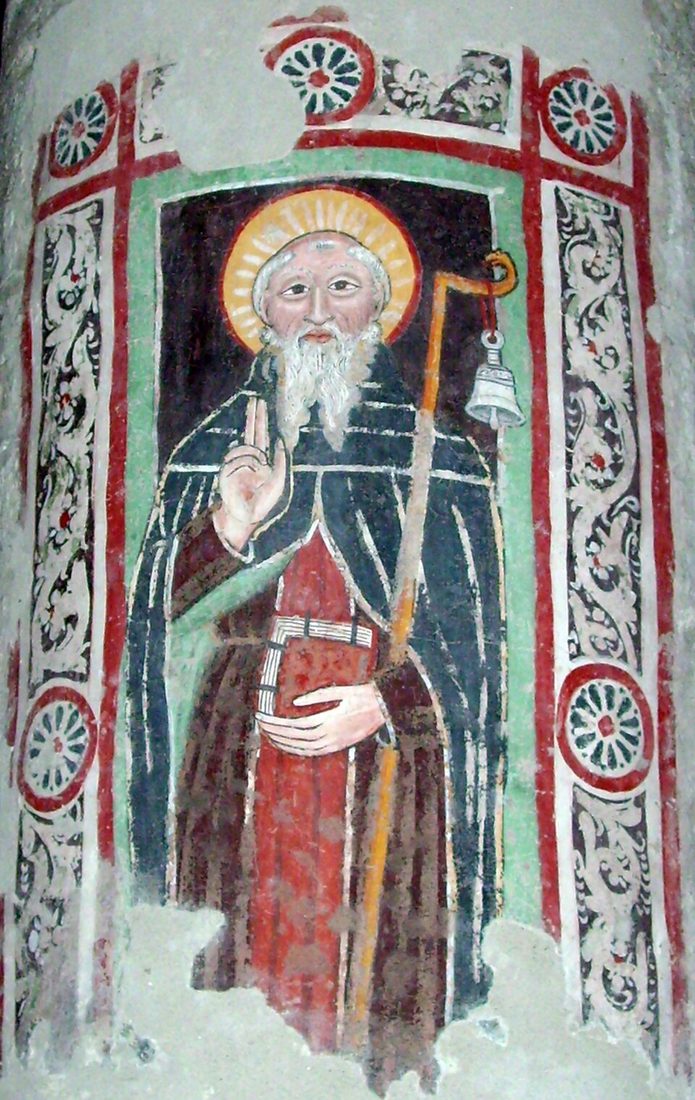

Born in Ireland in the 6th century, Columban became a monk at the monastery of Bangor. Towards the end of the century, he set out with twelve companions to proclaim the Gospel on the Continent and founded several monasteries in Gaul, including Luxeuil, whose influence shone for a long time. His rebukes to the king for his conduct led to his expulsion from Luxeuil in 610. He made his way to Italy, founded the abbey of Bobbio and died there in 615. His demanding rule formed many monks and saints of the Merovingian era.
Columban was born around 543 in the province of Leinster, in Ireland. At Bangor he was trained by Abbot Comgall in a life of prayer, asceticism and study, and was ordained a priest there. At about fifty, he chose to become a “pilgrim for Christ”: around 590 he landed on the coast of Brittany with his companions and founded the monasteries of Annegray, Luxeuil and Fontaine. The monks cleared the land and prayed: their example attracted many young men.
He introduced to the Continent private confession and penance, which could be received more than once. His Irish customs, notably regarding the date of Easter, and his frankness towards the powerful earned him opposition. Driven out of Luxeuil, he evangelised the regions around Lake Constance; one of his disciples, Gall, stayed there, and the abbey of Saint Gall would grow out of his hermitage. Benedict XVI sees him as one of the fathers of Europe: in a letter to Pope Gregory the Great, the expression “the whole of Europe” is found for the first time.
A saying
“The first of these is to love the Lord with all our heart, because he loved us first, from the beginning of time, even before we came into the light of this world.”
Instructions, XI, quoted by Benedict XVI, General Audience of 11 June 2008
- Further reading: In Haute-Saône, Luxeuil-les-Bains keeps the memory of his great abbey; in Italy, the abbey of Bobbio was his last monastery, where he died in 615.
Happy feast day to all named Columban, Colombane!
Sources: Nominis (Conférence des évêques de France) · Wikipédia · Benoît XVI, audience générale du 11 juin 2008 (saint Colomban) · Vatican News, saint du jour (23 novembre)
Today's Gospel (Lk 21:1-4)
“she, out of her poverty, put in all that she had to live on.”
The poor widow gives all that she has. Saint Clement and Saint Columban, too, gave their whole lives to the service of the Gospel.
Read all of the day's readings on aelf.org (in French)
Liturgical calendar: AELF; Gospel quotations: World English Bible (public domain)
Key
feast of one of our parish churches · today
- green: Ordinary Time
- purple: Advent and Lent
- white: Christmas, Easter, feasts of the Lord, of the Virgin Mary and of the saints
- red: the Passion, Pentecost, apostles and martyrs
- rose (optional): 3rd Sunday of Advent and 4th Sunday of Lent