
Monday 16 November 2026, the Church celebrates
Saint Margaret of Scotland; Saint Gertrude, Virgin
Monday 16 November 2026 · Monday of the 33rd week in Ordinary Time · Optional memorial · liturgical colour: green
Saint Margaret of Scotland
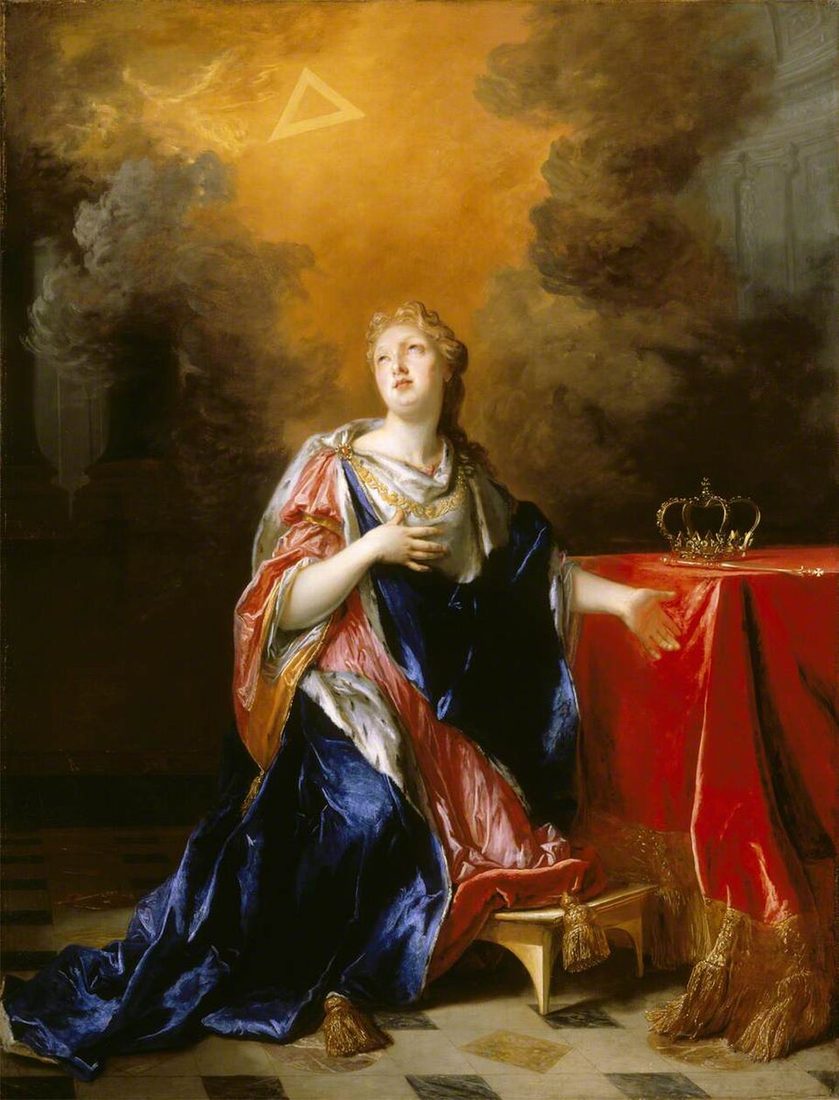

The granddaughter of a King of England, Margaret was born around 1045 in Hungary, where her family was living in exile. After the Norman Conquest of England, she took refuge with her family at the court of King Malcolm III of Scotland, whom she married in 1070; they had eight children. A queen attentive to the poor, she founded hospices for the sick and for pilgrims, supported the building of churches and monasteries, and helped to bring the Church in Scotland closer to the customs of Rome. She died at Edinburgh Castle on 16 November 1093, a few days after her husband and their eldest son were killed in battle. She was canonised in 1250 by Pope Innocent IV.
Her father, Edward, heir to the crown of England, had been forced into exile when the Danish king Cnut seized the kingdom. After Cnut’s death the family returned to England, but Edward died soon afterwards. After the Norman Conquest, his widow and children took refuge at the Scottish court, where King Malcolm III, moved by Margaret’s intelligence and faith, asked for her hand.
At Edinburgh Castle, the life of the court was shaped by the rhythm of prayer. An attentive mother of six sons and two daughters, Margaret advised her husband in the affairs of the kingdom and drew him into her life of faith. She also encouraged religious instruction, the coming of Benedictine monks, and the observance of the Lenten fast and of the same date for Easter as the Church of Rome.
In 1093, already ill, she learnt that her husband and her eldest son had been killed fighting the troops of the King of England. Her confessor and biographer, the monk Turgot, relates that she accepted this trial giving thanks to God. She died three days after them.
- Further reading: In Edinburgh, the castle chapel, the oldest church dedicated to her.
Happy feast day to all named Margaret!
Sources: Nominis — Sainte Marguerite d’Écosse · Vatican News — Sainte Marguerite d’Écosse
Saint Gertrude, Virgin
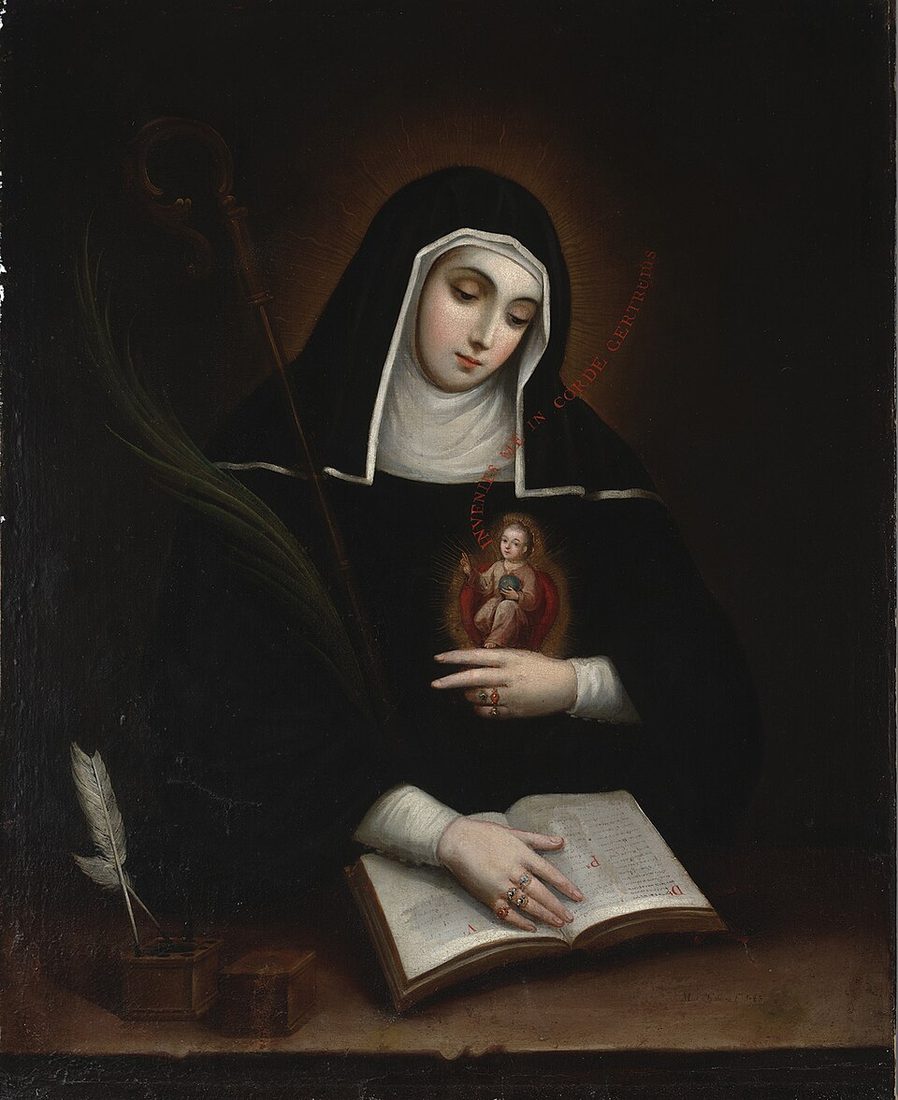

Born on 6 January 1256, Gertrude was entrusted at the age of five to the monastery of nuns at Helfta, in Germany, where she received a sound education. At around twenty-five, in 1281, she underwent a profound inner conversion and turned wholly towards Christ. Her writings, notably “The Herald of Divine Love” and the “Spiritual Exercises”, bear witness to her love for the Heart of Jesus and her trust in God’s mercy. She died at Helfta in 1301 or 1302. She is the only German woman to whom tradition gives the title “the Great”.
Nothing is known of her parents or of her birthplace. At the monastery of Helfta, in Saxony, the child proved a brilliant pupil: she learnt everything that was taught at the time and was passionately fond of literature, music, singing and illumination. She grew up there alongside great spiritual figures, such as her teacher Mechtild of Hackeborn and Abbess Gertrude.
For some twenty years, her life as a nun consisted mainly of study and prayer. During Advent 1280, she suddenly felt a deep distaste for the vanity of her learning; on the evening of 27 January 1281, she experienced an inner encounter with Christ that turned her life upside down. Leaving secular studies for Scripture and theology, she passed from a life she herself judged negligent to ardent prayer.
Her inner life was rooted in the liturgy, following the rhythm of Advent, Christmas, Lent and Easter, even when illness prevented her from joining the choir. She placed her gifts at the service of others: people came to consult her, and she answered them drawing on the Word of God. She died on 17 November 1301 or 1302, at about forty-six years of age.
A saying
“Yet this was indeed the path you chose, O my God, to reveal your salvation to me”
- Further reading: Her writings, “The Herald of Divine Love” and the “Spiritual Exercises”, the latter described by Benedict XVI as a “rare jewel of mystical spiritual literature”, offer a way into her spirituality.
Happy feast day to all named Gertrude!
Sources: Nominis — Sainte Gertrude de Helfta · Benoît XVI — Audience générale du 6 octobre 2010 : sainte Gertrude · Vatican News — Saints du 16 novembre
Today's Gospel (Lk 18:35-43)
“What do you want me to do?”
Jesus stops for the blind man who calls out to him and gives him back his sight. Saint Margaret, attentive to the poor, and Saint Gertrude, wholly turned towards Christ, teach us to turn to him with confidence.
Read all of the day's readings on aelf.org (in French)
Liturgical calendar: AELF; Gospel quotations: World English Bible (public domain)
Key
feast of one of our parish churches · today
- green: Ordinary Time
- purple: Advent and Lent
- white: Christmas, Easter, feasts of the Lord, of the Virgin Mary and of the saints
- red: the Passion, Pentecost, apostles and martyrs
- rose (optional): 3rd Sunday of Advent and 4th Sunday of Lent